
Respiratory Gas Exchange
Every time you take a breath, your body performs a complex dance to keep your cells alive. You rarely think about the air moving in and out, but this process is vital for survival. The lungs act like a busy shipping hub, constantly trading old air for fresh supplies. This exchange happens deep inside your chest, where tiny structures move gases across thin membranes. Without this constant flow, your body would quickly run out of the energy needed for basic tasks.
The Mechanics of Pulmonary Ventilation
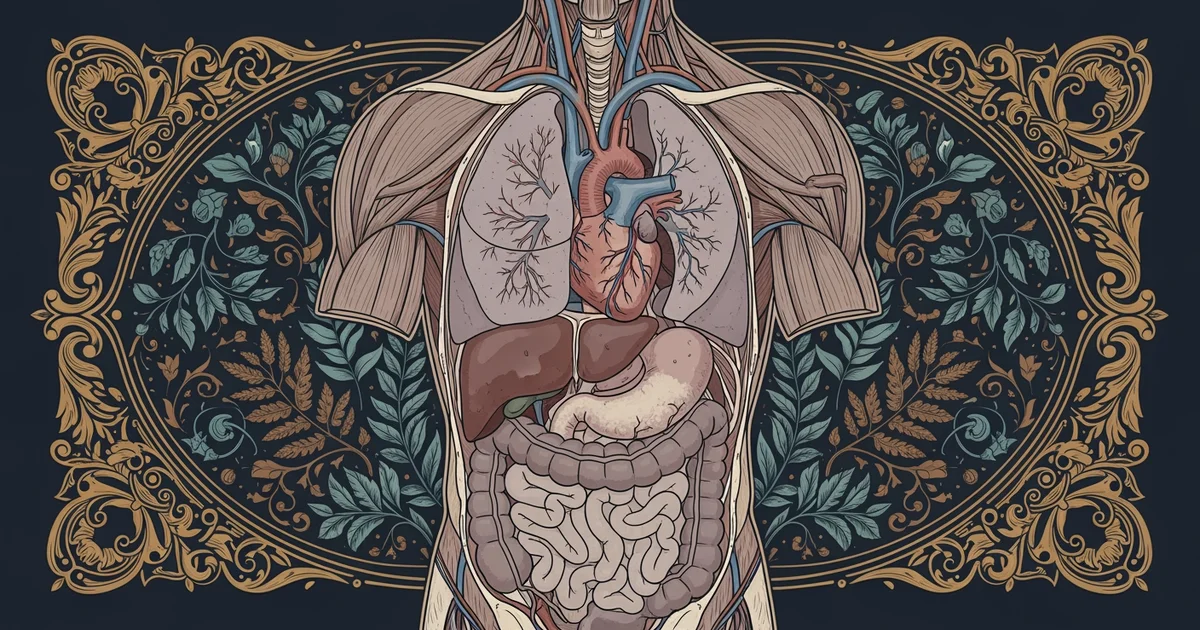
To move air into your lungs, your body must first change the pressure inside your chest cavity. This movement, known as pulmonary ventilation, relies on the physical expansion of your rib cage and the diaphragm. Think of your lungs like a pair of bellows used to stoke a fire in a cold room. When you pull the handles apart, the internal space grows larger and air rushes inside to fill the void. Your muscles work in the same way to create space for fresh air.
When the diaphragm muscle contracts, it moves downward toward your stomach area to create more room. This action lowers the pressure inside your chest, which forces air to flow into your lungs naturally. When the diaphragm relaxes, it moves back up and pushes the air out of your body. This rhythmic cycle ensures that your blood receives a steady supply of oxygen throughout the day. Your body adjusts this rate based on how much physical work you are currently doing.
Key term: Diaphragm — the large, dome-shaped muscle located below the lungs that controls the volume of the chest cavity during breathing.
This process is not just about muscle movement but also about the simple laws of physics. Gas molecules always move from areas of high pressure to areas of low pressure to find balance. By changing the size of your chest, you force these molecules to move in specific directions every second. This mechanical shift keeps your internal environment stable even when you are running or sleeping. The efficiency of this system depends on the health of your muscles and the elasticity of lung tissue.
Gas Exchange at the Alveolar Level
Once the air reaches the deepest parts of your lungs, it encounters tiny sacs called alveoli. These structures are covered in a web of thin blood vessels that allow for rapid gas movement. The walls of these sacs are incredibly thin, which makes the transfer of oxygen and carbon dioxide very fast. Oxygen moves from the air inside the sacs into your blood, while carbon dioxide moves out of the blood into the air.
| Feature | Function | Location |
|---|---|---|
| Alveoli | Gas exchange | Deep lung tissue |
| Diaphragm | Pressure control | Chest floor |
| Capillaries | Nutrient delivery | Surrounding alveoli |
This exchange is similar to a busy trade port where ships drop off cargo and pick up waste. The blood vessels act like ships arriving with loads of waste gas, which they swap for fresh oxygen. This happens millions of times each minute to ensure your cells never stop receiving the fuel they need. Efficiency remains high because the surface area of these sacs is massive, providing plenty of room for gas to pass through. Your body maintains this delicate balance to support every metabolic function required for your daily life.
Efficient breathing relies on muscular pressure changes that move air into the lungs to facilitate gas exchange at the microscopic level.
Now that we understand how air reaches the blood, how does the body process the nutrients found in our food?