
The Value of Biodiversity
Imagine your local grocery store suddenly losing every single item on the shelves except for plain white rice. You would quickly notice that your meals become boring, unhealthy, and impossible to sustain for any length of time. This same principle applies to the natural world, where a variety of life forms keeps our global systems running smoothly. We call this variety biodiversity, and it acts as a biological insurance policy for the entire planet. When we protect many different species, we ensure that nature can handle unexpected changes or environmental shocks without collapsing completely.
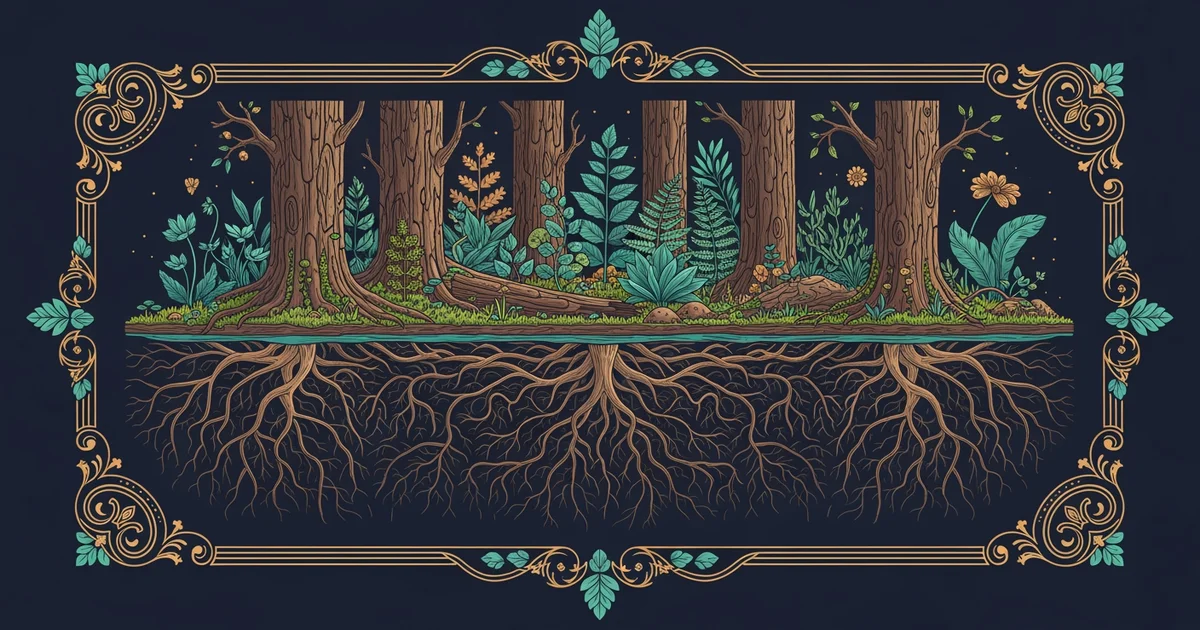
The Ecological Benefits of Diverse Species
Nature functions much like a complex economy where every living thing provides a specific service. Plants capture sunlight to create energy, while decomposers break down waste to recycle essential nutrients back into the soil. If we remove just one type of organism, the entire chain of production can slow down or stop entirely. High levels of biodiversity mean that many species perform similar roles, which creates a robust safety net. If a disease wipes out one type of grass, other species can step in to hold the soil together and keep the ecosystem functioning. This redundancy is the primary reason why diverse forests or reefs are so much more resilient than simple ones.
Key term: Resilience — the capacity of an ecosystem to recover quickly from disturbances like fires, storms, or disease outbreaks.
We can categorize the essential services provided by biodiversity into three specific areas that support human life and planetary health. These services are not just nice to have, but are fundamental requirements for our survival.
- Provisioning services include the raw materials we rely on every day, such as clean water, timber for building homes, and medicinal plants that treat human illnesses.
- Regulating services involve the natural processes that keep our climate stable, such as bees pollinating our food crops or wetlands filtering pollutants from our drinking water.
- Supporting services are the foundational processes that make life possible, such as the cycle of nutrients through the soil and the production of oxygen by ocean plants.
Why Variety Matters for Future Stability
Many people mistakenly believe that only large, charismatic animals like lions or whales matter for the health of our planet. In reality, the tiny organisms that live in the soil or the microscopic algae in the ocean are the true heavy lifters of the environment. These small creatures maintain the quality of the air we breathe and the fertility of the land where we grow our food. When we lose these species, we lose the invisible infrastructure that keeps the world habitable for humans. Protecting biodiversity is not just about saving pretty places, but about maintaining the functional tools that allow us to eat, drink, and breathe.
Think of biodiversity as a massive toolbox for a carpenter building a house. If you only own a single hammer, you can drive nails, but you cannot saw wood, measure distances, or screw in bolts. An ecosystem with many species is like a toolbox filled with every tool imaginable, allowing nature to solve any problem it encounters. When we protect diverse species, we are essentially keeping our toolbox fully stocked for the future. We never know which species might hold the key to curing a new disease or adapting to a changing climate. Keeping the full set of tools ensures we have the best chance to survive whatever challenges the future brings to our shared environment.
Biodiversity provides the essential services and functional resilience that allow natural systems to remain stable and support all life on Earth.
Understanding how these diverse populations interact leads us to the study of population dynamics.