
Future Research Directions
Imagine you are trying to photograph a tiny, fast-moving insect with a camera that only takes pictures once every hour. You might capture a blur or nothing at all, which is the exact problem scientists face when studying aerial objects that defy standard flight characteristics. We must move beyond casual sightings to create a structured, data-driven roadmap for future scientific exploration of these mysterious events.
Advancing Data Collection Methods
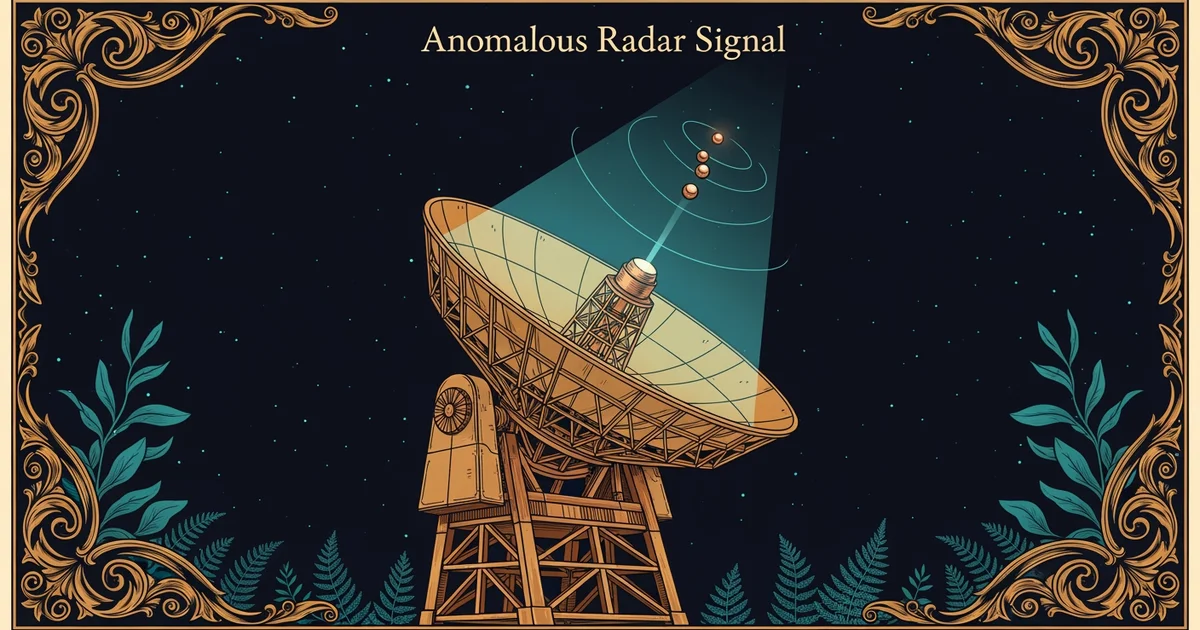
To build a better understanding, we need to transition from human-reported anecdotes to persistent, high-fidelity sensor arrays that monitor the sky around the clock. Think of this like upgrading from a manual, single-lens camera to a network of high-speed security cameras placed at every street corner in a city. This shift allows us to capture the full trajectory of an object rather than just a fleeting glimpse. By deploying infrared cameras, radar systems, and acoustic sensors in tandem, we can triangulate the precise location and speed of any unidentified craft. This creates a reliable dataset that allows us to distinguish between known atmospheric phenomena and truly anomalous physical objects that challenge our current physics models.
Key term: Sensor array — a collection of multiple electronic devices that work together to gather data from the environment simultaneously.
We must prioritize the integration of these systems into a unified, open-access platform for researchers worldwide. When data remains trapped in isolated silos, the scientific community cannot perform the rigorous cross-referencing required to validate observations. A centralized database would allow experts to apply machine learning algorithms to filter out common noise, such as weather balloons or drones. This process ensures that we focus our limited resources on the most significant anomalies, moving the study of these objects into the realm of mainstream physical science.
Establishing Standardized Research Protocols
Beyond just collecting data, the field requires a strict set of standardized protocols to ensure that all observations are comparable and reproducible. Researchers must agree on the specific metrics used to evaluate aerial flight, such as acceleration rates, thermal signatures, and electromagnetic interference levels. Without these shared standards, one team might define an object by its visual shape while another team focuses on its radar cross-section. This lack of common language prevents us from building a cohesive theory that explains how these objects function within our atmosphere. Establishing a universal measurement framework is the first step toward turning anecdotal reports into a rigorous, peer-validated body of knowledge.
| Research Component | Current Limitation | Proposed Improvement |
|---|---|---|
| Data Collection | Scattered reports | Persistent sensor grids |
| Analysis Method | Subjective accounts | Automated signal processing |
| Peer Validation | Limited access | Open-source data sharing |
We can compare this to the early days of meteorology, where weather tracking was once based on local rumors and inconsistent personal logs. It was only when scientists agreed on standardized thermometers and barometers that they could predict storms with any real accuracy. By applying this same level of discipline to aerial phenomena, we move away from speculation and toward the development of a predictive model. We must ask ourselves if our current tools are sufficient, or if we are simply looking for answers in the wrong parts of the electromagnetic spectrum. Integrating these methods will finally allow us to address the core challenge of why these objects seem to ignore the standard laws of aerodynamics that govern our own aircraft.
Scientific progress depends on replacing subjective human observation with persistent, standardized, and multi-modal sensor networks that provide verifiable evidence.
The next phase of this learning path will synthesize these research directions into a final framework for understanding aerial anomalies.