
Sensor Technology Basics
Imagine you are driving through a thick fog that hides the road ahead from your eyes. You rely on your car to tell you what is ahead because your own sight fails. Sensors work just like this when we track objects moving across the vast night sky. They act as artificial eyes that see things our human biology simply cannot detect on its own. By using specialized tools, we can peel back the darkness to find hidden aerial data.
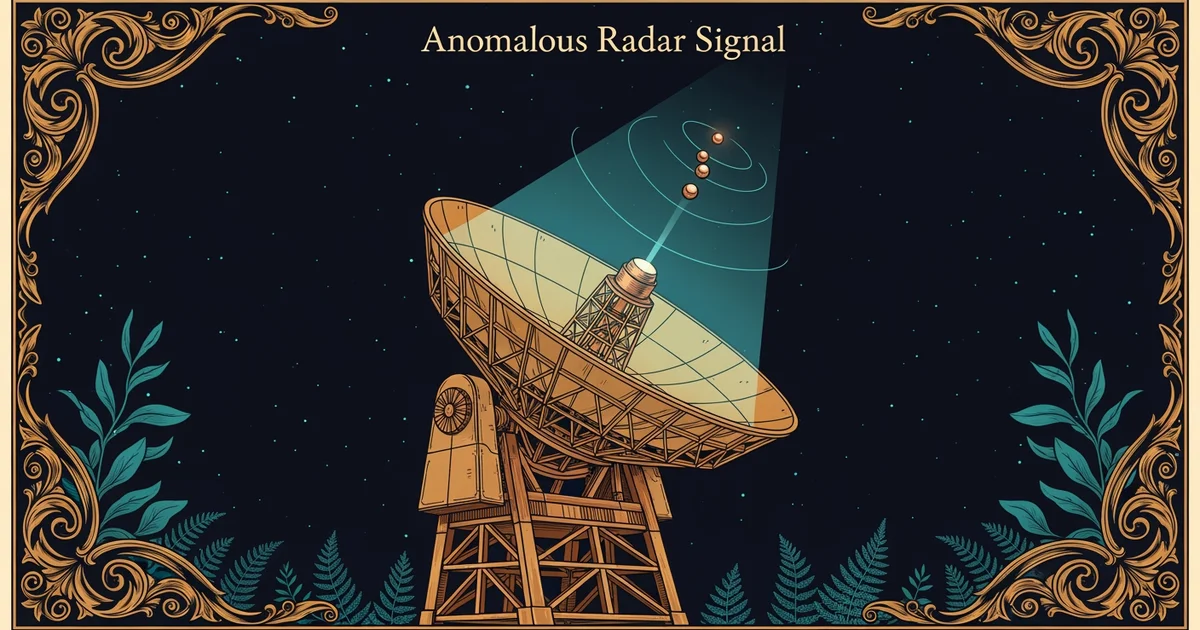
The Mechanics of Radar Systems
To understand how we track objects, we must first look at how radar functions in the sky. Radar sends out invisible pulses of energy that bounce off solid objects in their path. When these pulses hit a target, they return to the sensor with new information. This return signal tells us exactly where the object is located in space. It also reveals how fast the object moves relative to our ground station. Without these pulses, we would be blind to anything moving through the clouds. Think of it like shouting into a canyon to hear your own echo return. By measuring the time it takes for the sound to come back, you know how far away the canyon wall is standing. Radar uses this same timing trick to map out the positions of distant aerial vehicles.
Key term: Radar — a detection system that uses radio waves to determine the range, angle, or velocity of objects.
These systems are essential because they provide constant updates on target location and flight speed. We use radar to maintain a clear picture of the airspace above our heads every day. The data gathered helps us separate normal flight patterns from those that seem unusual or strange. When an object behaves in a way that defies physics, radar logs the movement for later study. This creates a reliable record that scientists can look at when they want to verify sightings.
Infrared Sensors and Thermal Imaging
While radar tracks physical position, infrared sensors look for the heat signatures left behind by objects. Every machine that moves through the air creates heat through friction or engine exhaust systems. Infrared sensors detect this invisible thermal radiation and turn it into a visible image. This allows us to track aircraft even when they do not show up on radar screens. It is like seeing the warm glow of a campfire on a dark, moonless night. The heat stands out against the cold background of the sky, making the target very easy to find. By combining these heat maps with radar data, we get a complete view of the object.
| Sensor Type | Primary Function | Detection Method | Best Use Case |
|---|---|---|---|
| Radar | Range and speed | Radio wave pulses | Tracking distance |
| Infrared | Thermal tracking | Heat signatures | Night visibility |
| Optical | Visual capture | Light reflection | Identifying shape |
Using these tools together creates a layered defense for monitoring the atmosphere around our planet. We can compare the radar path with the thermal trace to ensure the data is accurate. This process helps us remove errors caused by weather or sensor glitches in the hardware. If the radar shows an object, but the infrared sensor shows nothing at all, we know to investigate further. This rigorous cross-checking is the foundation of modern aerial study and space exploration research.
Scientific investigation of aerial objects relies on combining multiple sensor types to verify data points across different physical spectrums.
Next, we will explore how atmospheric conditions can trick these sensors and create optical illusions that mimic real objects.