
Propulsion Theory Analysis
Why do some aerial objects appear to move without any visible wings, rotors, or exhaust plumes? If we assume these objects follow physical laws, we must consider how they manipulate the surrounding space to achieve movement. Imagine a person trying to walk across a slippery floor by pushing against the air instead of the ground. This person would struggle to gain traction because the air provides very little resistance compared to a solid surface. Advanced propulsion systems might solve this by interacting with the environment in ways that standard jet engines simply cannot replicate. By shifting our focus from burning fuel to manipulating forces, we start to see how such movement could theoretically exist.
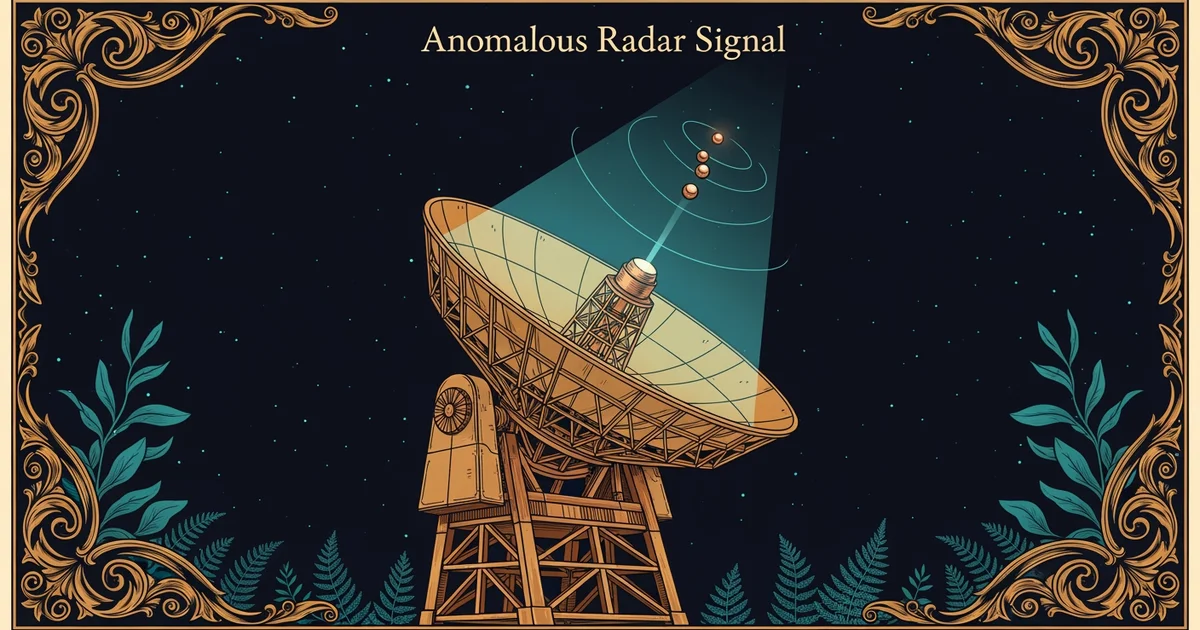
Theoretical Propulsion Mechanisms
When we look at high-speed transit, we often think about burning chemical fuel to create thrust. This method relies on Newton’s third law, which states that every action creates an equal and opposite reaction. However, an advanced system might use metric engineering to move the object by altering the space-time fabric around it. Instead of pushing against the air, the craft would contract space in front of itself and expand space behind it. This creates a moving wave that carries the object forward without needing traditional aerodynamic surfaces. This approach allows the craft to travel at high speeds without the friction that usually destroys objects moving through the atmosphere.
Key term: Metric engineering — a theoretical method of propulsion that involves manipulating the geometry of space-time to achieve movement without traditional thrust.
Another potential model involves the use of electromagnetic field propulsion to interact with the local environment. By generating a powerful field, the craft could potentially create a plasma sheath that reduces air resistance to almost zero. This plasma layer acts like a lubricant, allowing the craft to slice through the atmosphere at speeds that would otherwise cause a sonic boom. Because the air is pushed aside by the field, the object creates no turbulence or heat signatures. This explains why some observations show objects moving through the air with no visible heat or sound emission.
Comparing Potential Movement Models
We can compare these theoretical systems based on how they interact with the environment to achieve flight. The following table highlights the differences between traditional and advanced propulsion designs:
| System Type | Primary Mechanism | Interaction Method | Energy Output |
|---|---|---|---|
| Chemical Jet | Combustion | Pushing air back | High heat |
| Metric Drive | Space curvature | Modifying space | Exotic matter |
| Plasma Field | Magnetic fields | Reducing friction | Low emission |
These models show that the energy requirements for such flight are massive compared to modern aircraft. To achieve these effects, a craft would need a compact power source capable of outputting extreme levels of energy. The challenge for scientists is determining if such power sources can exist within a small frame. If a craft can manipulate gravity or space-time, it effectively bypasses the need for wings or engines as we know them today. This shift in logic forces us to rethink what constitutes a propulsion system in the modern age.
Consider the analogy of a surfer riding a wave in the ocean. The surfer does not create the wave, but instead positions themselves to utilize the energy that the wave already contains. In this scenario, the ocean represents the fabric of space-time, and the surfer represents the object moving through it. By tapping into the energy of the field, the craft moves effortlessly without needing its own internal fuel to generate the primary force. This perspective explains how objects could maintain high speeds while appearing to hover or change direction instantly. The object is simply moving along a path of least resistance within the manipulated space.
Advanced propulsion theory suggests that objects move by altering the local environment rather than pushing against it.
But what does it look like when we try to track these objects using multiple sensors at once?