
Power Generation Systems
Imagine you are running a remote cabin that must stay warm and bright while disconnected from the power grid. You need a reliable source of energy that works around the clock to keep your life-support systems running smoothly and safely. Space habitats operate much like this cabin, but they require much larger energy budgets to survive in the harsh vacuum of space. Engineers must balance the need for constant power against the weight and safety limits of their station designs.
Harnessing Solar and Nuclear Energy
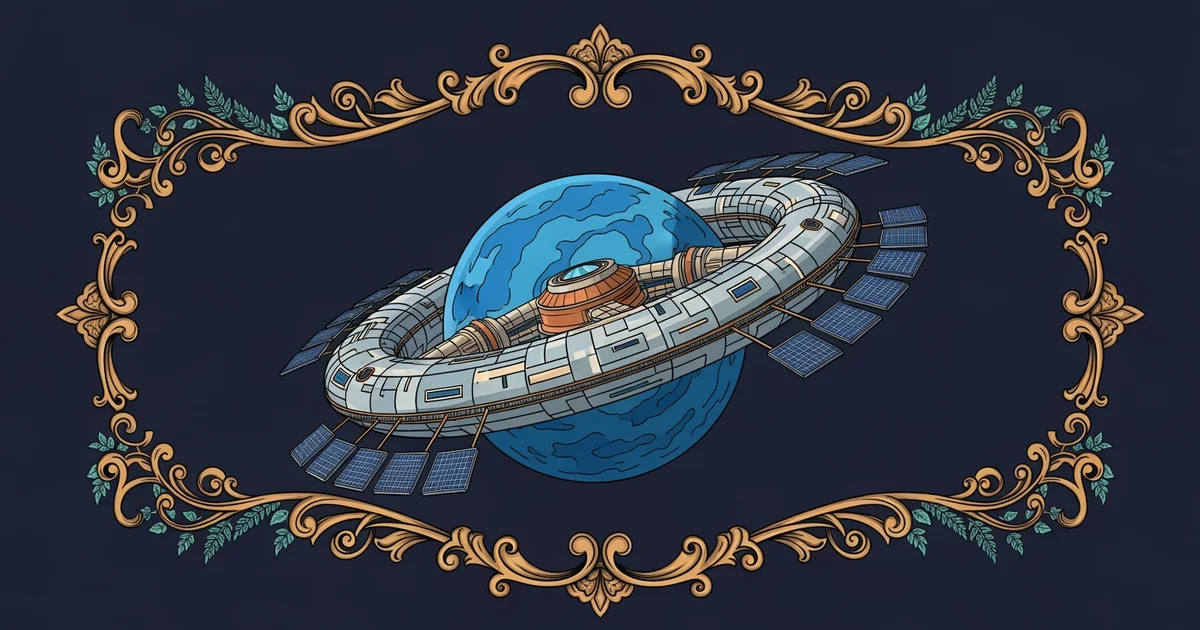
Space habitats primarily rely on two sources to generate the electricity required for daily operations. Solar power serves as the most common choice for stations orbiting near a star, as it captures light energy directly from the sun. Engineers use large solar arrays to convert these photons into usable electricity for the habitat. Nuclear power provides a more consistent alternative, as it does not depend on sunlight exposure. These systems use radioactive decay to generate heat, which then turns into electrical energy through complex thermal cycles. Designers often combine these two methods to ensure that the station maintains power during eclipses or when solar arrays face away from the sun.
Key term: Power Density — the amount of electrical power produced per unit of mass or volume within a specific energy system.
Choosing the right energy mix requires a careful look at the mission environment and the station size. Solar arrays are lightweight but require large surface areas to produce enough energy for a growing habitat. Nuclear reactors offer higher power density, meaning they provide more energy while taking up less physical space inside the station. Think of solar power like a small garden that needs constant sunlight to grow your food supply. Nuclear power acts like a large pantry stocked with canned goods that provide energy regardless of the weather outside your front door. Balancing these two sources ensures that the habitat remains functional during every phase of its mission life.
Evaluating System Performance Metrics
When engineers design these energy grids, they focus on how much power the station needs versus how much weight they can afford to launch. Every kilogram of equipment adds to the cost and complexity of the mission, so efficiency remains the primary goal for all hardware. The following table compares how solar and nuclear systems perform under typical station requirements for long-term human habitation in deep space.
| Feature | Solar Arrays | Nuclear Reactors | Hybrid Systems |
|---|---|---|---|
| Energy Source | Sunlight | Radioactive Decay | Combined Sources |
| Power Density | Low | High | Moderate |
| Reliability | Variable | Consistent | Very High |
| Deployment | Large surface | Compact core | Integrated unit |
Selecting the right system involves weighing these trade-offs against the specific needs of the crew and the station modules. If a habitat orbits far from a star, solar power becomes less effective because the intensity of light drops significantly with distance. In these cases, nuclear systems become the only viable option for sustaining life-support systems that require constant, high-level energy output. Engineers must also consider the maintenance needs of each system over many years of operation. Solar panels may suffer from degradation due to space radiation, while nuclear systems require shielding to protect the crew from harmful emissions. These design choices determine the long-term success of the habitat and the safety of everyone living within the station walls.
Reliable energy in space requires matching the power density of the generation system to the specific environmental constraints and mission requirements of the habitat.
Since our power grid is now established, how do we physically connect new habitat modules to the station without losing pressure or power?