
Free-Flow Design
Imagine wandering through a local park where paths wind naturally without forcing you into one specific direction. Retailers use a similar approach called free-flow design to create an open floor plan that encourages customers to explore merchandise at their own pace. Unlike rigid layouts that dictate every step, this style removes barriers to foster a relaxed shopping atmosphere. By choosing this path, store owners prioritize comfort and discovery over strict control of the customer journey. You feel less pressured to follow a set route and more inclined to linger near interesting displays. This freedom often leads to longer visits and higher levels of spontaneous purchasing behavior throughout the boutique.
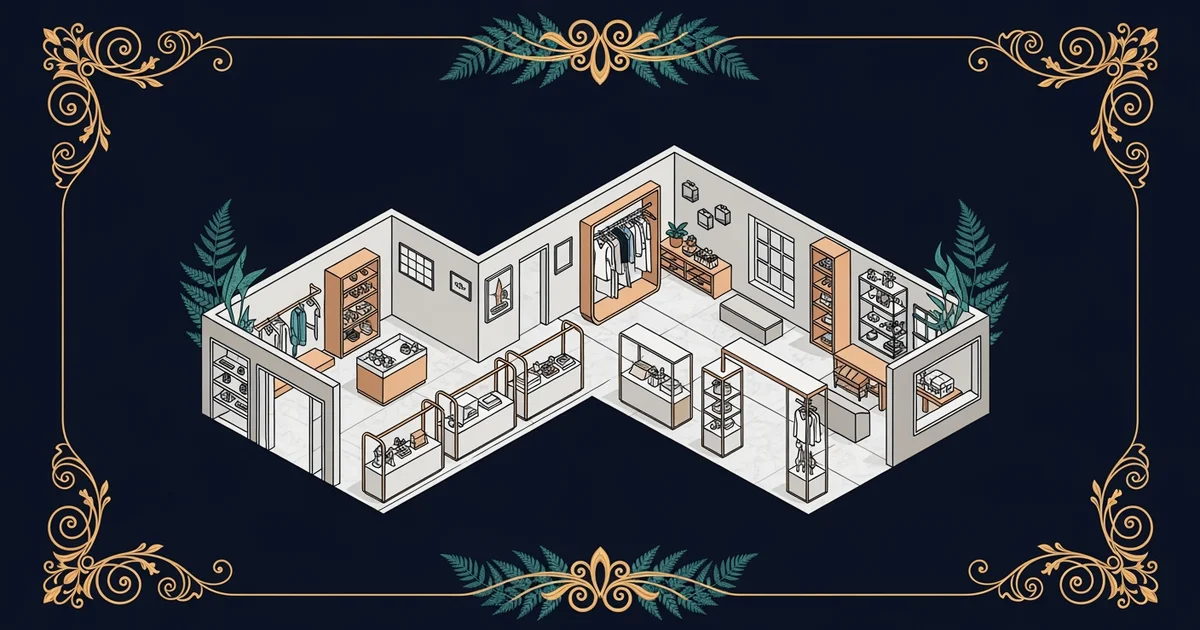
The Logic of Open Exploration
When store designers implement free-flow layouts, they treat the retail space like an open gallery rather than a maze. This strategy works well in smaller boutiques where the goal is to make every item feel accessible and special to the shopper. Imagine a river flowing around large boulders in a stream; the shoppers are the water and the product displays are the stones. Customers move around these islands of merchandise, naturally deviating from a straight line to inspect items that catch their eye. This fluid motion prevents the bottlenecking often seen in traditional grid layouts where shoppers must wait for others to finish browsing narrow aisles. Because the path is not strictly defined, the layout remains flexible enough to change whenever the store receives new inventory or seasonal goods.
Key term: Free-flow design — a flexible store layout strategy that allows customers to move freely between displays without being guided by a predetermined path.
Effective implementation of this design requires careful attention to the placement of focal points throughout the shop floor. Retailers should arrange fixtures in a way that creates natural sightlines, drawing the customer toward high-margin products without feeling forced. By placing smaller, eye-catching items in the center of the room, owners invite visitors to circle around and examine goods from multiple angles. This approach relies on the assumption that an unhurried customer will likely spend more money than one who feels rushed by a strict store map. To maintain this balance, store managers often use specific techniques to manage the flow of traffic:
- Grouping related items into distinct clusters that create natural stopping points for the browsing shopper.
- Utilizing varying fixture heights to keep the visual field open while still clearly defining different product categories.
- Leaving generous gaps between displays to ensure that multiple customers can browse simultaneously without feeling crowded or rushed.
Balancing Freedom and Sales Goals
While the open nature of this design invites exploration, retailers must still ensure that the layout supports their core business objectives. If the space is too empty, customers might feel lost or fail to notice the most important products in the store. Designers solve this by creating clear visual cues that guide the eye toward key collections while leaving the physical path open. This balance acts like a gentle nudge in a conversation; you are free to choose your next topic, but the speaker keeps the discussion focused on the main theme. The following table highlights how this design style compares to other common retail layouts in terms of customer experience and operational focus.
| Layout Style | Primary Goal | Customer Experience | Best For |
|---|---|---|---|
| Free-Flow | Discovery | Relaxed and fluid | Boutiques |
| Grid | Efficiency | Fast and logical | Groceries |
| Loop | Exposure | Controlled journey | Department |
By comparing these styles, you can see why free-flow design excels at building a personal connection between the shopper and the brand. It avoids the clinical, high-speed nature of a grocery store in favor of a slower, more deliberate pace. This environment rewards the customer for taking their time, which directly supports the goal of increasing the total value of their shopping trip. As you continue to study retail architecture, you will see how these subtle design choices dictate the success of physical stores in a digital age. The key is knowing how to guide the shopper through the space without ever making them feel like a prisoner of the floor plan.
A successful free-flow design empowers customers to discover products naturally by removing rigid barriers and creating an inviting, open environment for exploration.
The next Station introduces visual merchandising basics, which determines how specific product displays influence the shopping behavior within these open floor plans.