
Stress and Strain Relationships
Imagine you are pulling a thick rubber band until it snaps in your hands. You feel the material resisting your strength while it stretches and changes its original shape. This physical reaction is exactly how structural engineers view every beam inside a skyscraper. Materials do not just sit there; they constantly push back against the forces we apply to them. Understanding this push and pull helps us build structures that stand for centuries without failing under pressure.
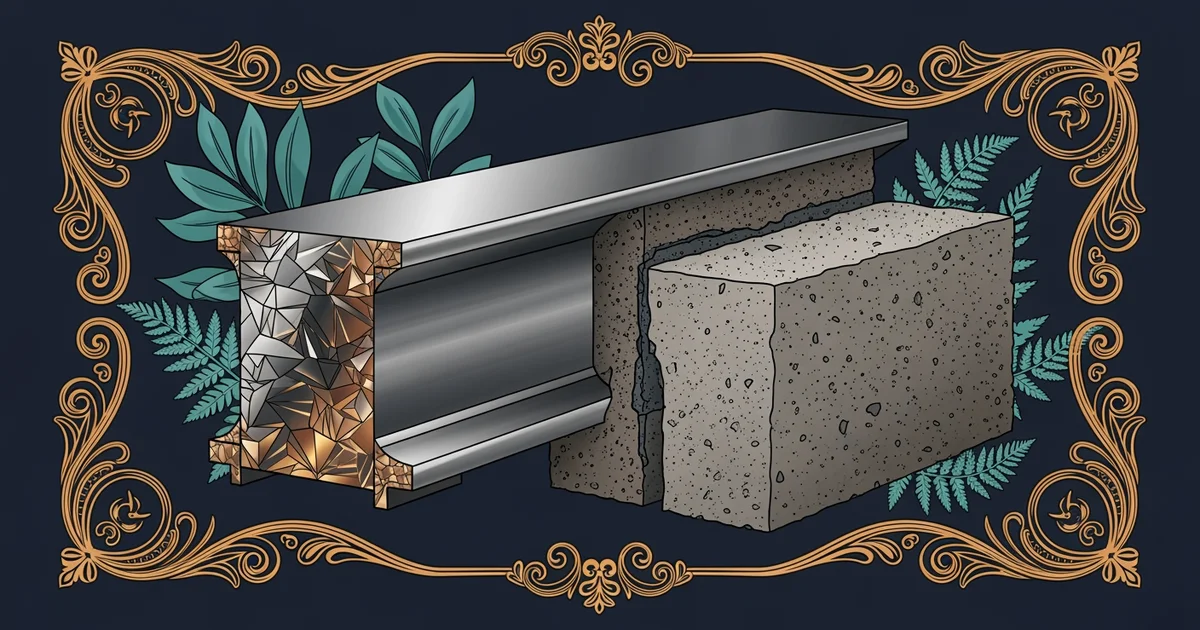
The Mechanics of Internal Resistance
When we apply a force to a solid object, the material experiences stress, which is the internal force acting across a specific area. Think of this like a busy highway where cars represent the internal force and the road width represents the area. If too many cars crowd into a narrow lane, the system becomes unstable and may eventually collapse. Engineers calculate this value to ensure that the internal load never exceeds the material limits. By keeping stress levels low, we ensure that the building remains safe for everyone inside.
Key term: Stress — the internal force applied to a material per unit of surface area that causes deformation.
While stress measures the intensity of the load, strain describes the actual physical deformation that occurs. If you stretch a metal rod, the strain is the change in length compared to its starting size. This relationship is like a budget for a project where stress is the cost and strain is the resulting debt. If you spend too much money, the debt becomes unmanageable and the structure fails. We must monitor both values to predict how a material behaves before it ever reaches a breaking point.
Analyzing Material Behavior Patterns
To see how these two concepts interact, engineers use a graph that plots stress against strain. This visual tool reveals the personality of a material under different levels of physical intensity. Most metals start by stretching in a predictable way that allows them to return to their original shape. This phase is called elastic deformation, which acts like a spring that bounces back when you stop pulling it. If you pull too hard, the material enters a plastic phase where it stays stretched out forever.
We can compare how different common materials react when we subject them to increasing amounts of force:
| Material | Response to Stress | Deformation Type | Primary Use |
|---|---|---|---|
| Steel | High resistance | Elastic then plastic | Building frames |
| Glass | Very brittle | Elastic only | Window panes |
| Rubber | Low resistance | Elastic only | Shock absorption |
These patterns help us choose the right material for every specific part of a design. For instance, we need steel in beams because it can stretch slightly without failing during a storm. Glass would be a poor choice for a beam because it snaps without any warning. Understanding these distinct reactions keeps our bridges from cracking when the wind blows or the traffic gets heavy.
When materials reach their limit, they undergo a permanent change that weakens the entire structural system. This transition happens when the internal bonds between atoms begin to slip past one another permanently. At this critical point, the material loses its ability to return to its original form. Designing with this knowledge allows us to use materials in their safest range. We prefer to keep all structural components well within the elastic zone to ensure long-term durability. By following these rules, we turn raw metal into reliable skeletons for our modern cities.
Reliable structural design depends on balancing internal resistance with predictable physical deformation to prevent permanent damage.
But what does it look like when we apply heat to these same material structures?
Want this with sources you can check?
Premium Learning Paths for Architecture & Design are researched against open-access libraries — PubMed, arXiv, government databases, and more — with their distinctive claims cited to real sources and independently checked.
See what Premium includes