
Ceramics and Glass Properties
Imagine you drop a heavy ceramic plate onto a hard kitchen tile floor. You expect it to shatter into small pieces, but a metal pan would likely just dent or bend. This difference shows how these materials react when they face sudden force or intense pressure. While metals can stretch and deform to absorb energy, ceramics and glass possess a rigid structure that prevents such movement. This lack of flexibility makes them incredibly strong in some ways but very vulnerable in others. Understanding why they fail so suddenly is essential for anyone interested in building safe, modern structures.
The Atomic Basis of Brittleness
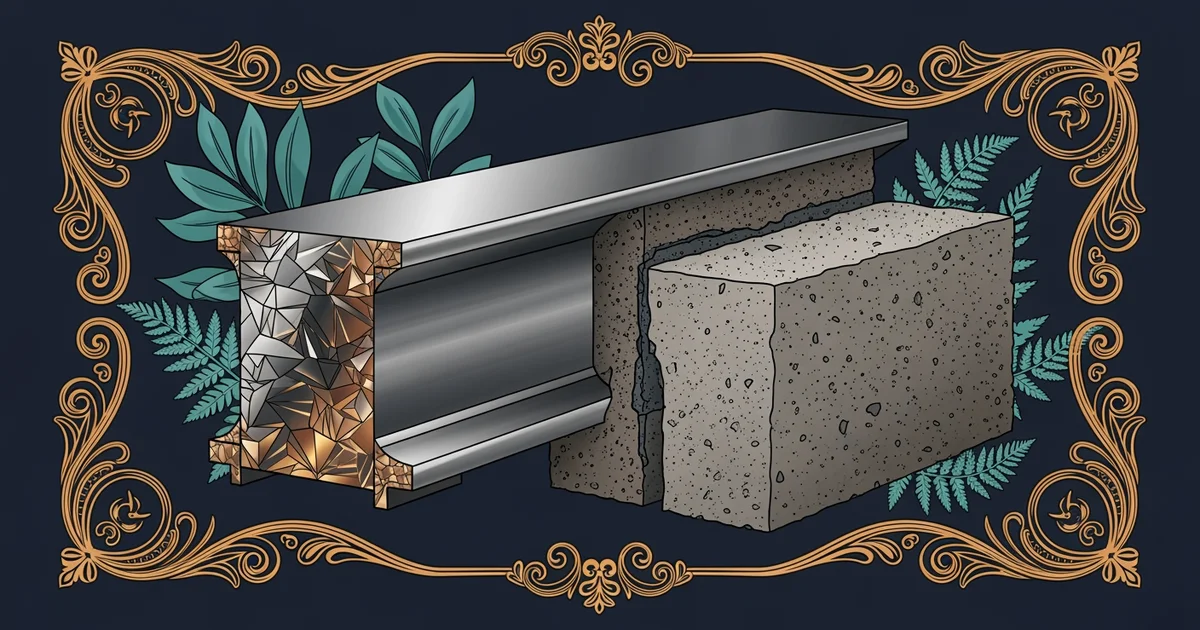
To understand why these materials fail, we must look at their internal atomic bonds. In a metal, atoms can slide past each other because their bonds are flexible and non-directional. Ceramics and glass contain covalent bonds or ionic bonds that lock every atom into a fixed position. Because these bonds are so rigid, the atoms cannot shift to relieve stress when an object hits them. Think of this like a rigid stone wall versus a chain-link fence. The fence can bend and sway when wind hits it, but the stone wall must either stay perfectly still or crack under the pressure. This internal rigidity is the primary reason why ceramics and glass are classified as brittle materials.
Key term: Brittleness — the tendency of a material to fracture or break without significant deformation when subjected to force.
When you apply force to these materials, the energy has nowhere to go. It cannot be absorbed by bending, so it travels through the material looking for a path. This energy concentrates at microscopic flaws, such as tiny scratches or bubbles inside the glass. Once the stress at one of these flaws exceeds the strength of the bonds, a crack forms instantly. This crack then races through the material at the speed of sound. Because the material cannot deform, it has no way to stop the crack from growing. This process leads to the sudden, explosive failure that we often see when a glass window breaks.
Managing Surface Stress and Failure
Engineers must account for these failure points when they design buildings using glass or ceramic tiles. Since cracks almost always start at the surface, keeping the surface smooth is a vital safety measure. Many modern glass products undergo a special cooling process to create internal tension. This process, known as tempering, forces the outer surface into a state of compression. Imagine a crowd of people pushing inward on a door; it becomes much harder for anyone to push their way out. By keeping the surface compressed, the glass becomes much more resistant to the tiny scratches that would normally cause a break.
| Material Property | Ceramic | Glass | Metal |
|---|---|---|---|
| Bond Type | Ionic/Covalent | Amorphous | Metallic |
| Flexibility | None | Very Low | High |
| Failure Mode | Brittle | Brittle | Ductile |
This table highlights the fundamental differences in how these common construction materials handle external stress. While ceramics and glass share similar brittle failure modes, their internal structures differ significantly. Glass is an amorphous solid, meaning its atoms are arranged in a disordered, liquid-like state. Ceramics are typically crystalline, with atoms arranged in highly ordered, repeating patterns. Despite these structural differences, both materials rely on surface integrity to maintain their overall strength. If the surface of either material is compromised by a deep scratch, the internal stress balance shifts, making the entire piece likely to fail under even minor pressure.
Ceramics and glass fail because their rigid atomic bonds prevent the material from bending to absorb energy, which causes cracks to propagate instantly from surface flaws.
The next Station introduces polymer science, which determines how flexible materials like plastics and rubbers change the way we construct modern buildings.