
Historical Material Evolution
Imagine standing before a massive stone wall that has survived for thousands of years without any modern glue. You might wonder how ancient builders achieved such structural permanence while our contemporary homes often require major repairs after only a few decades of heavy use.
The Evolution of Structural Integrity
Early builders relied on masonry techniques that prioritized sheer mass and gravity to maintain stability. By stacking heavy stones or sun-dried bricks, these architects created structures that resisted environmental forces through weight alone. This approach was reliable but limited by the physical size of the materials and the labor required to move them. Builders had to account for the natural limitations of stone, which is excellent at resisting pressure but prone to cracking under tension. They solved this by designing thick foundations and arches that channeled weight toward the ground. This method was much like an experienced traveler who carries only what they can physically manage, ensuring they never overextend their own limited capacity for weight-bearing tasks.
Key term: Masonry — the art of building structures from individual units like stone, brick, or concrete blocks that are often bound together by mortar.
As civilizations advanced, the need for taller and more complex buildings pushed engineers to look beyond simple stacking. They began to experiment with materials that offered greater strength-to-weight ratios, leading to the development of early lime-based mortars. These binders allowed for more precise construction, yet they still lacked the internal reinforcement needed for modern architectural demands. The transition from simple stacking to bonded masonry represented a major shift in human capability. It allowed for the creation of vast interior spaces that were previously impossible to achieve with raw stone alone. This shift mirrors an investor moving from a simple savings account into a diversified portfolio, where the goal is to maximize potential growth while managing inherent risks through smarter, more flexible allocation strategies.
Modern Synthetic Composites and Performance
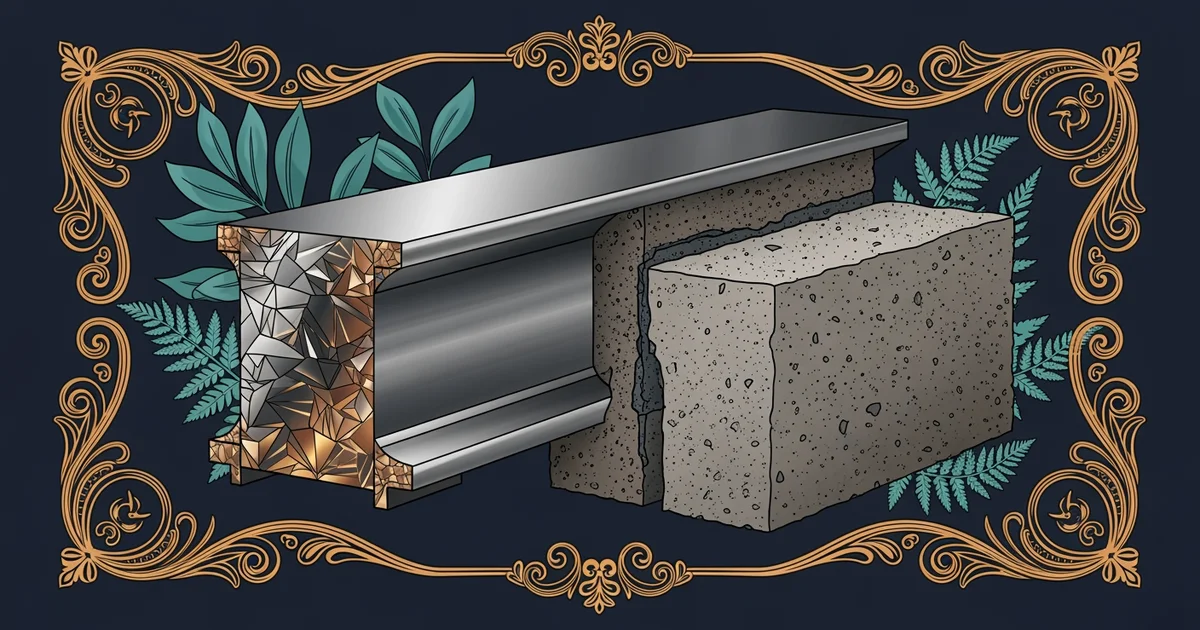
Modern construction relies heavily on synthetic composites that combine different materials to achieve properties impossible for natural substances. By embedding steel bars inside concrete, engineers create a material that handles both the crushing force of gravity and the pulling force of wind or seismic activity. This synergy allows for the soaring skyscrapers that define our current urban landscapes. These materials are engineered at a molecular level to respond to specific stresses, ensuring that buildings remain safe even during extreme weather conditions. The following table highlights the differences between these two eras of construction materials:
| Feature | Ancient Masonry | Modern Composites |
|---|---|---|
| Primary Strength | Compression resistance | Balanced tension and compression |
| Material Basis | Natural stone or clay | Engineered steel and polymers |
| Structural Logic | Mass and gravity | Internal reinforcement networks |
| Flexibility | Rigid and brittle | Dynamic and energy absorbent |
We must understand these differences to grasp why our modern world feels so different from the past. The evolution from natural stone to synthetic mixtures reflects our growing desire to control the environment. We no longer just adapt to the land, but we actively reshape it to suit our needs. This change brings both incredible possibilities and new responsibilities, as we must now maintain complex systems that are far more sensitive to degradation than ancient, solid stone walls.
- Material Selection: Ancient builders chose stone for its durability under compression, while modern designers select steel for its ability to stretch without snapping.
- Energy Distribution: Old masonry relies on the downward force of gravity, whereas modern composites distribute loads across an internal skeleton of interconnected parts.
- Environmental Adaptation: Modern materials are designed to flex during events like earthquakes, which prevents the catastrophic cracking that often destroyed older, rigid stone structures.
This ongoing progression shows that our safety depends on how well we balance the raw strength of materials with the smart geometry of our designs. We are constantly searching for new ways to build that are both stronger and more efficient than what came before us.
Humanity has transitioned from using massive, natural materials that rely on weight to using engineered, flexible composites that actively manage structural stress.
The next step in our journey will explore how these diverse materials are classified and selected for specific engineering challenges.