
Weaving Patterns Defined
Imagine you are looking at a woven fabric and wondering how the threads stay together. You see a grid of crossing lines that form the structure of your favorite shirt. This simple grid is the foundation of almost every textile you touch today. Understanding how fibers connect helps you see the hidden engineering behind your own clothes.
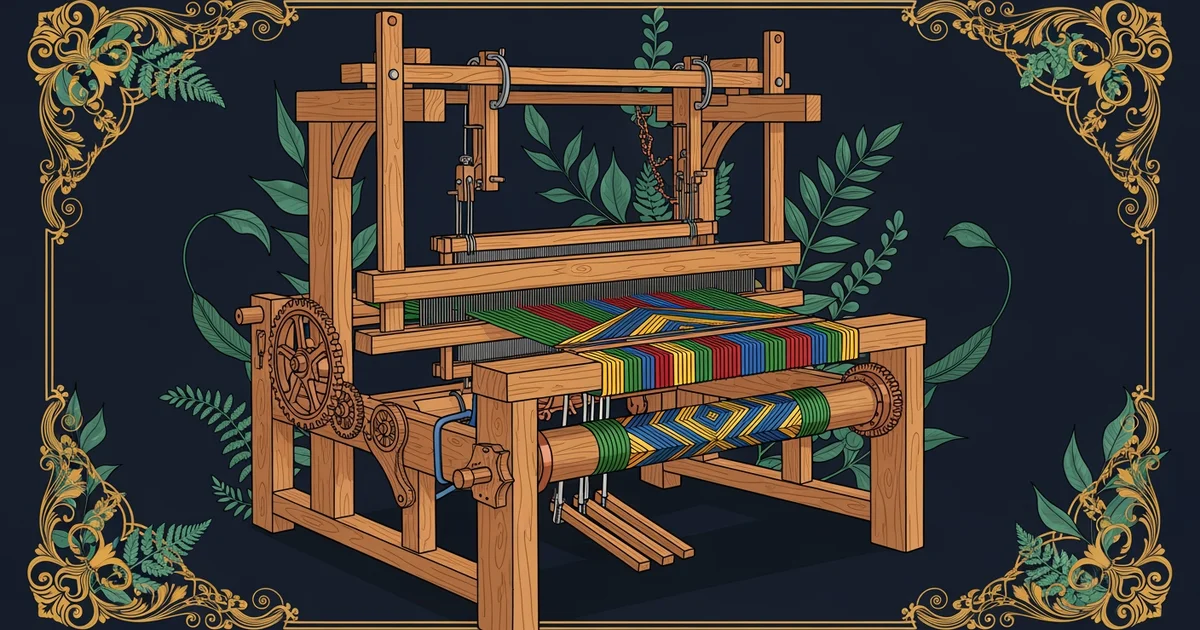
The Mechanics of Weaving Structures
Every woven piece of fabric begins with two sets of threads that cross at right angles. The warp threads run vertically along the length of the fabric during the weaving process. The weft threads travel horizontally, moving over and under the vertical warp threads to lock them in place. Think of this process like building a stone wall where you must alternate the bricks to keep the structure stable. If you only stacked bricks in straight columns, the wall would tumble over with the slightest push. Weaving works the same way because the interlacing action prevents the threads from sliding apart during daily wear.
Key term: Weaving — the craft of interlacing two sets of threads at right angles to create a stable fabric surface.
When we look at how these threads interlace, we find two primary ways to create patterns. A plain weave is the simplest method where the weft thread goes over one warp thread and then under the next. This creates a balanced grid that is very strong and easy to produce on a basic loom. It serves as the standard for many common items like bed sheets or simple cotton canvas bags. Because the threads cross frequently, the fabric usually stays flat and resists shifting. This makes it an ideal choice for clothing that needs to hold its shape over long periods of time.
Comparing Weave Styles
Moving beyond the plain weave, we find the twill weave, which creates a distinct diagonal pattern on the surface. In this style, the weft thread skips over two or more warp threads before it goes under one. This skipping action creates a floating segment of thread that gives the fabric a unique texture and drape. You can see this effect clearly in denim jeans, where the diagonal lines are a hallmark of the sturdy construction. Because the threads have more room to move, twill fabrics are often softer and more flexible than plain woven materials.
| Weave Type | Interlacing Pattern | Surface Appearance | Typical Use Case |
|---|---|---|---|
| Plain | One over, one under | Flat and uniform | Cotton shirts |
| Twill | Over two, under one | Diagonal lines | Denim jeans |
| Satin | Over four, under one | Smooth and shiny | Evening gowns |
These patterns change how a fabric feels and how it behaves when you move. The choice of weave dictates the durability, the weight, and the overall look of the final product. Designers select these patterns based on the intended purpose of the textile, whether they need rugged strength or elegant flow. By adjusting the number of threads skipped, a weaver can change the entire character of the fabric without changing the fiber itself. This simple mechanical adjustment is the secret language of the textile arts industry.
Understanding these structures allows you to appreciate the complexity hidden in plain sight. You can now identify why some fabrics feel stiff while others feel fluid and soft. Each pattern serves a specific function that improves the quality of the finished garment. As you learn more about these techniques, you will better understand the history of human craft. The way we arrange our threads defines the strength of our world.
The structural integrity of any fabric depends on the specific sequence of interlacing warp and weft threads.
The next Station introduces knitting vs crocheting, which determines how single-thread loops create stretchy fabrics.