
Pattern Recognition Tools
Imagine sorting thousands of unsorted digital photos into neat folders based on faces and locations. You rely on visual cues to group these images without needing a specific label for every person. Computers perform this same task using mathematical rules to find hidden groups within vast datasets. This process allows researchers to identify social clusters without knowing the labels beforehand. When we apply these methods to human behavior, we unlock new ways to understand how groups form and interact.
Understanding Data Clustering
When researchers analyze large amounts of social data, they often face a sea of unorganized information. They use clustering to identify natural groupings within a dataset based on shared traits or behaviors. Think of this like a shopper in a large grocery store who groups items by their aisles. You place produce in one section and dairy in another because they share common physical characteristics. Computers look for similar patterns in digital data points to create these logical groups. This approach helps experts find hidden structures in society that are otherwise invisible to the human eye.
Key term: Clustering — the process of grouping data points so that items in the same group are more similar to each other than to others.
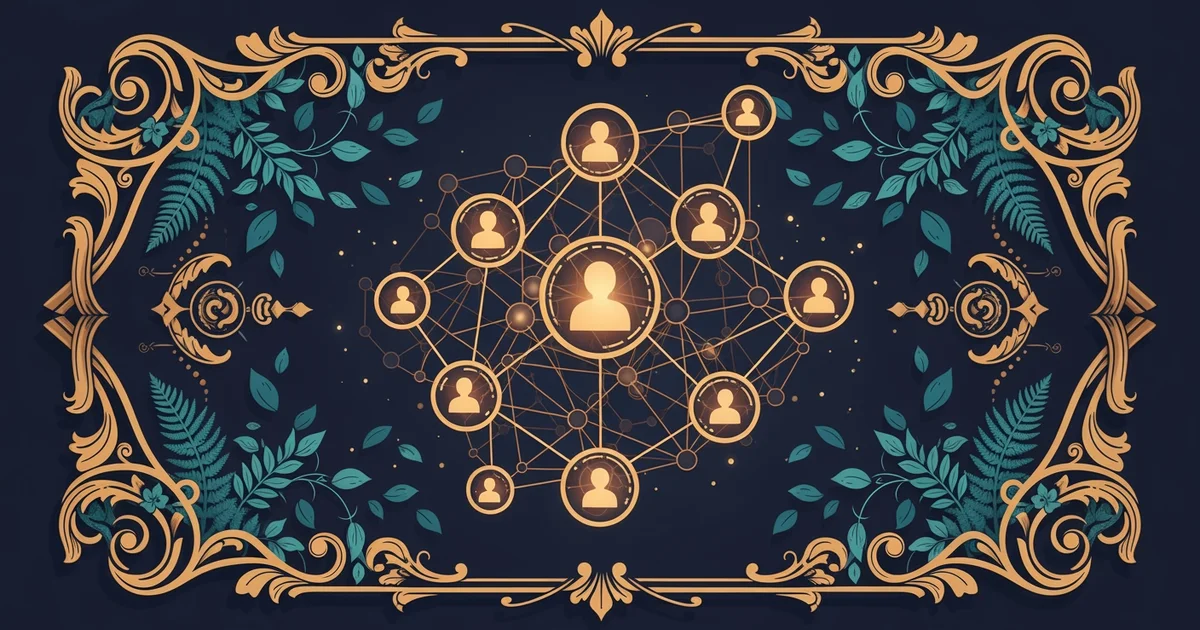
This method functions by measuring the distance between different data points in a virtual space. If two users show similar voting patterns, the computer places them closer together on a map. When many users cluster in one area, the system identifies a specific social group or trend. This reveals how people align themselves based on shared interests or habits. By mapping these distances, we gain a clear picture of how individuals connect within a larger population. It provides a visual map of complex social landscapes that would take years to chart manually.
Applying Pattern Recognition Tools
Once the computer organizes these points, researchers must interpret what the clusters actually represent in the real world. They look for common features among the members of a group to understand their collective behavior. A group might represent people who share specific political views or similar online shopping habits. Understanding these clusters helps us see how social influence spreads through different segments of the population. This mechanical process of sorting data forms the backbone of modern sociological research and predictive modeling.
To effectively manage these complex data sets, researchers rely on specific tools that automate the identification process. These tools allow for consistent and repeatable analysis of social dynamics across different time periods:
- K-means algorithms partition data into a set number of groups by calculating the average position of all points within each cluster to ensure maximum separation.
- Hierarchical clustering builds a tree-like structure of groups by nesting smaller clusters inside larger ones, which helps researchers see how social groups evolve over time.
- Density-based grouping identifies clusters by finding areas where data points are packed tightly together, which is useful for filtering out random noise from meaningful patterns.
These tools provide a systematic way to turn raw numbers into actionable social insights. By using these methods, we can observe how different social groups interact or diverge during major events. The ability to group behaviors accurately allows us to predict potential changes in societal trends before they fully manifest. It transforms the way we view human interaction by providing a mathematical lens for our social world. We no longer have to guess how society is changing because the data shows us the patterns directly. This shift toward data-driven analysis ensures that our understanding of society remains grounded in objective evidence rather than mere speculation.
Clustering reveals hidden social structures by grouping similar behaviors together based on mathematical patterns found within large datasets.
But what does it look like when these tools are used to measure the growing divide between different groups?