
Agent Based Modeling
Imagine a bustling city street where every single person follows their own simple set of rules. You might wonder how these individual choices combine to create the complex patterns we see in society.
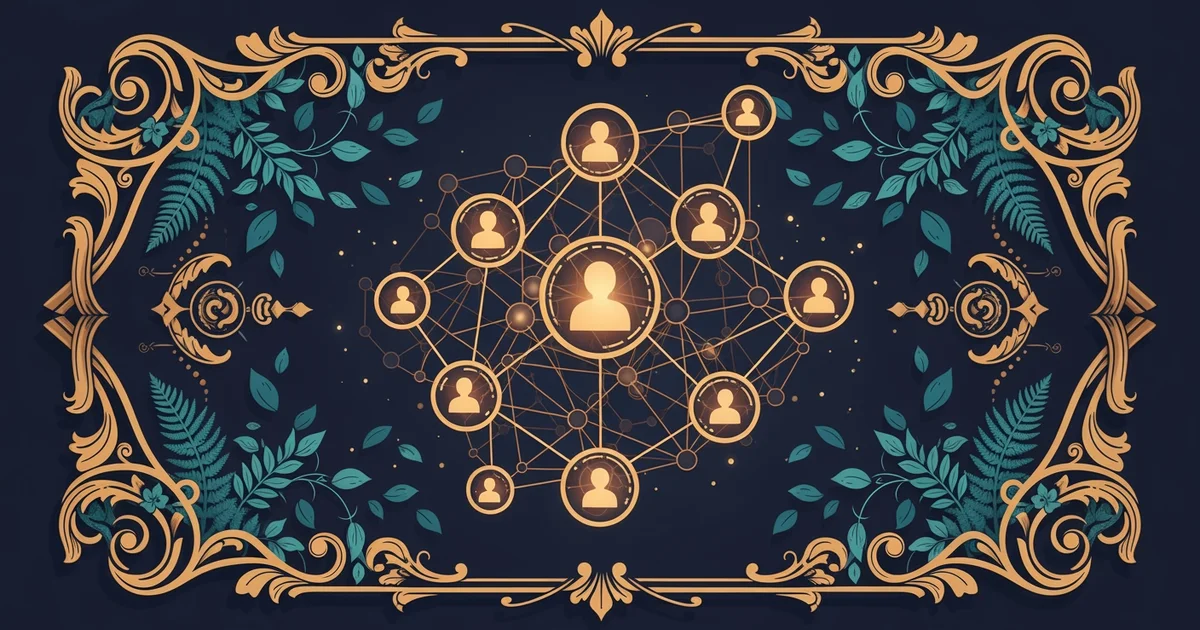
Understanding Agent Based Modeling
Agent Based Modeling is a powerful method used by social scientists to simulate complex human systems. It works by creating digital environments populated by individual entities called agents. Each agent acts according to a specific set of programmed instructions that dictate their behavior. When these agents interact with each other and their surroundings, they produce emergent patterns that often surprise the researchers. This approach allows us to observe how macro-level social trends arise from micro-level human decisions. Think of it like a flock of birds moving through the sky. No single bird leads the entire group, yet they move in perfect harmony. Each bird simply follows the bird next to it while avoiding collisions. When hundreds of agents follow similar local rules in a simulation, global structures like traffic jams or neighborhood segregation begin to appear on the screen.
Key term: Agent Based Modeling — a computer simulation technique that models the actions and interactions of autonomous individuals to assess their effects on the system as a whole.
To build a functional simulation, researchers must carefully define the environment and the rules for every agent. The process requires a structured approach to ensure the model reflects reality accurately.
- Define the agents by assigning them specific traits like wealth, location, or political preference.
- Establish the interaction rules that govern how agents change their state based on others.
- Run the simulation over many time steps to observe how the overall system evolves.
- Analyze the collected data to see if the model matches observed patterns in real societies.
This systematic setup helps scientists test theories without needing to conduct expensive or slow real-world experiments.
Applying Simulations to Social Systems
Once the simulation begins, the agents start interacting within the digital space. These interactions often lead to unexpected outcomes that provide deep insights into human behavior. For example, a model might show that even if individuals only have a slight preference for living near people like themselves, total segregation can occur over time. This insight demonstrates that large-scale social issues do not always require malicious intent from individuals. Instead, these patterns emerge from the cumulative effect of many small, independent choices made by people every day. By adjusting the rules, researchers can test how different policies might change the final outcome. This flexibility makes the method an essential tool for studying topics ranging from urban planning to the spread of ideas.
| Feature | Description of Use | Benefit to Researcher |
|---|---|---|
| Agents | Individual decision makers | Allows for diverse behavior |
| Environment | The digital space | Provides context for movement |
| Rules | Logic for interaction | Enables testing of "what if" scenarios |
| Emergence | The final system pattern | Reveals hidden social dynamics |
This table illustrates how the components of a model work together to produce meaningful results. By changing the rules in the table, researchers can see how different social policies might influence the overall population. The simulation acts as a laboratory where we can safely experiment with complex human systems. This helps us understand why societies function the way they do and how they might change in the future.
Complex social patterns emerge from the simple, local interactions of many independent individuals within a defined system.
The next Station introduces Social Network Analysis, which determines how those individual connections form the structural bridges that hold our society together.