
Modern Physics Frontiers
Modern physics reveals that light and matter behave in ways that defy our daily intuition. We once believed that particles and waves were distinct entities, yet quantum experiments prove they are two sides of the same coin. This dual nature forces us to rethink how forces interact across the vast scales of our universe. When we look at the smallest levels of reality, the smooth fields of classical electromagnetism begin to shimmer with hidden, granular energy. Researchers now struggle to reconcile these tiny fluctuations with the massive gravitational forces that shape the stars above us.
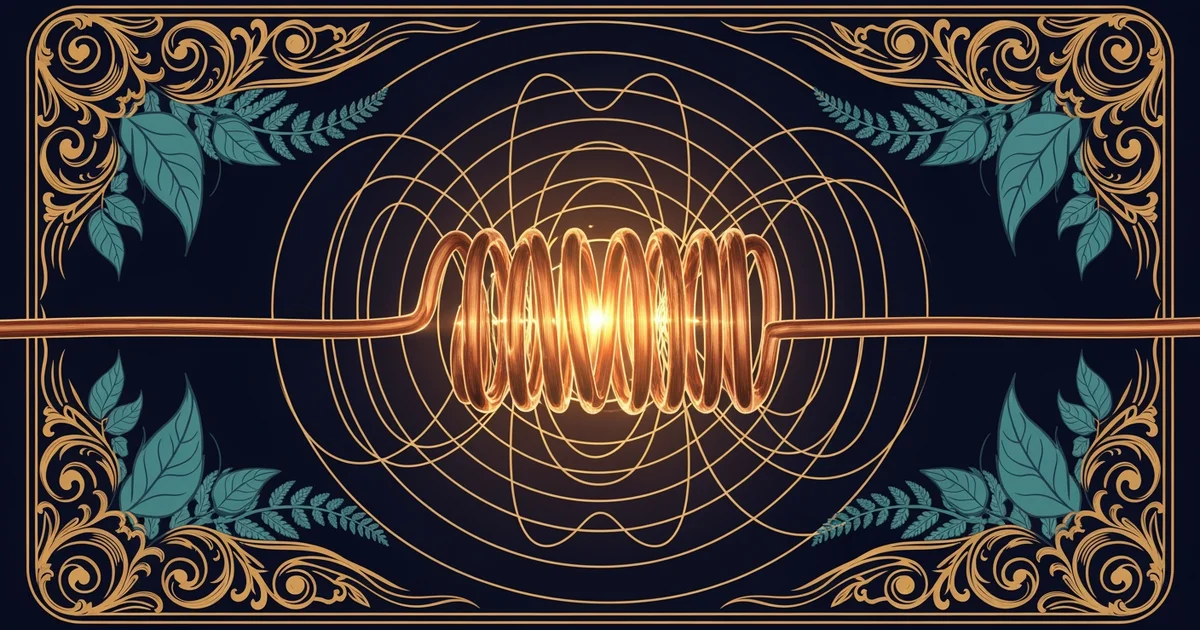
Exploring the Quantum Field
To understand the modern frontier, we must revisit the Quantum Electrodynamics framework that describes how light interacts with charged matter. This field suggests that empty space is not truly empty but filled with a fluctuating sea of virtual particles. Imagine the vacuum of space as a busy stock market floor where trades happen in milliseconds. These virtual particles pop into existence and vanish before we can directly measure them, yet their collective influence shapes the physical constants of our world. By calculating these tiny effects, scientists can predict the behavior of electrons with incredible precision.
Key term: Quantum Electrodynamics — the study of how light and matter interact through the exchange of photons within a quantum field.
This theory builds upon the earlier work of Maxwell, who first unified electricity and magnetism into a single set of equations. While Maxwell described fields as smooth, continuous waves, the quantum approach treats these fields as being composed of discrete packets called photons. This shift is like moving from a smooth ramp to a staircase, where energy can only exist at specific, defined levels. The tension between these two views defines the current research in particle physics. Scientists are constantly testing these limits to see if the staircase model holds up under extreme conditions.
Challenges in Modern Unified Theory
As we push toward a more complete understanding, we encounter the Standard Model of physics, which categorizes all known subatomic particles. This model successfully integrates three of the four fundamental forces, but gravity remains the stubborn outsider that refuses to fit into the pattern. The following table summarizes the four forces that govern every interaction in our observable universe today:
| Force | Primary Carrier | Range | Relative Strength |
|---|---|---|---|
| Electromagnetic | Photon | Infinite | Strong |
| Strong Nuclear | Gluon | Very Short | Very Strong |
| Weak Nuclear | W boson | Short | Weak |
| Gravity | Graviton (hypothetical) | Infinite | Extremely Weak |
Researchers are currently investigating whether these forces might merge into one single force at extremely high energy levels. This pursuit of a unified theory is similar to trying to find a single root cause for every different weather pattern on Earth. If we could prove that these forces are just different expressions of one underlying law, we would finally understand the blueprint of the cosmos. Current research focuses on high-energy collisions to simulate the conditions of the early universe. These experiments help us determine if the forces were once identical before the universe cooled down and expanded.
Many questions remain unanswered regarding the nature of dark matter and its interaction with electromagnetic fields. We know that dark matter exerts a gravitational pull, but it does not appear to emit or reflect light. This means our current electromagnetic tools are essentially blind to the most abundant form of matter in space. Solving this mystery will likely require a new branch of physics that goes beyond our current understanding of particles. We are currently standing at a threshold where our existing models must evolve to explain these invisible influences. The journey from simple circuits to quantum fields shows just how much we have learned about the hidden forces that drive our world.
Modern physics bridges the gap between classical field theory and quantum mechanics to explain the fundamental forces that govern all matter.
Electromagnetism serves as the foundational language we use to describe the complex, invisible interactions that define our reality.