
Magnetic Field Basics
Have you ever held two magnets close together and felt that strange, invisible force pushing them apart? That push or pull happens because magnets create a space around them that we call a magnetic field.
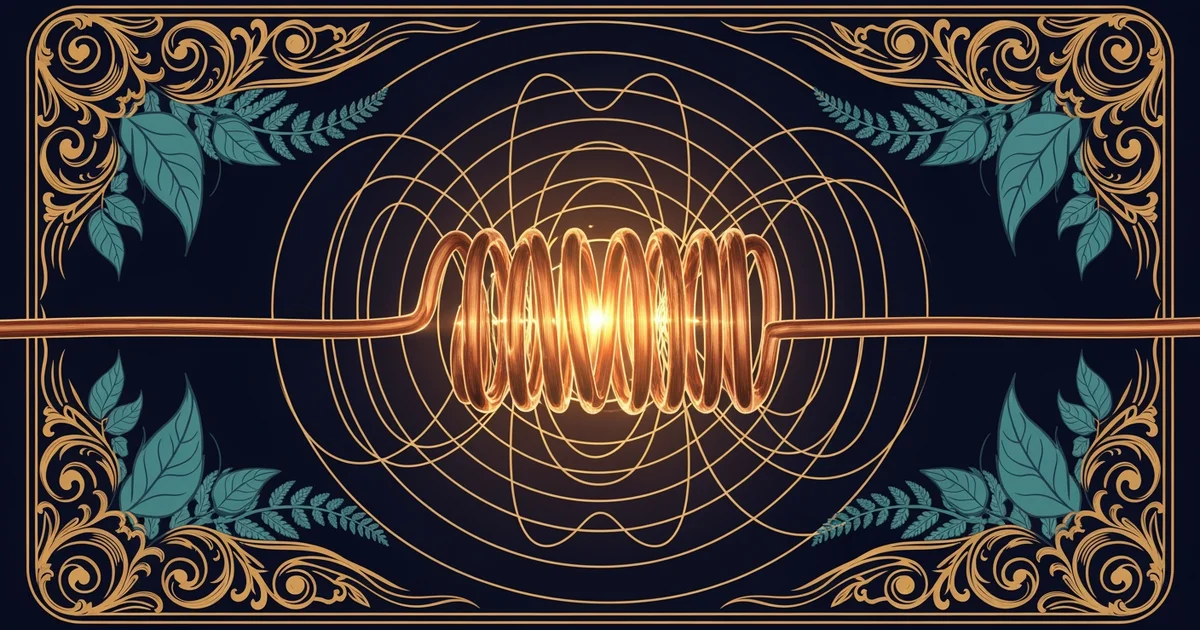
Understanding Invisible Forces
When we talk about magnetism, we are describing a region where moving electric charges feel a force. Imagine the area around a magnet as a busy city street full of invisible traffic lanes. These lanes guide smaller magnetic objects toward or away from the source of the pull. Because the field is invisible, we often draw lines to help us visualize how the force behaves in space. These lines always leave the north pole and curve around to enter the south pole. The density of these lines tells us how strong the local force is at any specific point. Where the lines bunch together, the magnetic strength is at its highest level. Where the lines spread out, the force becomes much weaker and harder to detect. This map of lines acts like a compass for our understanding of how magnets interact with the world.
Key term: Magnetic field — the invisible region surrounding a magnet or electric current where magnetic forces act on moving charges.
Because these fields are invisible, we use iron filings to see them in a laboratory setting. When you sprinkle these tiny metal bits near a magnet, they align with the field lines. This creates a physical map of the hidden forces that would otherwise remain totally unseen by our eyes. Think of this like a weather map showing wind patterns across a large country during a storm. The wind is invisible, but we see its path by watching how it moves the clouds. Similarly, the iron filings reveal the hidden architecture of the magnetic field by tracing its shape.
Mapping Magnetic Interactions
We can organize how these fields behave by looking at the interaction between different poles. When you bring two magnets together, their fields either join forces or fight against one another. This interaction determines whether the magnets will attract or repel each other in space. We summarize these basic behaviors in the following list of observations:
- Opposite poles attract because their field lines connect smoothly from one magnet to the other, creating a unified path.
- Like poles repel because their field lines push against each other, forcing the magnets to move away for stability.
- The strength of the field decreases as you move further away from the magnet, meaning the force is distance-sensitive.
These interactions are fundamental to how we build motors and generators in our modern, electrified society. Every time you use an electric device, you are likely relying on these invisible fields to turn energy into motion. Understanding these shapes is the first step toward mastering the complex laws that govern all electromagnetism.
| Interaction Type | Pole Arrangement | Resulting Force | Field Behavior |
|---|---|---|---|
| Attraction | North to South | Pulling together | Lines connect |
| Repulsion | North to North | Pushing apart | Lines diverge |
| Repulsion | South to South | Pushing apart | Lines diverge |
By studying this table, you can predict how any two magnets will react before they even touch. The field lines act as a blueprint for the physical force that will eventually move the magnets. This predictability is why we can design complex machines that rely on precise magnetic movements every day. When we master the art of mapping these fields, we gain control over the forces that power our global technology. This foundation allows us to explore even deeper concepts like electric fields in the next stage of our journey.
Magnetic fields are invisible maps of force that dictate how magnets pull together or push apart based on their pole alignment.
Now that we understand how magnets interact, we must explore how electric charges create their own unique fields in the next station.