
Corrective Lens Technology
When a person standing at a busy intersection struggles to read the street sign across the road, they are experiencing the direct results of refractive errors. This common visual challenge demonstrates how the internal geometry of the human eye fails to focus light correctly onto the retina, which is the core concept of optical physics discussed in Station 11. Corrective lenses act as a secondary optical system that adjusts the path of incoming light before it ever reaches the natural lens of the eye. By manipulating the angle of light rays, these lenses ensure that the final image lands perfectly on the light-sensitive cells of the retina instead of falling in front or behind it.
Principles of Optical Correction
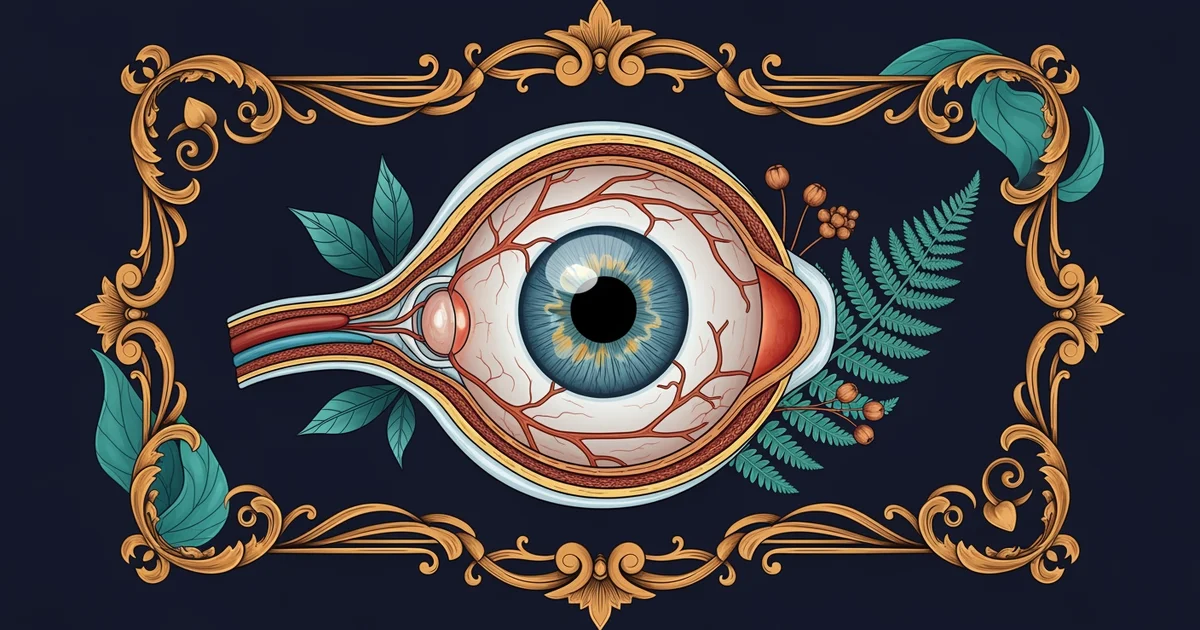
The primary goal of any corrective lens is to compensate for the structural limitations of the eyeball, which typically stem from the length of the eye or the curvature of the cornea. When light enters the eye, it must pass through the cornea and the lens to converge into a single focal point. If the eyeball is too long, the image forms before reaching the retina, resulting in blurry distance vision. Conversely, if the eyeball is too short, the image attempts to form behind the retina, which makes close objects appear fuzzy. Lenses provide the necessary refractive power to shift this focal point into the correct position for clear sight.
Key term: Refractive power — the ability of a lens to bend light rays, measured in units called diopters to define the strength needed for correction.
To manage these variations, technicians use specific lens shapes that alter light paths in predictable ways. A concave lens is thinner in the center and spreads light rays outward, which helps move the focal point backward for people with nearsightedness. A convex lens is thicker in the center and pulls light rays inward, which helps move the focal point forward for people with farsightedness. Much like a camera lens adjusts its focus to capture a sharp image on a sensor, these glasses provide a permanent adjustment to the eye's natural optics.
Matching Lenses to Visual Needs
Determining the correct prescription requires a precise calculation of how much the light must be bent to reach the retina. Optometrists use a standard set of variables to categorize these visual needs, ensuring that the chosen lens matches the physiological requirement of the individual patient. The following table outlines how different lens shapes address specific refractive challenges encountered during standard vision screenings:
| Refractive Error | Focal Point Location | Lens Shape Used | Effect on Light |
|---|---|---|---|
| Myopia | In front of retina | Concave | Diverges light |
| Hyperopia | Behind the retina | Convex | Converges light |
| Astigmatism | Multiple focal lines | Cylindrical | Corrects unevenness |
Selecting the right lens involves balancing these physical properties with the comfort of the wearer. For instance, a person with high levels of myopia requires a stronger concave lens, which often results in thicker edges around the frame. Modern manufacturing allows for high-index materials that bend light more efficiently, enabling thinner lenses even for strong prescriptions. This application of physics ensures that individuals can navigate their daily environment without the strain caused by improper light focus on the retinal surface.
Understanding these mechanisms is vital for anyone studying medical technology or basic health sciences. The interaction between light and glass is not merely a mechanical process but a foundational element of human sensory health. By applying these mathematical principles, practitioners can restore visual clarity to millions of people who otherwise struggle to interact with their surroundings effectively. This systematic approach to vision correction represents a major achievement in the field of clinical medicine and optical engineering.
Corrective lenses function by precisely altering the trajectory of incoming light rays to align the final focal point with the retina.
But this model breaks down when the eye experiences irregular surface curvature that simple spherical lenses cannot fully rectify.
This content is educational only and does not constitute medical advice. Always consult a qualified healthcare professional for personal health decisions.