
The Anatomy of Human Sight
Imagine you are standing in a crowded room, scanning the faces of friends across the space. Your eyes perform this task in a fraction of a second without any conscious effort. This process relies on a complex series of biological structures working in perfect harmony together. Understanding these parts explains how we perceive the colorful world around us every single day. The eye functions much like a high-end camera, capturing light and converting it into clear signals for the brain.
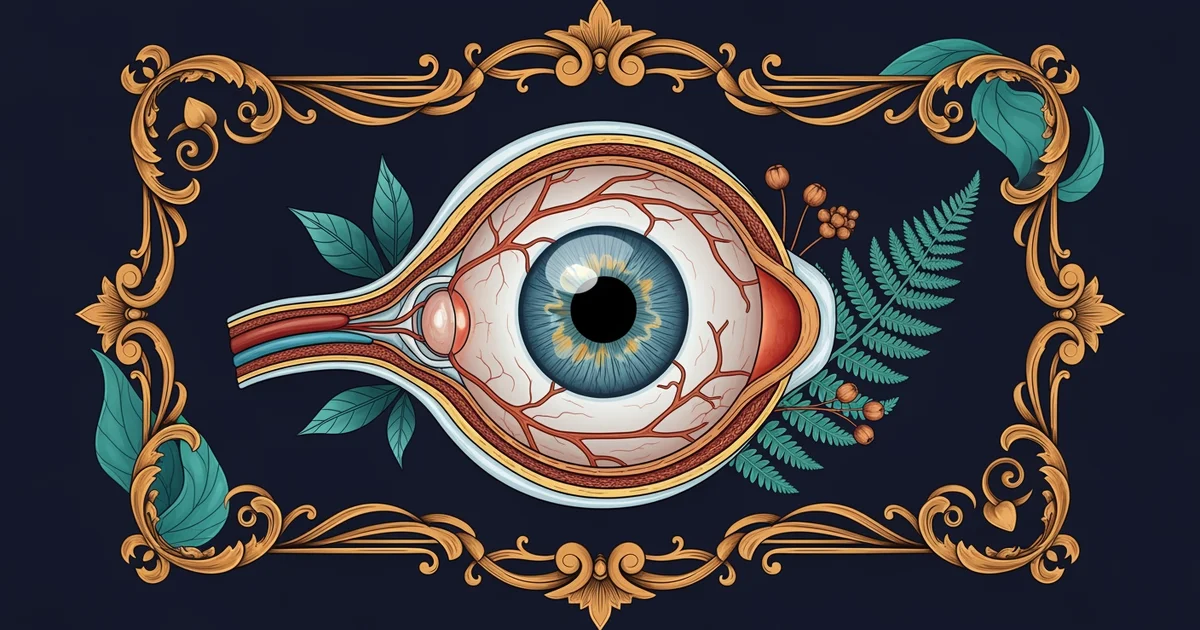
The Outer and Inner Structures
The journey of sight begins at the very front surface of the human eye. Light first passes through the cornea, which acts as a clear, protective window for the eye. This curved layer bends incoming light rays so they can pass through the pupil effectively. Behind this lies the iris, which is the colored part that controls the size of the opening. It functions like a camera aperture, adjusting the amount of light that enters the internal chamber. If the environment is too bright, the iris constricts to protect the sensitive tissues inside.
Key term: Cornea — the transparent front layer of the eye that serves as the primary focusing element for incoming light.
Once light moves through the pupil, it encounters the lens, which sits directly behind the iris. This structure changes its shape to fine-tune the focus of light onto the back wall. Think of the lens like the focus ring on a manual camera lens, which you adjust to make a blurry image sharp. When the eye views objects close up, the lens becomes thicker to bend light more sharply. When the eye views distant objects, the lens flattens to allow light to travel straight back.
Processing Visual Information
The back of the eye contains the retina, a thin layer of light-sensitive cells that covers the interior. These cells act like a digital sensor, transforming raw light energy into electrical impulses for the brain. The retina contains millions of specialized receptors that detect both color and low-light movement. Without these receptors, the brain would receive only scattered light rather than a coherent, vivid image. The signals then travel along the optic nerve, which acts as a high-speed data cable to the visual cortex.
To understand how these parts work together, consider the following primary components:
- The cornea provides the initial focus by bending light rays toward the center of the eye.
- The iris regulates the total light intensity by widening or narrowing the pupil based on brightness.
- The lens provides the final focus adjustment to ensure the image lands clearly on the retina.
- The retina converts light energy into electrical signals that the brain can eventually interpret as sight.
| Structure | Primary Function | Analogy |
|---|---|---|
| Cornea | Bending light | Camera window |
| Iris | Controlling light | Aperture |
| Lens | Focusing image | Focus ring |
| Retina | Sensing light | Digital sensor |
These components ensure that the visual data remains accurate as it travels toward the brain. Each part must function correctly to maintain the clarity of our daily visual experience. If one part fails, the entire system loses its ability to produce a sharp, meaningful picture. By studying these parts, we gain a deep appreciation for the biological engineering required for human vision. This path will provide you with a complete understanding of how light, physics, and biology combine to create the sense of sight.
The human eye functions as an integrated optical system that captures, focuses, and converts light into neural data for the brain.
This foundation prepares you for the next step where we explore the physics of light. This content is educational only and does not constitute medical advice. Always consult a qualified healthcare professional for personal health decisions.