
Refractive Error Basics
Imagine trying to take a clear photograph with a camera lens that is slightly too long or too short for the frame. People often experience this exact frustration when their eyes fail to focus light directly onto the retina, causing blurry images that make daily tasks difficult. This phenomenon, known as refractive error, happens when the physical shape of the eye prevents light from landing where it needs to go. Understanding these errors requires looking at how the cornea and the lens work together to bend incoming light rays. When these structures do not align perfectly with the length of the eyeball, the resulting image loses its crisp edges and fine details.
The Mechanics of Refraction
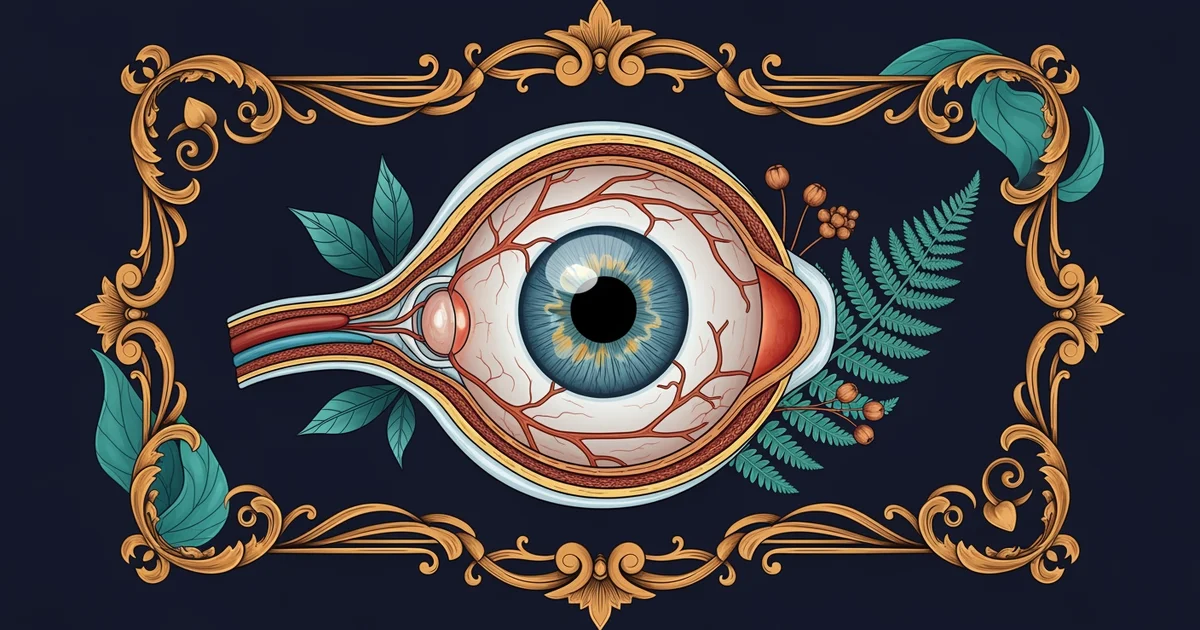
Light enters the eye through the cornea, which acts like a protective window that begins the process of focusing. After passing through the pupil, the light hits the natural lens, which fine-tunes the angle of the light rays. In a perfectly shaped eye, these rays converge precisely on the surface of the retina, which is the light-sensitive tissue at the back of the eye. Think of the eye like a manual camera where the distance between the lens and the film must match the focal length perfectly. If the camera body is too deep or too shallow, the light misses the film, and the picture becomes a fuzzy, distorted mess instead of a sharp image.
Key term: Refractive error — a common vision condition where the shape of the eye prevents light from focusing directly on the retina.
When the eye is too long, light rays meet in front of the retina rather than directly on it. This condition is called myopia, and it results in clear vision for nearby objects but blurry vision for distant ones. Individuals with this condition often find that road signs or classroom boards appear hazy because the focal point is misplaced. Research suggests that the elongation of the eyeball is a primary factor in this process, though genetics and environmental habits also play significant roles in how the eye develops over time.
Distinguishing Vision Conditions
Conversely, when the eyeball is too short, light rays attempt to focus behind the retina, which causes a different set of visual challenges. This condition is known as hyperopia, and it often makes nearby objects appear fuzzy while distant objects remain relatively clear. People with this condition may notice that reading a book or using a phone requires extra effort, as the eye struggles to pull the focal point forward onto the retinal surface. The following table highlights the core physical differences between these two common refractive conditions to help clarify how they impact visual clarity.
| Condition | Eyeball Length | Focal Point Location | Primary Symptom |
|---|---|---|---|
| Myopia | Too long | In front of retina | Blurry distance |
| Hyperopia | Too short | Behind the retina | Blurry near |
| Emmetropia | Normal | Directly on retina | Clear vision |
These conditions are not diseases but rather variations in the physical geometry of the human eye. Most individuals experience some level of refractive shift as they grow, which explains why many people require corrective lenses during their teenage years. By adjusting the path of light before it enters the eye, tools like glasses or contacts guide the rays back to the correct spot. This correction compensates for the physical shape of the eye and ensures that the retina receives a sharp, focused image that the brain can interpret correctly.
Now that you understand why the shape of the eye matters for clear vision, you can see how light must land precisely on the back of the eye to create useful images. The next Station introduces Color Perception Science, which determines how the retina converts those focused light signals into the vivid hues we experience every day. This content is educational only and does not constitute medical advice. Always consult a qualified healthcare professional for personal health decisions.
Corrective lenses improve vision by altering the path of incoming light to compensate for the physical shape of the eye.
The next Station introduces Color Perception Science, which determines how the retina converts those focused light signals into the vivid hues we experience every day.