
Self-Similarity Defined
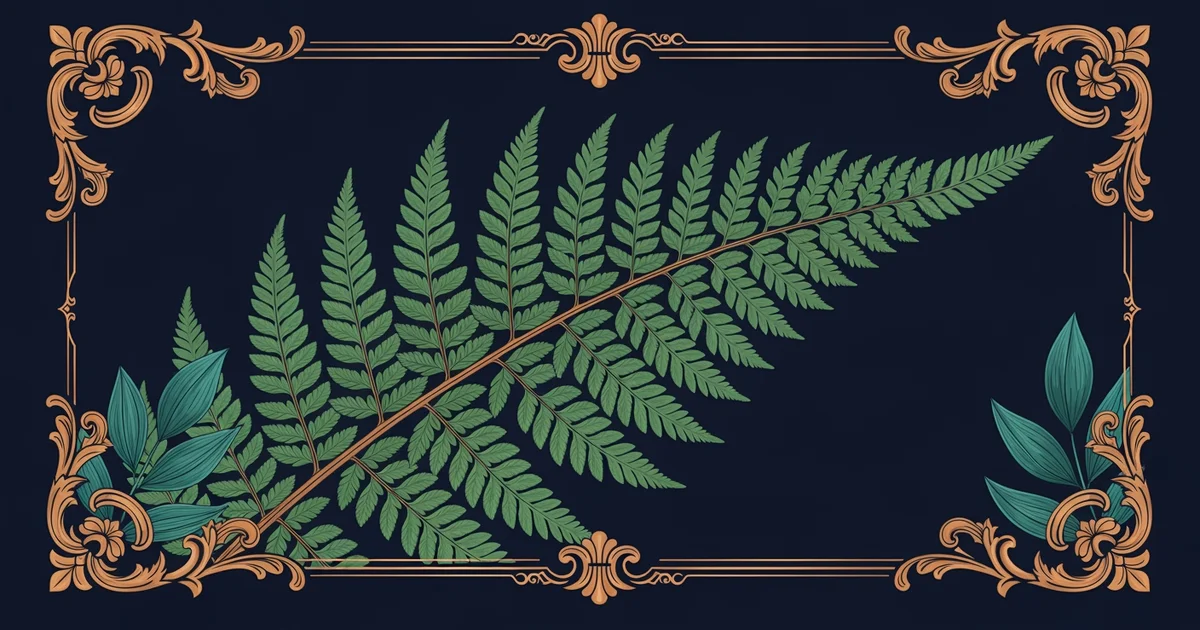
Imagine looking at a single fern leaf and seeing the exact same shape repeated in every smaller branch. You notice that each tiny leaflet mimics the structure of the entire plant perfectly. This phenomenon happens everywhere in nature, from the jagged edges of a coastline to the branching veins in your own lungs. When a complex shape contains smaller parts that look like the whole, we call that property self-similarity. It is a simple rule that builds massive complexity without needing a blueprint for every single detail.
The Logic of Repeating Patterns
Nature does not need to store vast amounts of data to create intricate, beautiful designs. It relies on a process where a single geometric rule repeats itself across different scales of size. Think of this like a business franchise where every store follows the exact same operational manual to ensure consistency. Whether you visit a location in a small town or a bustling city, the service and layout remain identical. This efficiency allows nature to grow elaborate systems like trees or river networks by repeating one simple instruction over and over again.
Key term: Self-similarity — a mathematical property where an object is made of smaller copies of itself at different scales.
When we analyze these shapes, we look for the way they maintain their form regardless of how much we zoom in. If you take a piece of a cloud and enlarge it, the texture looks just as jagged and complex as the original cloud. This consistency across scales is the hallmark of a fractal structure. By using these iterative steps, the system saves energy and resources while building structures that are perfectly adapted to their specific environments.
Identifying Fractal Properties
To classify whether an object shows this property, we must observe how its parts relate to the whole structure. Many objects in our daily life appear to be self-similar, but they often lack the mathematical precision required for true fractals. For instance, a tree branch looks like a smaller version of the tree trunk, but it does not repeat this pattern infinitely. We can organize these objects by how closely they follow the rules of repeating geometry in their natural growth cycles.
| Object Type | Repeating Structure | Scale Consistency | Fractal Nature |
|---|---|---|---|
| Fern Leaf | High similarity | Very consistent | Strong |
| Human Lung | High branching | Very consistent | Strong |
| Regular Ball | No repetition | Not applicable | None |
These characteristics help us distinguish between simple geometric shapes and complex, self-similar systems found in biology. The following list highlights why this repetition is so effective for natural survival and development:
- Efficient space usage occurs because branching patterns allow for maximum surface area in a very limited volume.
- Resource distribution improves because the repeating paths ensure that nutrients reach every tiny corner of the system.
- Structural resilience increases because the redundant, repeating pathways provide backup routes if one part of the system fails.
By observing these patterns, we begin to see that the complexity of our world is not random. It is the result of a logical, repeating mathematical process that governs how matter organizes itself in space. Every time you see a snowflake or a lightning bolt, you are witnessing this exact same principle in action. You are seeing the power of simple rules creating grand, beautiful, and functional outcomes that define the natural world around us.
Self-similarity provides a mathematical shortcut for nature to build complex, efficient structures through the endless repetition of simple geometric rules.
Next, we will explore how these repeating rules create the famous Koch Snowflake.