
Introduction to Fractal Shapes
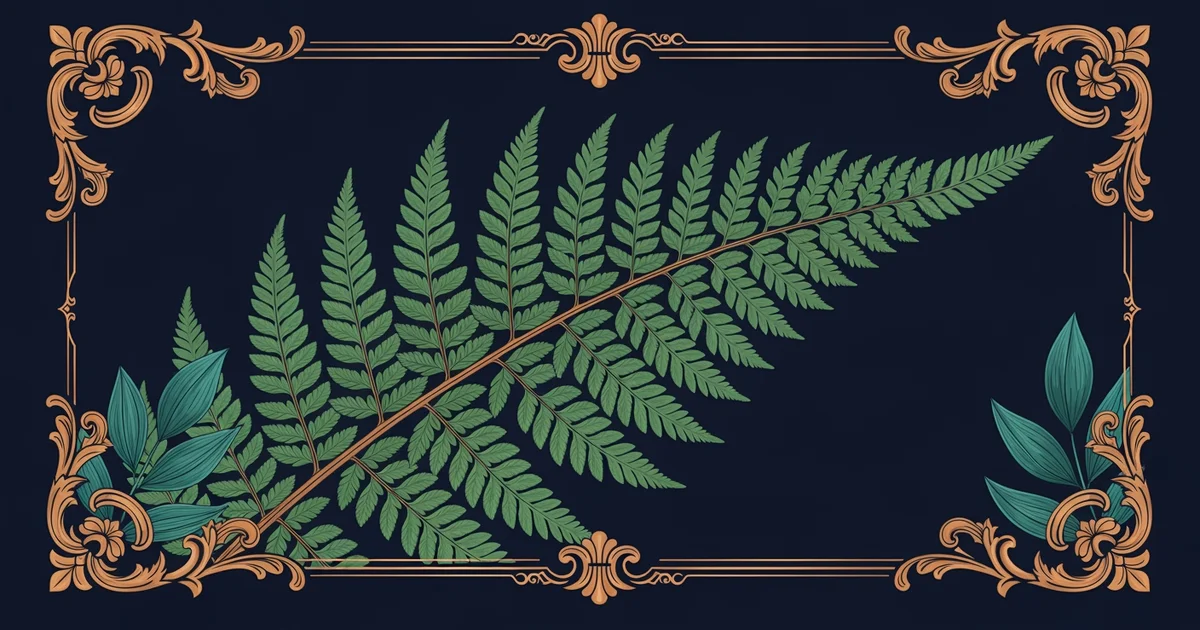
Look closely at the jagged edge of a fern leaf or the branching veins of a tree. You will notice that each tiny part looks exactly like the whole structure in miniature form.
The Logic of Self-Similarity
Nature relies on efficient patterns to grow complex structures without needing complex blueprints for every single cell. This efficiency is achieved through self-similarity, which describes a shape where smaller parts are copies of the larger whole. Imagine a set of nesting dolls where every doll contains an identical but smaller version of itself. In the natural world, this allows a simple genetic rule to repeat over and over again. As the rule repeats, the organism builds intricate shapes like lungs or river networks. These shapes maximize surface area within a limited space, which is essential for breathing or moving water across a landscape. By using this recursive logic, nature avoids the need for storing massive amounts of data for every leaf or branch.
Key term: Fractal — a complex geometric shape that displays self-similarity across different scales of magnification.
When you zoom into a fractal, you find the same patterns repeating at smaller and smaller levels. This is why a single branch of a tree often resembles the entire tree structure. This process is similar to a business that uses a single effective management strategy across many different franchise locations. The strategy remains constant, but the scale of operation changes based on the specific location needs. Because the rule is simple, the system remains stable even as it grows to an immense size. This mathematical repetition is the hidden engine driving the growth of everything from lightning bolts to the circulatory system in your body.
Identifying Patterns in the Wild
To see these patterns in action, you can observe how different natural systems organize their physical space. While traditional geometry uses smooth lines and perfect circles, these natural shapes are rough and irregular. They fill space in a way that creates high efficiency for energy transfer or structural support. Consider the following examples of how these repeating patterns appear in our daily environment:
- The branching of human lungs creates a massive surface area for oxygen exchange by repeating the same split pattern.
- Coastal shorelines exhibit jagged edges that look similar whether you view them from a satellite or a beach.
- Snowflakes grow by adding identical hexagonal branches to their centers, creating intricate beauty through a very simple growth rule.
These structures demonstrate that complexity is often just a simple rule applied many times over. By recognizing these shapes, you can predict how systems grow and how they interact with their surroundings. You will find that the world is not made of smooth surfaces, but of rough, repeating, and beautiful geometries. Understanding this shift in perspective changes how you view a simple walk through a park or a view of the mountains. You are no longer looking at random shapes, but at the elegant output of mathematical instructions written into the fabric of reality.
| Feature | Traditional Geometry | Fractal Geometry |
|---|---|---|
| Shape | Smooth and perfect | Rough and irregular |
| Scale | Fixed size | Infinite detail |
| Rule | Single static form | Repeating instruction |
This table highlights why traditional math often fails to describe the real world accurately. While we learn about circles and squares in school, nature prefers the messy, repeating efficiency of these structures. By embracing this logic, scientists can model everything from heart rate variability to the way galaxies cluster in space. You are starting a journey that will teach you how to read the hidden language of the natural world.
Complex natural structures emerge from the repeated application of simple, self-similar mathematical instructions.
By the end of this path, you will understand how these patterns define the shape of our entire universe.