
The Geometry of Infinity
Imagine zooming into a rugged coastline and seeing the same jagged shapes appear regardless of how close you look. This strange phenomenon happens because nature uses simple rules to build complex structures that never truly end. Most objects in our daily lives have a clear beginning and a distinct end point. However, fractal shapes defy this limit by packing an infinite amount of detail into a very small, finite space. Understanding this geometry changes how we view the world around us.
The Logic of Infinite Detail
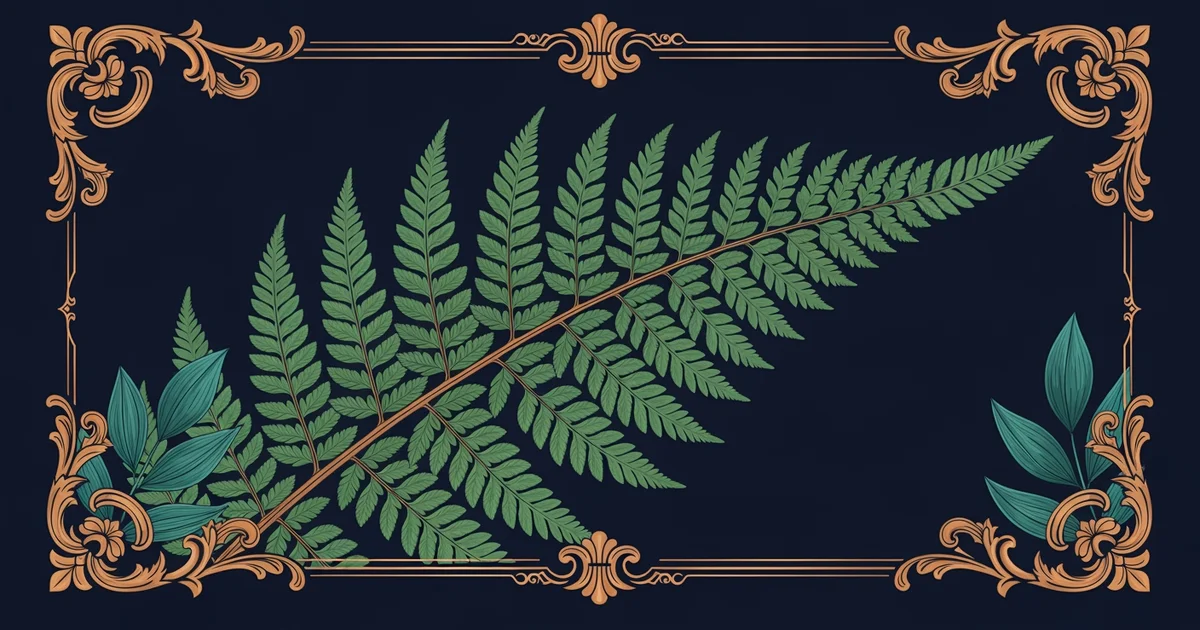
Mathematics often deals with shapes that have smooth lines, but nature prefers the rough edges of fractals. When you observe a fern leaf, you notice that each small branch looks like a tiny version of the whole plant. This pattern repeats itself over and over as you examine smaller and smaller sections of the leaf. Each iteration adds more detail without increasing the total area occupied by the object itself. You are witnessing a mathematical process that creates depth through simple, constant repetition of a single rule.
Key term: Fractal — a complex geometric shape that displays the same pattern at every scale of magnification.
Think about the way a city map works when you use a digital device to navigate. When you view the whole map, you see major roads and large districts clearly displayed on your screen. As you zoom in, the map reveals smaller streets and individual buildings that were hidden from your initial view. Even if you zoom in further, the map keeps providing new information about alleys and paths. A fractal functions much like this map, except the detail never runs out no matter how deep you go.
Measuring Complexity in Finite Spaces
Measuring the length of a fractal curve presents a unique challenge because the detail increases as you measure more closely. If you use a very large ruler to measure a coastline, you miss the tiny inlets and jagged rocks. A smaller ruler captures those extra details, which makes the total measured length increase significantly. This process suggests that the perimeter of a fractal can technically become infinite while the area stays bounded. We can organize these scaling properties by looking at how different shapes behave as we increase our level of observation.
| Shape Type | Scaling Behavior | Detail Density | Boundary |
|---|---|---|---|
| Simple Line | Constant length | Minimal | Finite |
| Smooth Curve | Predictable arc | Low | Finite |
| Fractal | Infinite scaling | Maximum | Infinite |
These patterns exist because the rules of geometry allow for shapes to fold inward on themselves repeatedly. By following these three steps, nature constructs these complex, infinite-looking forms:
- Initiation starts the process by defining a basic geometric shape or a simple line segment.
- Iteration applies a consistent rule to replace parts of the shape with smaller, complex versions.
- Recursion repeats the previous step indefinitely to build layers of detail that define the final form.
When we look at clouds, mountains, or blood vessels, we see this recursive logic in action every single day. The brain struggles to grasp infinity, yet these shapes make it visible within the palm of your hand. By accepting that finite boundaries can hold infinite complexity, we unlock a new way to map the natural world. This realization bridges the gap between abstract equations and the messy, beautiful reality of the physical environment.
Complex natural patterns emerge because simple mathematical rules repeat infinitely within a limited physical space.
The next step explores how this self-similarity allows us to classify different types of fractal structures.