
The History of Variation
Have you ever noticed how people from different towns use unique words that seem strange to visitors? This simple observation reveals that language is never static but instead changes as people move across the landscape.
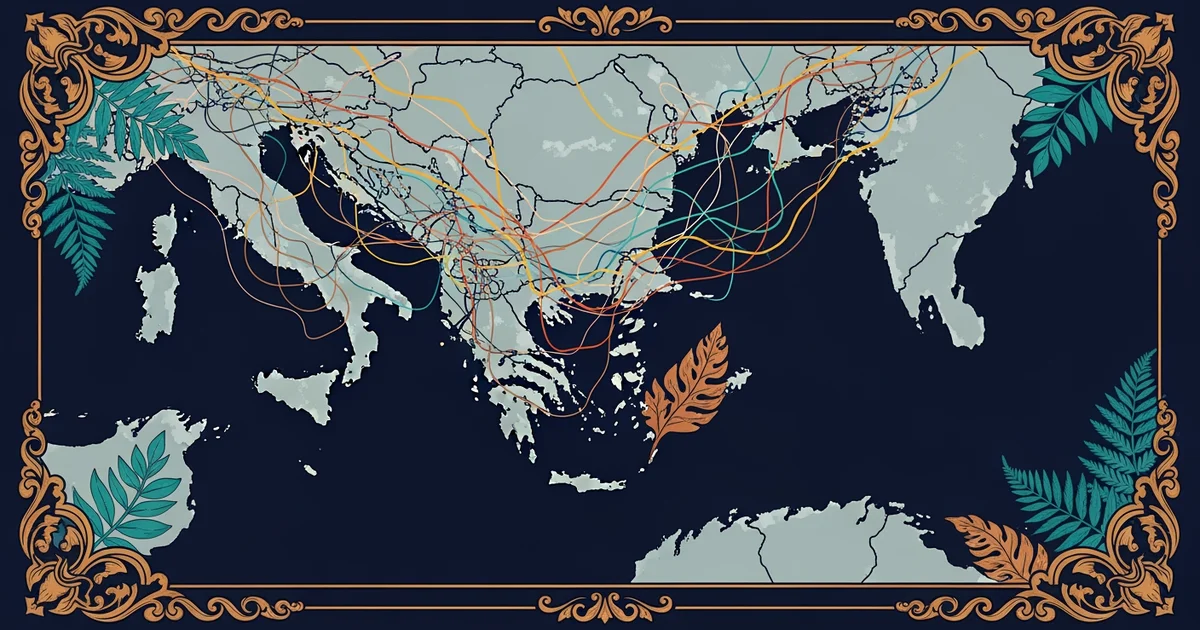
The Geography of Language Change
When communities settle in new areas, their speech patterns begin to drift away from their original home base. This process acts like a slow-moving river that gradually carves new paths through the earth over many years. As groups become isolated by mountains or large bodies of water, they lose the daily contact needed to keep their speech uniform. Over time, these small differences in pronunciation and word choice grow into distinct regional patterns. Think of these changes as the accumulation of interest in a bank account where small daily deposits eventually create a large, noticeable balance. This natural drift ensures that no two regions speak exactly the same way after several generations have passed.
Key term: Dialectology — the branch of linguistics that studies the variations in speech patterns based on regional or social groups.
Migration patterns serve as the primary engine driving these linguistic shifts across the map of any country. When families move to settle new lands, they bring their native vocabulary and accent with them like packed luggage. Once they arrive, they mix their old ways of speaking with the local habits of neighbors they meet along the way. This blending creates a hybrid form of communication that belongs to neither the old home nor the new destination entirely. These distinct boundaries often align with historical trade routes or early colonial settlement patterns that still influence how people talk today. Understanding these roots helps us see why modern speech is a living map of our shared history.
Tracing Linguistic Boundaries
We can track these variations by looking at how specific traits spread or stop at certain geographic lines. These patterns are not random but follow the paths of human movement and historical interaction throughout the centuries. By examining these traits, we can see how geography limits or encourages the spread of new words and sounds. Consider the following factors that influence how these linguistic borders form within a population:
- Geographic barriers act as natural walls that prevent the easy flow of speech between two nearby communities.
- Economic trade routes serve as highways that carry new words and pronunciations across vast distances very rapidly.
- Social isolation allows a group to preserve older forms of speech that have otherwise vanished in urban centers.
These factors determine how quickly a language might change or how long it stays the same over time. When a group remains in one spot, their language often stays more stable compared to groups that travel often. If a group moves to a new place, they must adapt their speech to fit the new environment and the people living there. This constant tension between keeping old habits and adopting new ones defines the history of our diverse linguistic landscape.
| Factor | Impact on Language | Speed of Change |
|---|---|---|
| Migration | High | Fast |
| Mountains | Low | Slow |
| Trade | High | Moderate |
This table shows how different forces shape the speed and nature of how our speech evolves. Migration introduces the most change because it forces people to interact with entirely new sets of speakers. Mountains act as a buffer, slowing down the spread of new trends and keeping local dialects alive for longer. Trade creates a middle ground where people from many places meet and exchange ideas, which leads to a blending of regional traits. Every person alive today carries the marks of these historical forces in the way they form their daily sentences.
Regional speech patterns function as a living record of how past human migration and isolation shaped the way we communicate today.
Next, we will explore how to draw lines on a map to visualize these hidden boundaries between different speech communities.