
Historical Transport Evolution
Imagine your favorite snack arrives at your door after traveling across the entire globe. You likely assume this journey is simple, but the history of moving goods is a complex story of human ingenuity. Early trade relied on basic muscle power, where humans and animals carried heavy loads across rough terrain. This method was slow and extremely limited by the physical strength of the people or creatures involved. As civilizations grew, the need for faster and more reliable transport became a primary driver for major technological innovation. Moving goods today is like a high-speed relay race where every baton handoff must be perfectly timed to succeed.
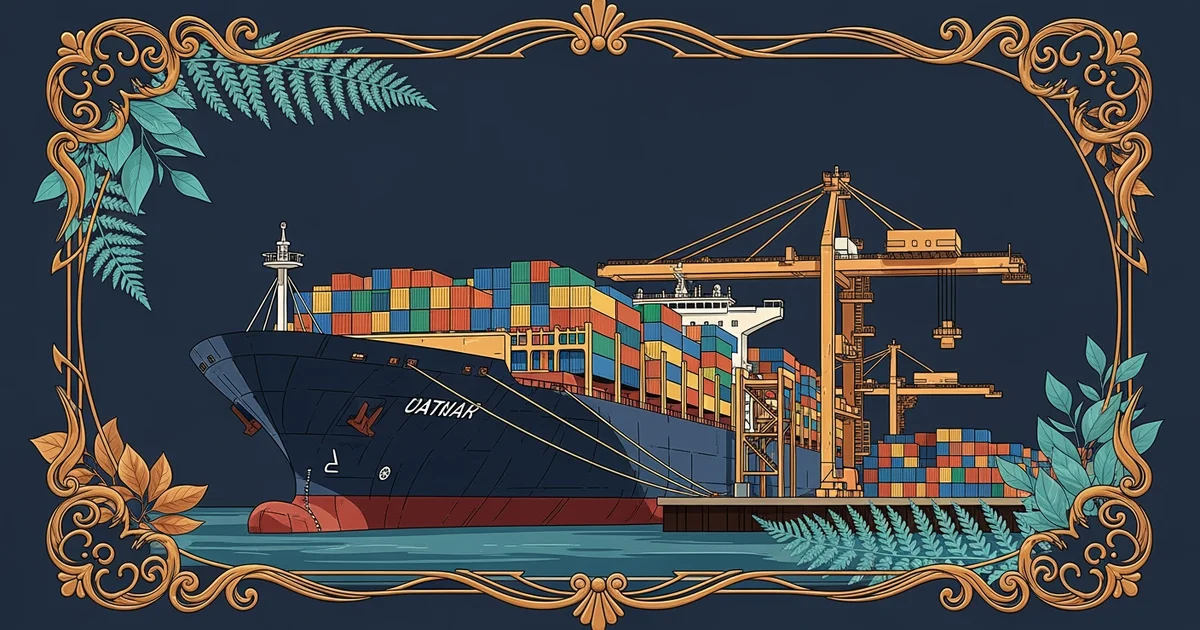
The Evolution of Mechanical Shipping
When societies moved beyond muscle power, they looked toward the wind and water to help them. Early sailors used wooden ships to navigate coastal routes, which allowed them to carry much larger loads than any land caravan. These vessels were the first major leap in logistics, turning the vast oceans into highways for commerce. By harnessing natural forces, merchants could transport grain, textiles, and spices across distances that once seemed impossible to cross. This shift proved that engineering could amplify human effort by using external energy sources to complete repetitive and heavy tasks.
Key term: Logistics — the detailed coordination of a complex operation involving many people, facilities, or supplies.
As the world entered the industrial age, steam power completely transformed how we moved heavy freight. Trains and steamships replaced sails and horses, providing a consistent speed that did not depend on the weather. This reliability allowed businesses to plan their supply chains with much greater precision than ever before. If you look at the history of transport, you see a clear pattern of replacing unreliable natural forces with controlled mechanical power. This transition laid the groundwork for the modern global economy by making long-distance trade predictable and affordable for everyone involved.
Milestones in Transport Efficiency
To understand how far we have come, we must look at the major shifts in how we organize freight. The following table highlights how different eras solved the problem of moving goods from one point to another.
| Era | Primary Power Source | Main Limitation | Efficiency Level |
|---|---|---|---|
| Ancient | Human or Animal | Physical Stamina | Very Low |
| Maritime | Wind and Current | Weather Patterns | Moderate |
| Industrial | Steam and Coal | Fuel Availability | High |
| Modern | Diesel and Electric | Infrastructure | Very High |
These changes show that engineering is not just about building faster machines for the sake of speed. It is about creating systems that reduce the cost and risk of moving items across borders. Modern shipping relies on standardized containers, which allow cranes to move goods between ships and trains without opening the boxes. This standardization acts as a common language for the global economy, ensuring that every piece of equipment fits perfectly together. Without this level of coordination, the global supply chain would collapse under the weight of its own complexity.
When we analyze these historical shifts, we can identify three distinct stages of development that moved us toward the current system:
- The manual stage relied on individual effort, which kept trade localized and small in scale.
- The mechanical stage introduced engines, which allowed for the mass movement of raw materials.
- The integrated stage uses digital tracking to ensure that every package moves with maximum efficiency.
By studying these stages, we learn that the goal of logistics is to minimize the friction of distance. Every invention in this field has aimed to remove the barriers that keep products from reaching the people who need them. We have moved from relying on luck and weather to using precise, data-driven systems that operate around the clock.
Historical transport evolution demonstrates that human progress relies on replacing inconsistent natural energy with reliable mechanical systems to bridge physical distances.
Next, we will explore how these massive shifts in transport capability directly influence the prices of the goods you buy every day.