
Basics of Photon Energy
Imagine you are standing in a bright room where every single light particle carries a specific amount of energy. You can think of these particles as tiny packets of power that fuel our modern digital world. Just as a bank account holds a specific balance, every photon holds a precise amount of energy. This energy determines how light interacts with the materials in your smartphone or your computer screen. Engineers must understand this balance to build faster processors and clearer displays for our daily lives.
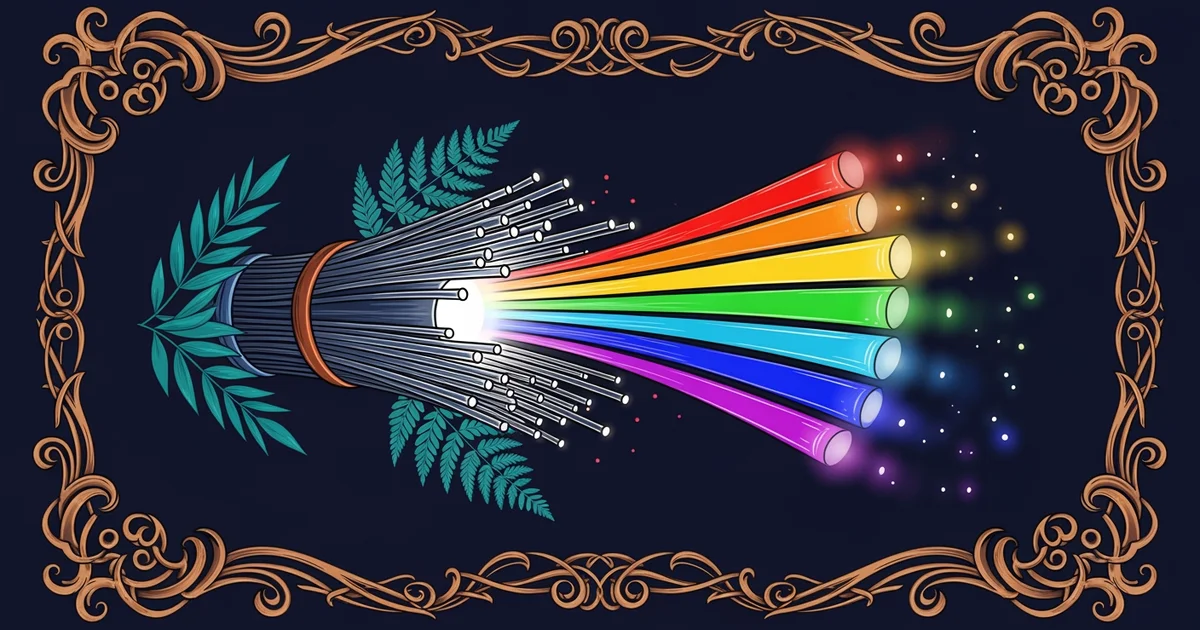
The Relationship Between Frequency and Energy
When we look at the nature of light, we find that it behaves like a wave moving through space. The number of times this wave vibrates each second is known as the frequency of the light. High frequency waves vibrate very rapidly, while low frequency waves move at a slower pace. Scientists discovered that the energy of a photon depends entirely on this vibration rate. If you increase the frequency of the light, the energy of each individual photon also increases. This direct link allows engineers to control energy levels by simply changing the color of the light. Think of it like a river current where the speed of the water dictates the power available to turn a wheel. A faster current provides more energy to the wheel, just as a higher frequency provides more energy to the photon.
Key term: Photon — the smallest discrete unit of light energy that acts as both a particle and a wave.
To see how this works, we can look at the different types of light. Each type has a unique frequency and energy level that changes how it interacts with the physical world around us. Consider the following examples of light energy levels:
- Ultraviolet light has a very high frequency and carries enough energy to damage skin cells over time.
- Visible light sits in the middle of the spectrum and allows our eyes to process visual information daily.
- Infrared light features a low frequency and carries less energy, which is why it feels like gentle heat.
Calculating Energy in Modern Systems
Because light energy follows strict rules, engineers use specific formulas to calculate how much power a system needs. They rely on a constant value that links frequency to energy to ensure their devices function correctly. This constant acts as a universal exchange rate between the vibration of light and the energy it provides. If an engineer wants to design a solar panel, they must calculate the energy of incoming photons. If the photons carry enough energy, they can knock electrons loose to create a flow of electricity. This process powers everything from small calculators to large arrays that provide energy to entire homes. Without this precise calculation, our modern technology would lack the stable power sources required for consistent operation.
| Light Type | Frequency Level | Energy Level | Primary Use |
|---|---|---|---|
| Ultraviolet | Very High | High | Sterilization |
| Visible | Medium | Moderate | Illumination |
| Infrared | Low | Low | Heat Sensors |
By comparing these types, we can see that energy is not random but follows a clear pattern. Engineers use this pattern to build sensors that detect specific light frequencies for medical or industrial tasks. When you use a remote control, you are using infrared light to send a low energy signal to your television. The sensor in the television detects this specific frequency and translates the signal into a command for the machine. This demonstrates how we use the predictable nature of photon energy to control the devices we rely on every single day.
The energy of a photon is directly proportional to its frequency, allowing engineers to manipulate light for specific technological applications.
Building on this understanding of energy, we will now examine how light changes direction when it moves between different materials.