
Future of Green Shipping
Massive cargo ships carry nearly everything we buy, yet they burn heavy fuels that pollute the air. Engineers now face a difficult choice between keeping old habits or creating a clean future for global trade. How can we redesign these giants to sail across oceans without leaving a trail of carbon behind? This task requires rethinking how we power movement while keeping the world economy running smoothly.
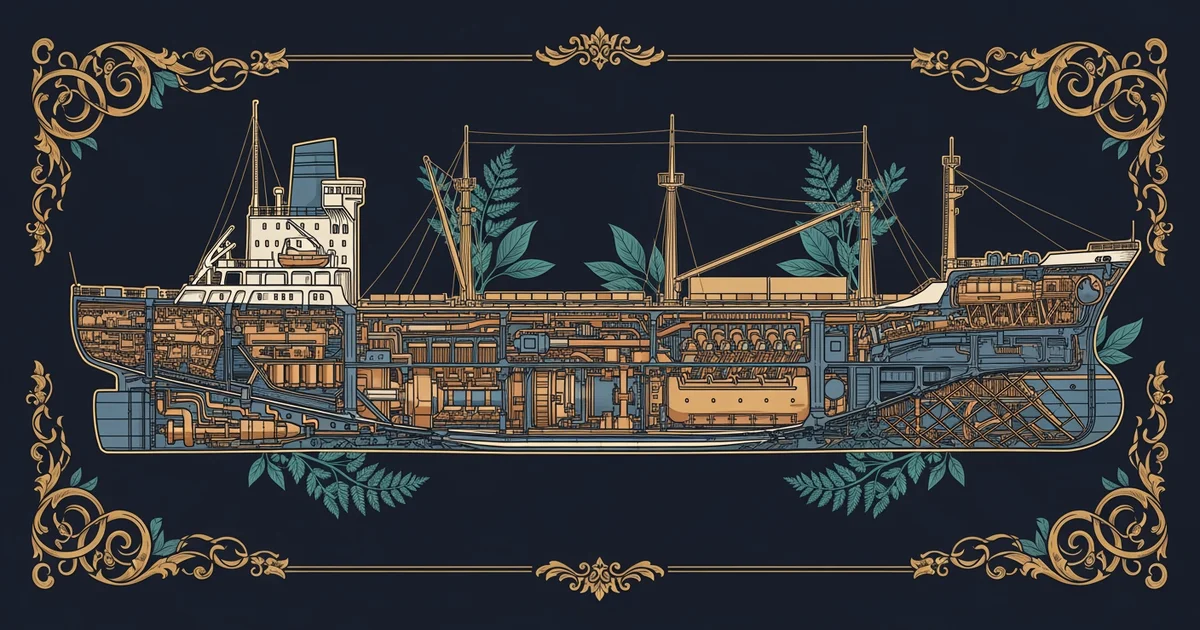
Rethinking Vessel Propulsion Systems
Traditional shipping relies on heavy fuel oil because it is cheap and provides reliable energy for long trips. Replacing this fuel is like trying to swap the engine of a moving car while driving on a highway. Engineers must design systems that store enough energy for thousands of miles without taking up all the cargo space. One promising approach involves using Green Hydrogen as a fuel source for these massive vessels. This fuel produces only water when burned, which eliminates carbon emissions during the voyage. However, storing hydrogen requires large, pressurized tanks that change how ships are balanced and loaded. Designers must solve these structural puzzles to ensure that safety remains the top priority for every crew member.
Key term: Green Hydrogen — a clean energy carrier produced by using renewable electricity to split water into hydrogen and oxygen.
Integrating Renewable Energy Sources
Beyond changing the fuel, engineers are looking at ways to capture natural energy directly from the ocean environment. Modern ships now use advanced sails or rotor systems to harness wind power alongside their main engines. These systems act like a sailboat that helps a heavy barge move forward without using extra fuel. Using wind power reduces the strain on the primary engine and lowers total consumption during long journeys. We can view this as a hybrid vehicle that uses electricity to start moving and wind to keep cruising. Integrating these systems requires precise sensors to track wind speed and adjust the ship's position automatically. This prevents the vessel from losing momentum while navigating through unpredictable weather patterns found in the open sea.
Several renewable technologies are currently being tested to improve overall ship efficiency:
- Flettner Rotors use spinning vertical cylinders to create lift from the wind, which helps push the ship forward and reduces engine load.
- Solar Arrays cover large flat surfaces on the deck to provide electricity for onboard systems, which lowers the demand on the main generator.
- Hull Coatings utilize special materials to reduce drag in the water, allowing the vessel to move faster while using significantly less energy.
Balancing Efficiency and Cargo Capacity
Designers must carefully balance the need for clean energy with the ship's primary job of carrying heavy loads. Adding too many batteries or fuel tanks reduces the space available for goods, which makes shipping more expensive. Engineers calculate these trade-offs by comparing the weight of energy systems against the total cargo capacity of the vessel. We can see this challenge as a budget where every extra pound of equipment takes money away from the ship's profit. Finding the right mix requires advanced computer modeling to simulate how different designs behave in rough ocean conditions. This analysis builds on lessons from our previous work with safety systems by ensuring that new energy designs do not compromise vessel stability. By combining these technologies, engineers can create a balanced design that meets the demand for greener global trade.
| Technology Type | Primary Benefit | Main Challenge |
|---|---|---|
| Hydrogen Fuel | Zero emissions | Storage space |
| Wind Rotors | Fuel savings | Structural weight |
| Solar Panels | Power auxiliary | Surface area |
This table shows how different green technologies interact with the constraints of modern naval engineering. Each choice impacts the ship's range and its ability to carry profitable cargo across the vast, unpredictable ocean. The goal is to maximize the benefits while minimizing the physical footprint of the new equipment.
Future green shipping requires engineers to blend traditional naval stability with clean energy technologies to maintain global trade without harming the environment.
We will now explore how these green designs work with autonomous systems to create the next generation of smart, self-navigating cargo vessels.