
Origins of Marine Engineering
The Evolution of Marine Engineering
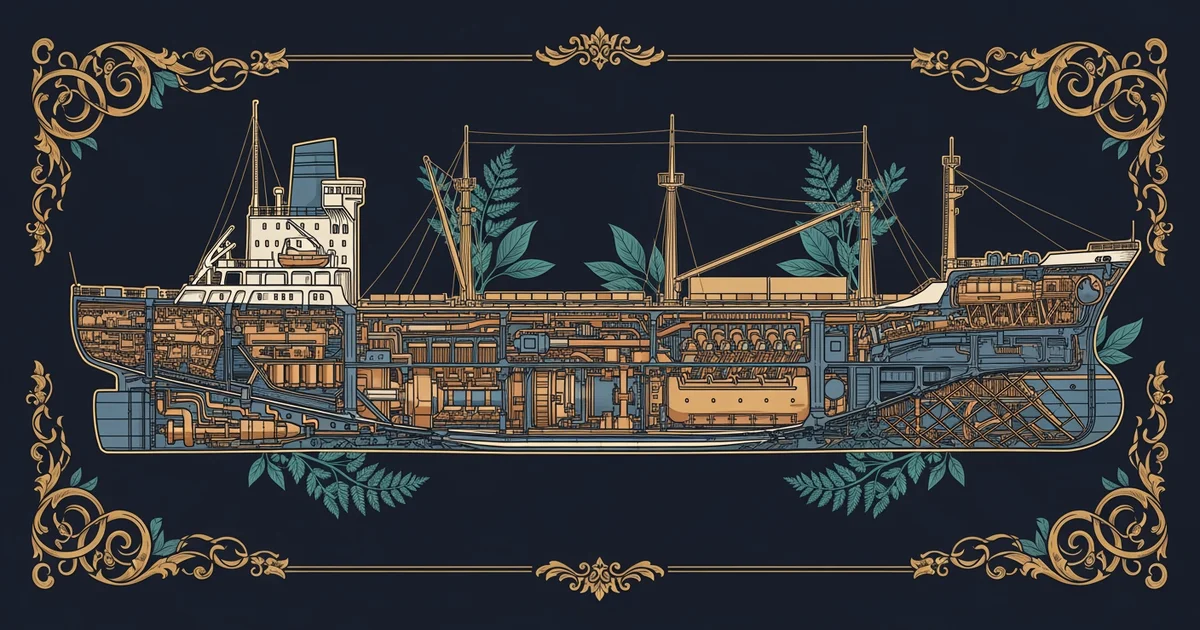
Marine engineering began with the simple desire to move goods across vast water bodies. Early civilizations used wooden rafts and simple oars to navigate coastal rivers and lakes. These primitive vessels relied entirely on human muscle power or basic wind currents for motion. Engineers eventually discovered that shaping hulls could improve speed and overall vessel stability significantly. The transition from wood to iron changed everything for ship builders during the industrial era. Iron hulls allowed for much larger vessels that could withstand deeper, more turbulent ocean waters. This shift marked the true birth of modern marine engineering as a formal technical discipline.
The Power of Steam Propulsion
The steam engine revolutionized how ships traveled across the globe throughout the nineteenth century. Engineers developed boilers that heated water to create high pressure steam for moving pistons. These pistons connected to large paddle wheels that pushed ships forward through the dense water. Later designs replaced paddle wheels with submerged propellers to increase efficiency and improve vessel handling. Ships no longer depended on unpredictable winds to reach their destinations on tight schedules. This reliability allowed maritime trade to expand rapidly between distant continents and busy port cities. Steam power remains a foundational concept for understanding modern mechanical ship propulsion systems today.
Understanding Basic Buoyancy
Buoyancy is the upward force that allows heavy steel ships to float on water. Archimedes discovered that an object displaces water equal to its own submerged volume weight. Engineers must calculate this displacement carefully to ensure that a ship remains perfectly stable. If the center of gravity rises too high, the vessel risks capsizing in rough seas. Designing a stable hull requires balancing the weight of the cargo against the buoyancy. This balance is a critical challenge for every engineer working in the maritime industry today. Understanding these forces helps students grasp why ships have specific shapes and internal layouts.
Materials in Harsh Environments
Saltwater is a highly corrosive substance that constantly attacks metal structures on every single ship. Engineers must select specific materials that can survive these harsh conditions for many years. Stainless steel and specialized aluminum alloys are common choices for building modern marine vessels today. Protective coatings like marine paint or zinc anodes help prevent rust from destroying critical components. Without these materials, ships would suffer from structural failure in a very short time frame. Learning about metal properties is essential for anyone interested in the field of engineering. This knowledge ensures that ships remain safe for crews and valuable cargo during voyages.
The Science of Fluid Dynamics
Fluid dynamics studies how water moves around a hull as the ship travels forward. Engineers use this science to reduce drag and improve the fuel efficiency of vessels. A smooth hull shape allows water to flow easily without creating unnecessary turbulence or resistance. Modern computer models help designers test these shapes before building any physical ship prototypes. Reducing drag saves massive amounts of fuel over the long life of a ship. This efficiency is vital for both the economic success and the environmental impact of shipping. Fluid dynamics remains one of the most complex topics for students of marine engineering.
The diagram above illustrates how mechanical power translates into the forward motion of vessels. Engine power creates torque that turns the propeller against the resistance of the water. Each step in this process impacts the final speed and fuel efficiency of the ship. Engineers must optimize every single link in this chain to maintain high performance standards. This simple flow chart represents the core mechanical cycle found on almost every ship.
Looking Toward the Future
The field of marine engineering is constantly changing as new technologies emerge for global trade. Engineers are now focused on reducing carbon emissions to protect our delicate marine ecosystems. Renewable energy sources like wind and solar are being integrated into new ship designs. Autonomous systems are also changing how we navigate ships across the open ocean waters. These advancements require a new generation of engineers to master complex digital control systems. The future of maritime travel looks very different from the early days of steam. Students who study these topics will help lead this exciting transition in global transportation.