
Hull Structural Integrity
A massive steel ship must battle relentless ocean waves that twist and push its heavy frame constantly. If a hull lacks the strength to resist these forces, the vessel faces catastrophic structural failure at sea. Engineers design these hulls to absorb immense pressure while maintaining their shape under extreme environmental conditions. Understanding how steel reacts to stress is the first step in building ships that safely traverse the globe.
Analyzing Stress Points in Steel Frames
When a ship moves through water, the hull experiences complex forces that change with every passing wave. Engineers identify these critical areas by looking at where the ship bends or twists the most during travel. The longitudinal strength of a ship refers to its ability to resist bending forces that occur when waves hit the bow and stern simultaneously. Think of a long piece of wood held at both ends while someone pushes down in the middle. The wood bends until it reaches its breaking point, just like a ship hull under heavy cargo loads. To prevent this, engineers add thick steel plates known as stringers to the inner hull structure. These plates act like the spine of the ship, providing the necessary rigidity to keep the vessel from snapping in two during a storm.
Key term: Stress concentration — a location in a structure where mechanical stress is significantly higher than in surrounding areas, often leading to potential cracks or metal fatigue.
Beyond bending, ships must handle the constant vibration and twisting motions caused by rough sea states. Engineers use computer models to simulate these forces, ensuring that every weld and joint can handle the pressure. If a weld is too brittle, the constant movement will cause a crack to form and spread rapidly through the steel. Designers mitigate this by using rounded corners on doors and hatchways to distribute force more evenly across the metal. Sharp corners act like magnets for stress, pulling all the energy into one tiny point where the material will eventually fail. By smoothing these transitions, engineers ensure that the hull remains a unified, flexible system rather than a series of rigid parts.
Identifying Structural Weakness in Complex Designs
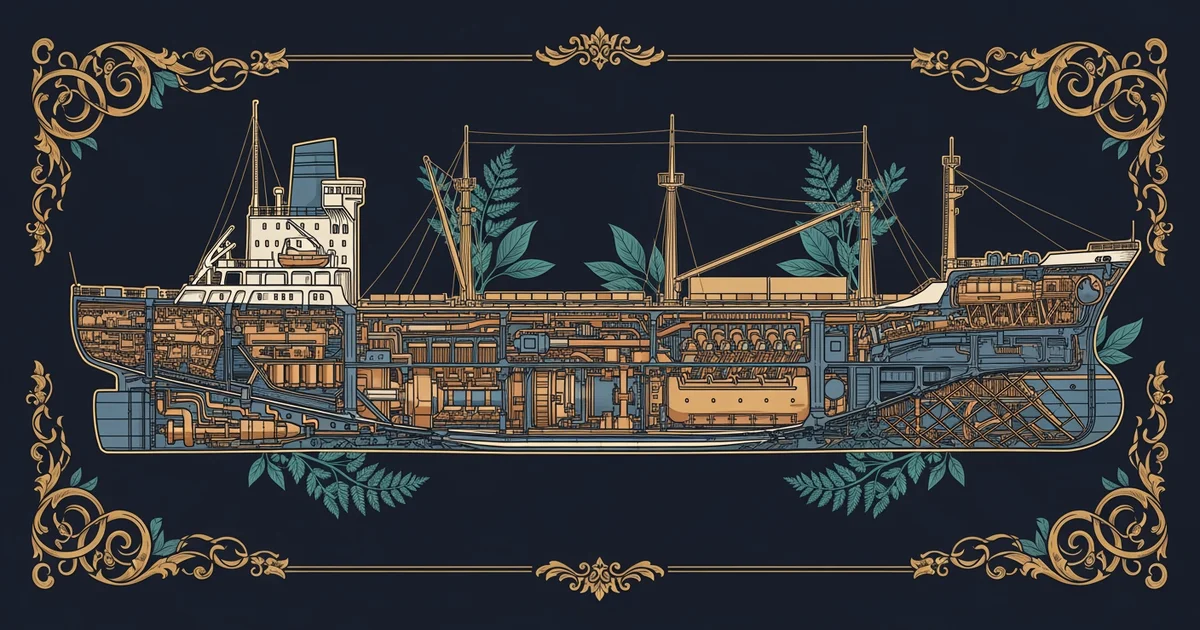
Maintaining the integrity of a complex vessel requires a deep understanding of how different sections interact under pressure. The hull is not a solid block of steel, but a network of interconnected beams, frames, and plates. Engineers categorize these structural elements based on their primary function to ensure the entire system remains balanced:
- Transverse frames provide support to the sides of the ship, preventing the hull from collapsing inward when the vessel encounters heavy side-impact waves or docking pressures.
- Bulkheads act as internal walls that divide the ship into smaller compartments, which stops water from flooding the entire vessel if one section suffers a breach.
- Keels serve as the primary foundation of the ship, running along the bottom to provide stability and support the weight of the massive engines housed within the center.
These components must work together to distribute weight evenly across the entire frame. If one section is too weak, the surrounding steel must work harder to compensate, which leads to premature fatigue. Engineers perform regular inspections to check for signs of corrosion or metal thinning that might compromise these critical support members. By monitoring these areas, they can reinforce weakened spots before the ship returns to the open ocean for another long voyage.
Structural integrity relies on the careful distribution of force across a flexible steel framework to prevent localized points of failure.
But what does it look like in practice when we begin integrating power and control systems into these reinforced hulls?