
Safety and Emergency Systems
During the 2018 engine room fire on the container vessel Maersk Honam, crew members faced a critical failure of standard containment protocols while navigating the Arabian Sea. This event highlights the terrifying reality that even massive steel ships can become trapped in a rapidly spreading inferno if safety systems do not function perfectly. Engineers must design these spaces as isolated zones to prevent flames from reaching the bridge or cargo holds. This is the primary goal of the Fire Suppression System which we first introduced in Station 2 as a basic safety requirement for maritime stability.
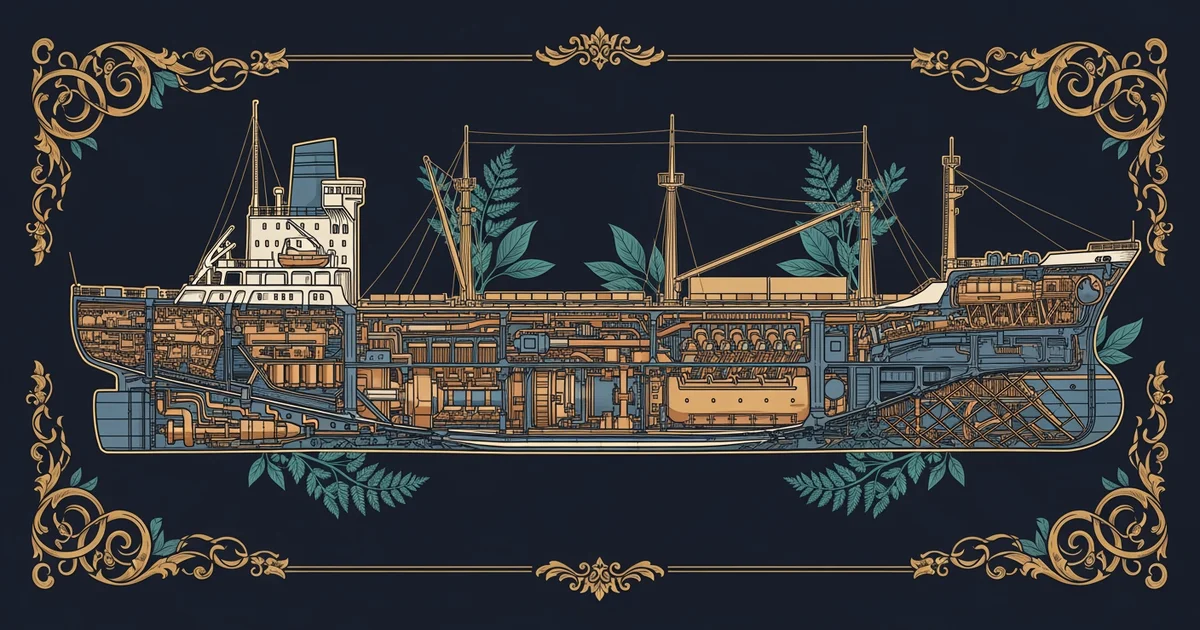
Managing Engine Room Hazards
Modern marine vessels rely on complex layouts to keep the engine room safe from accidental ignition sources. Engineers treat the engine room like a high-stakes kitchen where heat and fuel exist in a tight, confined space. If a fuel pipe leaks near a hot exhaust manifold, the risk of fire increases significantly. To combat this, ships use a Fixed Fire Extinguishing System that floods the entire space with inert gas. This gas displaces oxygen, which effectively starves the fire of the air it needs to keep burning. The system functions like a vacuum cleaner running in reverse, as it pulls the life out of the fire rather than just spraying water on the flames.
Engineers must ensure these systems meet strict international safety standards for every single ship design. The following components are essential for maintaining a safe engine room environment during any emergency situation:
- The detection sensors monitor the room for smoke or heat changes by sending constant electrical pulses back to the main control panel in the bridge.
- The remote activation valves allow the crew to trigger the suppression gas from a safe distance outside the engine room, which prevents them from entering a dangerous area.
- The ventilation dampers close automatically when the system activates to trap the inert gas inside the room, ensuring that fresh air does not feed the flames from the outside.
Implementing Emergency Response Protocols
When a fire breaks out, the crew must follow a precise sequence of actions to protect the ship and their lives. The first step involves isolating the fuel supply to stop the fire from gaining more energy. After cutting the fuel, the crew must then seal the room to prevent heat from escaping into other decks. The following table shows how different suppression methods compare when fighting specific types of engine room fires.
| Suppression Method | Best Used For | Primary Action |
|---|---|---|
| Carbon Dioxide | Electrical fires | Removes oxygen |
| Water Mist | Oil based fires | Cools the area |
| Foam Systems | Fuel spills | Smothers liquid |
Key term: Inert Gas — a non-flammable substance used to replace oxygen in a sealed space to stop combustion without damaging sensitive machinery.
Effective fire safety planning requires constant practice and regular maintenance of all onboard equipment. Engineers design these systems so that they can be operated by a small team during a crisis. If the crew fails to seal the room properly, the fire will continue to grow despite the gas release. This reality creates a tension between needing to act fast and needing to act correctly. Every second spent checking the seals is a second the fire has to spread, but an unsealed room renders the entire suppression system useless. Success depends on the crew knowing their ship better than they know their own homes. The design of the vessel provides the tools, but the human element remains the final line of defense against total disaster.
Reliable fire safety on massive ships requires a combination of automated gas suppression systems and the disciplined human execution of containment procedures.
But this model of fire suppression becomes incredibly difficult to maintain as ships transition toward using alternative liquid fuels that burn at much higher temperatures than traditional diesel.