
Cargo Handling Technologies
When the massive container ship Ever Given blocked the Suez Canal, global trade slowed to a crawl almost instantly. This event highlighted how fragile our supply chains are when cargo handling systems fail to function correctly. Engineers must design these vessels to maximize efficiency while maintaining strict stability during the loading process. This challenge involves balancing weight, speed, and safety in a way that keeps the entire global economy moving forward smoothly. Understanding these systems requires looking at how we move goods across the oceans today.
Mechanical Systems for Loading
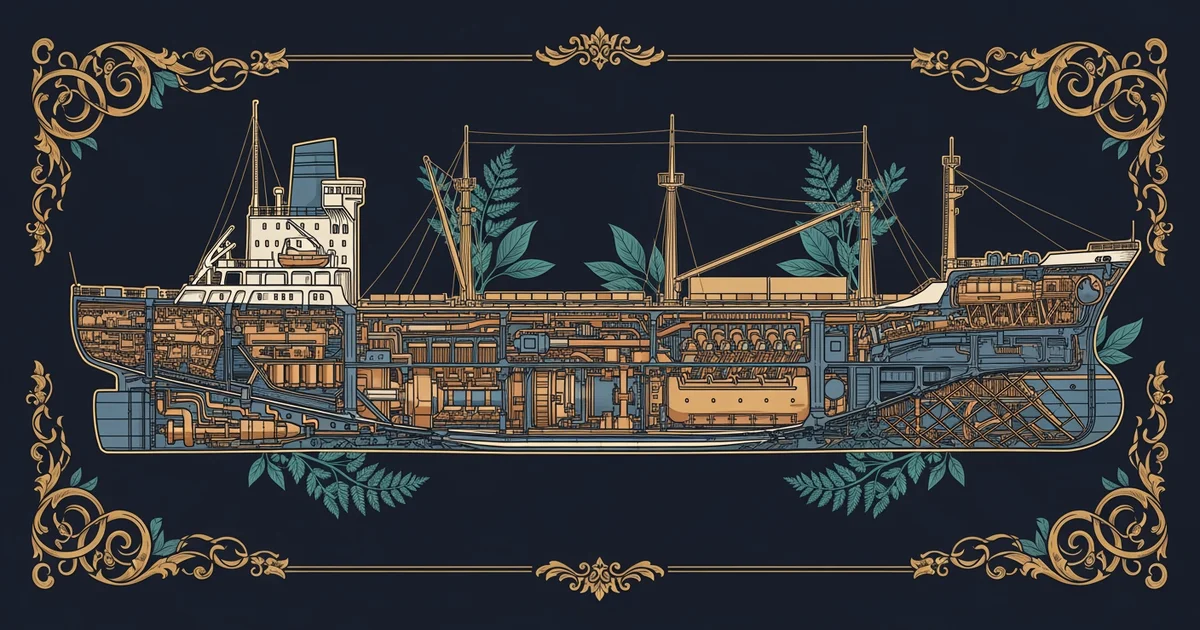
Modern cargo ships rely on complex machinery to manage thousands of heavy steel containers every single day. The primary tool for this task is the shipboard crane or the massive shore-based gantry crane system. These cranes use sophisticated spreader mechanisms to lock onto the top corners of each container securely. Once locked, the operator lifts the unit and moves it across the deck to a specific slot. This process is like a giant game of Tetris where the pieces weigh many tons each. If the operator misplaces a unit, the entire stack might become unstable during rough weather conditions at sea.
Key term: Spreader — the specialized lifting frame attached to a crane that mechanically locks onto the corner castings of a shipping container for safe transport.
Engineers design these systems to handle extreme forces while moving heavy loads across the vast, unpredictable ocean surface. The weight distribution must remain perfectly balanced to prevent the ship from listing or capsizing while under way. If the ship leans too far, the cargo could shift and cause a catastrophic failure of the hull structure. Therefore, the loading plan is usually calculated by advanced software that predicts how the ship will react to specific weight patterns. This digital planning ensures that the vessel remains upright even when facing the most powerful storms on Earth.
Vessel Types and Cargo Handling
Different types of vessels require unique approaches to cargo handling based on the physical state of their goods. A liquid natural gas carrier needs very different systems compared to a dry bulk carrier or a standard container ship. Container ships prioritize speed and volume, while bulk carriers focus on maximizing the total weight moved per trip. The following table compares these three common vessel types and their primary handling methods for efficient global transport:
| Vessel Type | Primary Cargo | Handling Method | Stability Priority |
|---|---|---|---|
| Container | Manufactured | Gantry Cranes | Vertical Stack |
| Bulk Carrier | Ore or Grain | Conveyor Belts | Internal Bulkhead |
| Tanker Ship | Crude Oil | Pipeline Pumps | Pressure Balance |
These different methods demonstrate how engineers adapt technology to fit the specific needs of various shipping industries. For example, a bulk carrier cannot use cranes for grain, so it uses massive conveyor systems to fill the holds evenly. This prevents the grain from shifting during the voyage, which would be dangerous for the ship and crew. By using these specialized systems, engineers ensure that every type of cargo reaches its destination without damage or loss of vessel stability.
Managing cargo is a balancing act between the speed of the port and the safety of the ocean. If a port loads a ship too quickly without checking the weight distribution, the ship might face structural damage later. Engineers must account for these human factors by building systems that prevent errors before they start. This requires a deep understanding of how physical weight impacts the hull's ability to resist water pressure and wind forces. Every container placed on deck changes the center of gravity, making the ship behave like a dynamic, living machine that responds to every wave it encounters.
Efficient cargo handling requires integrating advanced mechanical lifting systems with precise digital weight distribution models to ensure vessel stability.
But this model of centralized shipping breaks down when we consider the environmental impact of massive port operations and fuel consumption.