
Plant Design Integration
Imagine a massive city grid where every single road must connect perfectly to keep the traffic moving without any major delays. Chemical engineers face this exact challenge when they design a modern manufacturing facility to process raw materials into finished goods. They must organize complex equipment into a logical path to ensure that every reaction happens safely and efficiently. This structural arrangement is the foundation of industrial production, turning scattered components into a unified system that functions like a living organism. When we look at how raw materials become products, we see that the secret lies in how engineers bridge the gap between small laboratory tests and large factory operations.
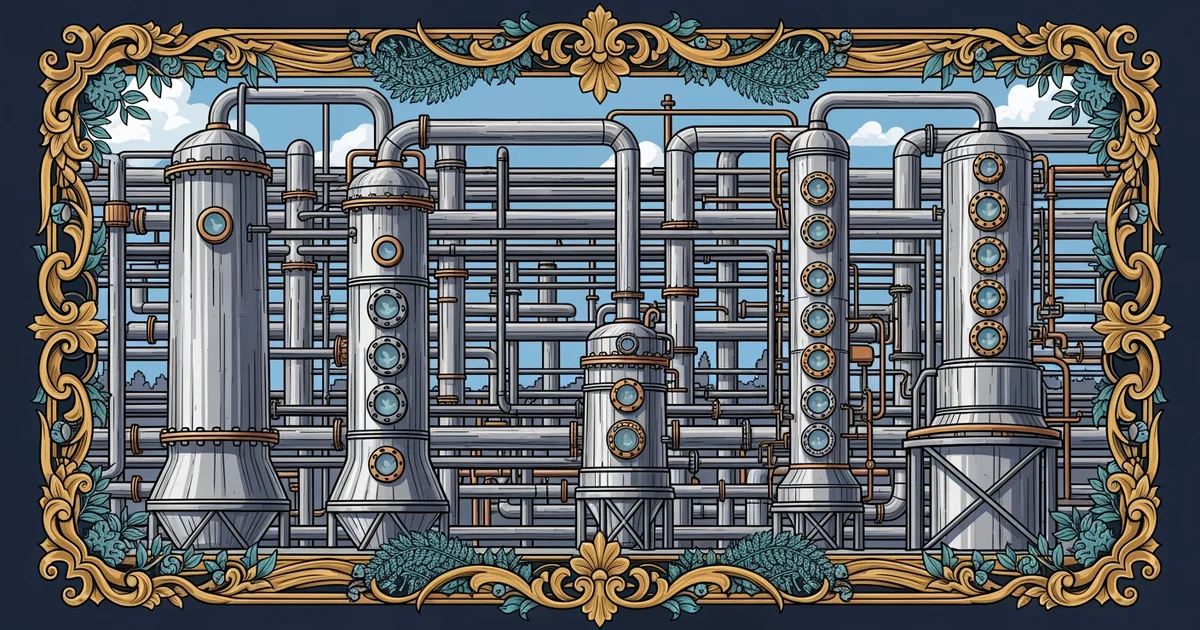
Designing the Process Flow
Engineers start this work by creating a detailed map known as a process flowsheet to track every step of the production cycle. This document acts as the blueprint for the entire facility, showing where fluids move, where heat is added, and where materials change their chemical state. Just as a chef follows a recipe to ensure the meal tastes consistent every time, the engineer uses this flowsheet to guarantee the final output meets strict quality standards. If the flowsheet contains errors, the entire plant might experience bottlenecks that waste energy and reduce the amount of product created during the day. By carefully charting these paths, designers ensure that the plant operates with maximum efficiency while keeping safety at the absolute forefront of all daily operations.
Key term: Process flowsheet — a visual diagram that outlines the sequence of equipment and material movement within a chemical manufacturing plant.
Integrating Complex Systems
After the initial map is drawn, engineers must integrate individual pieces of hardware into a single, cohesive unit that works in harmony. Think of this integration like a professional kitchen where the stove, the refrigerator, and the prep stations are placed to minimize the distance staff must walk. If the stove sits too far from the prep counter, the chef loses time and the food cools down before it reaches the customer. In a factory, if a reactor is placed too far from a cooling unit, the system loses valuable heat energy and slows down the entire production line. Engineers use this spatial logic to minimize waste, ensuring that the energy consumed at one stage of the process supports the needs of the next stage.
To manage these complex interactions, engineers categorize equipment based on the specific role they play in the transformation of raw materials into useful goods:
- Reactor units serve as the heart of the plant by initiating the chemical changes that convert raw, natural substances into valuable products through controlled heat and pressure.
- Separation columns function as the sorting centers of the factory by removing impurities and isolating the desired components from the leftover waste materials.
- Heat exchangers act as the energy managers of the system by capturing excess heat from one area to pre-warm incoming materials elsewhere in the plant.
Balancing Efficiency and Sustainability
As engineers refine their designs, they must balance the need for high production speeds with the requirements for environmental safety. Previous stations discussed how we measure sustainability, but now we must apply those metrics directly to the physical layout of the factory floor. If a design requires too much water or energy, it fails the sustainability test regardless of how fast it produces goods. Engineers constantly tweak the flowsheet to recapture lost heat and recycle chemical solvents, effectively turning the plant into a closed loop. This synthesis of efficiency and ecology ensures that our modern industrial world can continue to provide essential products without exhausting the natural resources that sustain our society. The ultimate goal remains clear: create a system that is both profitable for the company and responsible toward the planet we share.
Successful plant design requires the precise integration of chemical reactions and mechanical systems to ensure that raw materials flow efficiently into high-value products.
The next step in our journey explores how future technologies will fundamentally change the way we design and operate these complex industrial systems.