
Heat Transfer Basics
Imagine you are holding a cold metal spoon inside a steaming cup of hot cocoa. Within seconds, the handle becomes warm to your touch because heat moves from the liquid into the metal. This everyday experience shows how energy naturally flows from areas with high thermal intensity to lower ones. Engineers must understand this flow to design machines that stay cool or keep materials warm during production. By controlling this movement, they ensure that raw materials transform into the high-quality products we rely on every single day.
Understanding Thermal Energy Movement
When we discuss how heat moves, we are really talking about the transfer of kinetic energy. Particles in a hot substance vibrate rapidly and bump into neighboring particles that are moving much slower. This physical contact forces the slower particles to speed up, effectively spreading the heat throughout the object. Think of this process like a busy crowd at a concert where people push against each other to move forward. As people in the front start moving, they bump into those ahead, creating a wave of motion that travels through the entire group. This movement is how thermal energy travels through solid objects, which engineers call conduction.
Key term: Conduction — the process where thermal energy moves through a material via direct particle collision.
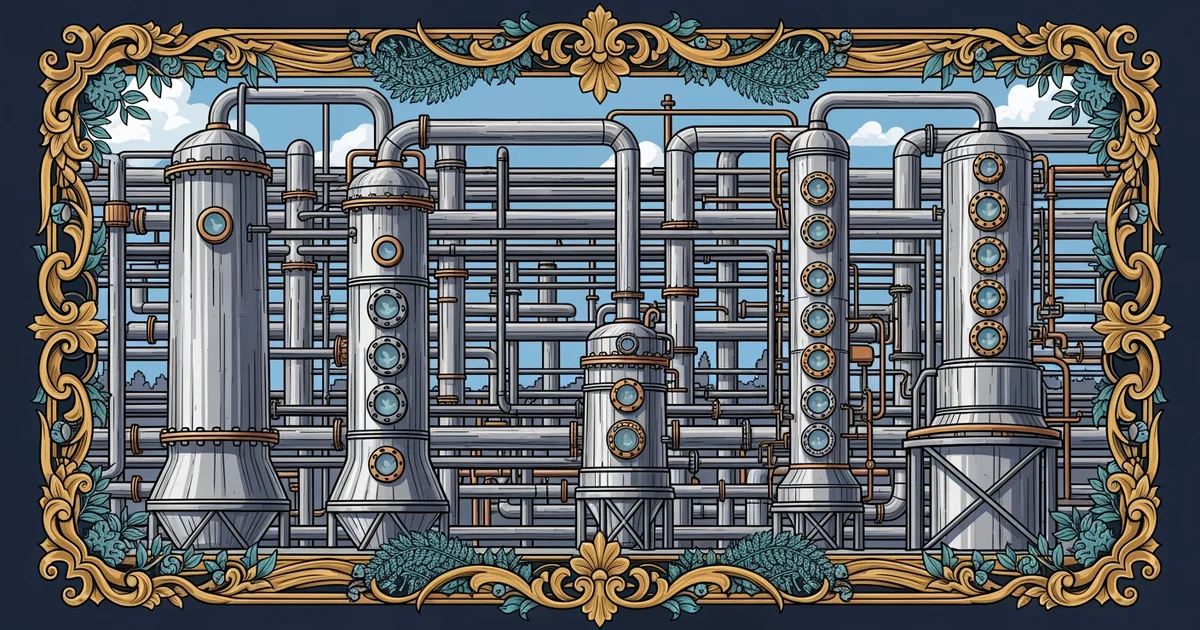
Engineers often use specific tools to manage these energy flows in large industrial systems. They rely on a device known as a heat exchanger to move thermal energy between two different fluids. These fluids are separated by a solid wall to prevent them from mixing together during the process. One fluid might be very hot while the other remains cool, allowing the heat to jump across the wall. This setup keeps the system stable and prevents overheating while maximizing the efficiency of the entire manufacturing line.
Designing Efficient Exchange Systems
To determine how much heat moves through a system, engineers must calculate the rate of transfer. This calculation depends on the surface area available, the material thickness, and the difference in temperatures. A larger surface area allows more particles to collide, which speeds up the transfer of energy significantly. If the wall is too thick, the heat struggles to pass through, acting like a heavy blanket. Engineers must balance these factors to ensure that the machine performs its job without wasting precious energy. The following table outlines how different variables affect the overall efficiency of these thermal exchange systems.
| Variable | Change | Effect on Heat Transfer |
|---|---|---|
| Surface Area | Increase | Higher transfer rate |
| Wall Thickness | Increase | Lower transfer rate |
| Temperature Gap | Increase | Faster energy flow |
When building these systems, engineers often choose between different flow patterns to optimize their designs. They might arrange the pipes so that the two fluids travel in the same direction or opposite directions. Choosing the right path ensures that the temperature difference remains high throughout the entire device. This strategy keeps the energy moving quickly from the hot fluid to the cooler one. By carefully mapping these paths, engineers can create systems that are both compact and highly effective for mass production.
- Identify the temperature difference between the hot and cold fluids to set the baseline.
- Calculate the total surface area required for the heat to move across the barrier.
- Select the best material for the wall to ensure maximum conductivity without structural failure.
- Arrange the flow paths to maintain a steady gradient across the entire device.
This systematic approach ensures that every factory process remains within safe temperature limits while saving costs. By mastering these principles, engineers turn raw inputs into refined goods with precision and reliability. Every product you own underwent a similar thermal journey during its creation in a large facility.
Thermal energy transfer is a controllable process where engineers use physical barriers and temperature gradients to move heat efficiently between substances.
The next Station introduces mass transfer dynamics, which determines how chemical components move through a mixture during production.