
Defining Chemical Engineering
Imagine holding a handful of raw sand and watching it transform into a clear glass bottle. This simple change from gritty dust to a smooth container happens because of complex industrial processes. Engineers work behind the scenes to turn basic natural materials into the items you use every day. They combine science and math to make these massive transformations possible on a global scale. Without this work, our modern world would lack the materials needed for medicine, food, and technology.
The Core Work of Chemical Engineering
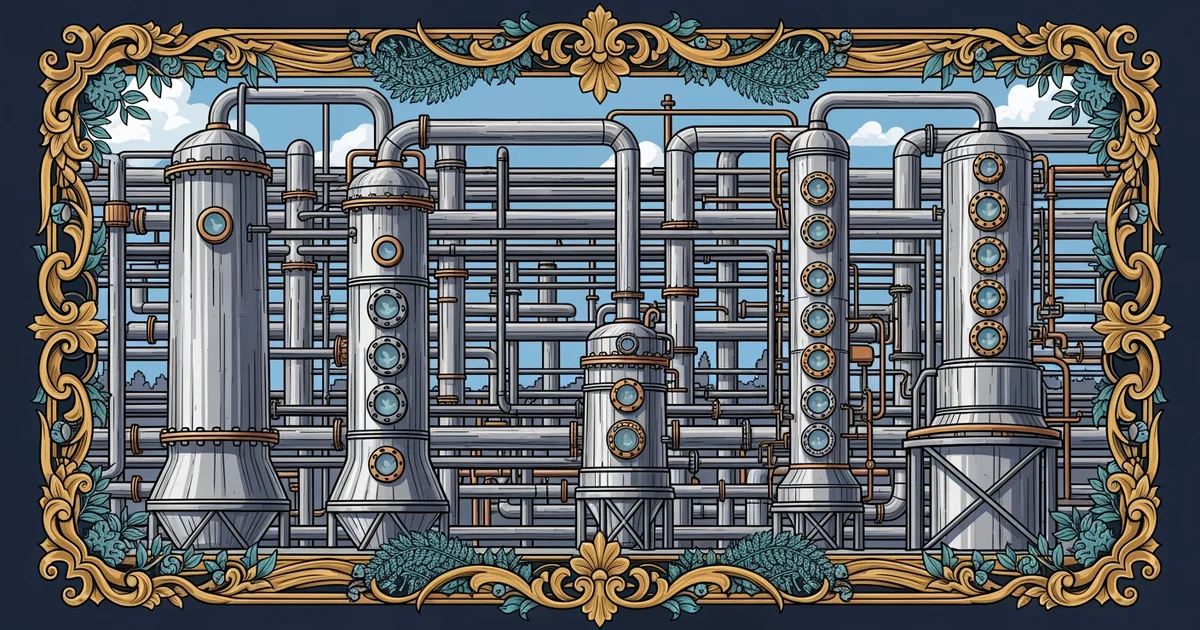
Chemical engineering involves the design and management of processes that change raw matter into useful goods. Think of a chef in a massive, high-tech kitchen who must prepare meals for millions of hungry people simultaneously. The chef needs to ensure that every single plate tastes identical while maintaining strict safety standards throughout the kitchen. Chemical engineers act as the architects of these industrial kitchens by controlling heat, pressure, and chemical reactions. They ensure that every step of the manufacturing cycle remains efficient, safe, and cost-effective for everyone involved.
Key term: Chemical Engineering — the branch of engineering that uses physical science and mathematics to turn raw materials into valuable products.
These professionals focus on the transformation of matter through carefully controlled systems that operate on a massive scale. They study how molecules interact to create new substances that serve specific human needs like cleaning agents or fuel. By understanding the fundamental behavior of atoms, they can predict how large machines will perform under high stress. They must balance the laws of physics with the practical limits of factory equipment to keep production moving. This requires constant monitoring of variables like temperature and flow rates to prevent any dangerous or wasteful outcomes.
Managing Industrial Systems
To move from raw ingredients to finished products, engineers rely on specific unit operations that repeat throughout many different industries. These operations allow for the separation, purification, and mixing of materials in a predictable, repeatable, and safe manner. By breaking down complex tasks into smaller, manageable steps, they can optimize each part of the entire manufacturing process.
| Process Step | Primary Goal | Example Application |
|---|---|---|
| Separation | Removing impurities | Filtering clean water |
| Mixing | Combining ingredients | Creating liquid soap |
| Heat Transfer | Changing temperature | Pasteurizing fresh milk |
These core functions serve as the building blocks for every major factory that produces the goods we rely on daily. Engineers must understand how these steps interact because a small change in one area can affect the whole system. For example, changing the temperature of a liquid might speed up mixing but could also ruin the final product quality. They use data to find the sweet spot where speed and quality meet to create the best possible outcome for consumers.
Engineering teams often use these fundamental steps to ensure that the final product meets high standards of safety and quality. They monitor the flow of materials through pipes and reactors to maintain a steady output of goods. If a system experiences a blockage or a temperature spike, the engineers must adjust the controls immediately to restore balance. This constant attention to detail keeps the entire supply chain running without interruption or risk to the public. Through this systematic approach, they turn random natural resources into the safe and reliable items found in your home.
Chemical engineering serves as the bridge between raw natural resources and the finished, useful products that sustain our modern way of life.
By mastering these foundational concepts, you will build the skills needed to understand how matter and energy interact in the world around you.