
Scale and Safety
Imagine a massive factory pipe suddenly bursting under high pressure while workers stand nearby. Engineers must prevent such disasters by designing systems that handle extreme forces safely every day. When we scale up a small laboratory experiment to a giant industrial level, the risks often grow much faster than the size of the equipment itself. Small errors in a beaker are messy, but small errors in a factory can be catastrophic. Engineers use strict protocols to ensure that every machine remains stable, predictable, and secure for everyone involved in the production process.
Understanding Industrial Risk Management
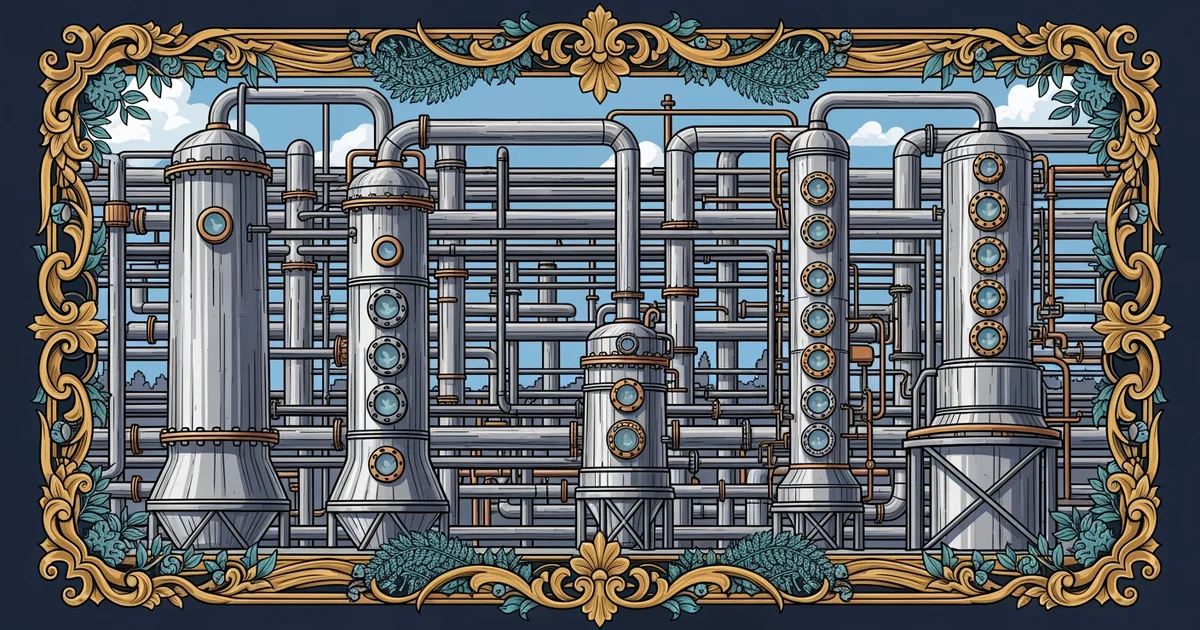
To manage these risks, engineers look at the entire system through the lens of process safety. This field focuses on preventing leaks, fires, or explosions that could harm people or the environment. Think of it like managing a household budget where a small mistake in counting change is manageable, but a mistake in a massive bank ledger could bankrupt an entire city. Engineers must account for every possible failure point before they even build the physical structure. They identify hazards early and create redundant systems to ensure that if one part fails, the entire plant does not suffer a total collapse.
Key term: Process safety — the rigorous application of engineering principles to prevent hazardous releases of chemicals or energy from industrial systems.
When engineers scale up a process, they must verify that the materials can withstand the new, higher forces. They use a specific set of tools to evaluate these dangers before any production begins. These safety checks ensure that the equipment is not just strong enough for normal use, but also for unexpected surges in pressure or temperature. By testing these conditions in a digital model first, engineers save time and prevent physical disasters. This methodical approach turns chaotic industrial environments into organized and reliable spaces for manufacturing essential goods.
Essential Protocols for System Integrity
Engineers follow a strict sequence of actions to ensure that every large system operates within a safe range. These steps help them maintain control over complex chemical reactions and physical flows during the production cycle.
- Hazard assessment identifies every potential point where a system might fail under stress.
- Control implementation adds mechanical barriers that stop leaks before they reach the outside air.
- Monitoring systems track temperature and pressure changes to alert operators of any rising danger.
- Emergency shutdown protocols automatically stop all operations if a critical limit is ever exceeded.
These protocols ensure that human operators are never the only line of defense against a dangerous industrial accident. By relying on automated systems, engineers create a buffer that protects the facility even when human error occurs. This is vital because complex systems often have many moving parts that must stay in perfect harmony to function correctly. When these parts work together, the entire factory becomes more efficient and safer for the workers on the floor.
| Feature | Small Scale | Large Scale | Safety Impact |
|---|---|---|---|
| Pressure | Low | Very High | Requires thicker steel |
| Heat | Manageable | Intense | Needs cooling systems |
| Volume | Minimal | Massive | Needs spill containment |
This table highlights why scaling up requires more than just making parts larger. As the volume of chemicals increases, the physical demands on the equipment rise exponentially. A pipe that works for a small experiment might shatter under the weight and pressure of a commercial production run. Engineers must calculate these changes precisely to avoid structural failure. By understanding these differences, they can build systems that remain safe regardless of the total output volume. This preparation is the foundation of modern chemical engineering and ensures that our daily products are made without endangering the communities where factories operate.
Engineers maintain safety in large systems by identifying risks early and designing automated backups that prevent failures before they occur.
Next, we will explore how these liquids and gases move through pipes to keep production flowing smoothly.