
Integrated Planning
Imagine your city is a massive house where every room needs water to function properly. If the kitchen drains the pipes while the bathroom needs a shower, the whole house loses pressure and efficiency. Managing local water resources requires this same level of coordinated planning to ensure everyone has access to the supply they need. We must move past isolated efforts and toward a unified strategy that treats the entire water basin as one single, interconnected living system.
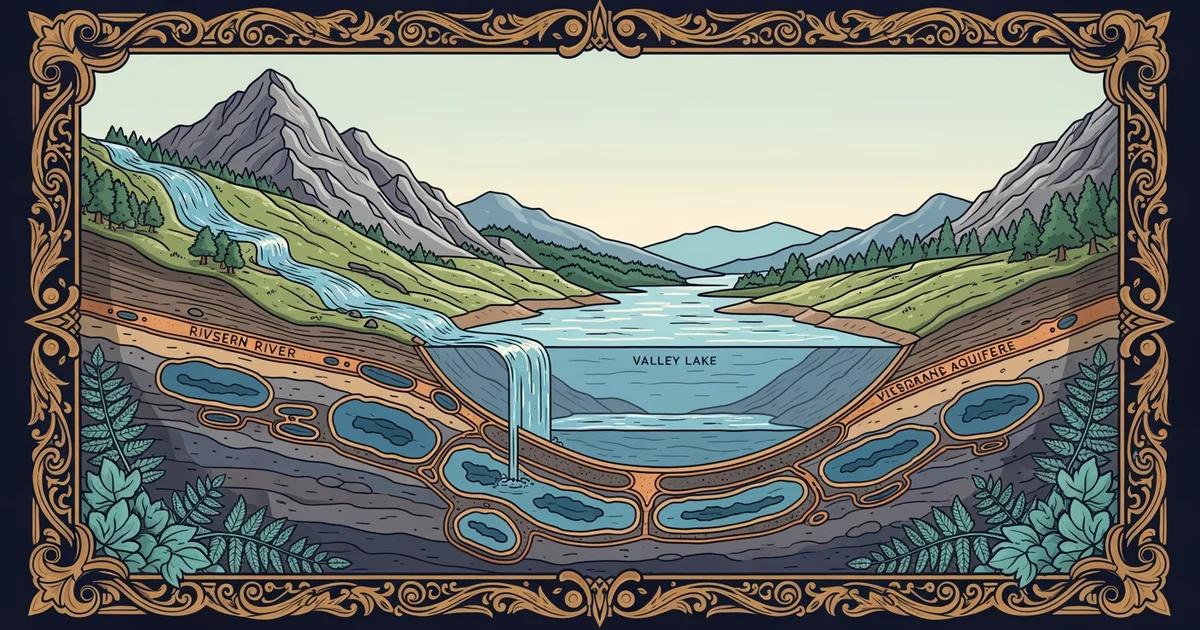
Connecting Local Systems
Integrated planning acts like a conductor leading a large orchestra to ensure every section plays in harmony. When planners look at a river basin, they must consider the needs of farmers, urban residents, and wild ecosystems simultaneously. If we only focus on agricultural needs, cities might face shortages during dry seasons. If we only prioritize urban growth, we risk destroying the natural wetlands that clean our water supply naturally. This process requires balancing competing demands through transparent communication between all groups involved in the process.
Key term: Integrated Water Resources Management — a process which promotes the coordinated development and management of water, land, and related resources to maximize economic and social welfare.
By viewing the basin as a shared resource, we avoid the trap of zero-sum thinking where one group must lose for another to win. This approach forces us to reconcile the tension between industrial development and environmental conservation. We can see how this works by comparing three major sectors that rely on the same basin for their daily survival and operational success.
| Sector | Primary Need | Potential Conflict | Shared Goal |
|---|---|---|---|
| Agriculture | High volume irrigation | Depletes river levels | Efficient water use |
| Urban Centers | Consistent clean supply | Pollution from runoff | Sustainable growth |
| Ecosystems | Natural flow patterns | Habitat loss/damage | Biodiversity health |
Implementing Holistic Strategies
Successful management depends on our ability to synthesize data from different sources into one coherent action plan. We must look at how previous topics like climate change impacts alter the reliability of rainfall patterns over time. When we combine this with the need for sustainable infrastructure, we create a roadmap that survives changing environmental conditions. This strategy involves several distinct phases that ensure all stakeholders remain informed and involved throughout the entire project lifecycle.
- Assessment phase identifies the current water availability and maps out the specific needs of every user group within the basin region.
- Collaborative negotiation brings diverse stakeholders to the table to establish fair rules for water allocation during periods of extreme scarcity.
- Adaptive monitoring uses real-time data to adjust usage levels as environmental conditions shift, ensuring we never exceed the natural replenishment rate.
- Infrastructure investment focuses on projects that provide multiple benefits, such as restoring wetlands that provide flood protection and natural water filtration.
These steps ensure that our planning remains flexible enough to handle the unexpected challenges of a warming world. By integrating these strategies, we address the foundation question of how to protect fragile ecosystems while meeting human needs. We are essentially building a safety net that protects the basin from the stresses of over-extraction and pollution. This requires moving away from short-term fixes toward long-term resilience that benefits the entire community for many future generations.
Effective water management requires balancing the competing needs of agriculture, cities, and nature through a unified, adaptive planning framework that treats the entire basin as a single interconnected system.
Next, we will explore how future water solutions can leverage new technology to further enhance the resilience of our global water supply.