
The Global Water Cycle
Imagine a glass of water sitting on your desk that has been moving across the planet for billions of years. Every drop you drink has traveled through clouds, deep underground oceans, and even the bodies of ancient creatures before reaching you. This constant movement of water is not just a random event, but a highly organized system that keeps all life on Earth functioning. Understanding this process helps us see how our planet recycles its most precious resource to support every living thing.
The Mechanisms of Water Movement
Water constantly changes its physical state as it moves between the surface of the Earth and the atmosphere. This cycle begins when energy from the sun warms the liquid water found in our vast oceans and lakes. As the temperature rises, individual water molecules gain enough energy to break free from the liquid surface and turn into invisible gas. This process, known as evaporation, acts like a global delivery service that lifts moisture high into the sky. Once the water vapor reaches the cooler air above, it loses energy and begins to cluster together. These tiny droplets form clouds that drift across the globe, waiting for the right conditions to return to the ground.
Key term: Evaporation — the process where liquid water turns into gas and rises into the atmosphere.
When these clouds become heavy with moisture, the water returns to the Earth through various forms of precipitation. This stage is similar to a bank account receiving a deposit after a long period of spending. Rain, snow, and hail act as the primary methods for moving water from the clouds back down to the surface. Once the water lands, it either flows over the ground into rivers or soaks deep into the soil. This movement ensures that inland areas receive the moisture they need to support forests, crops, and human communities. Without this constant flow, the land would quickly turn into a barren desert that cannot sustain life.
Storage and Distribution Systems
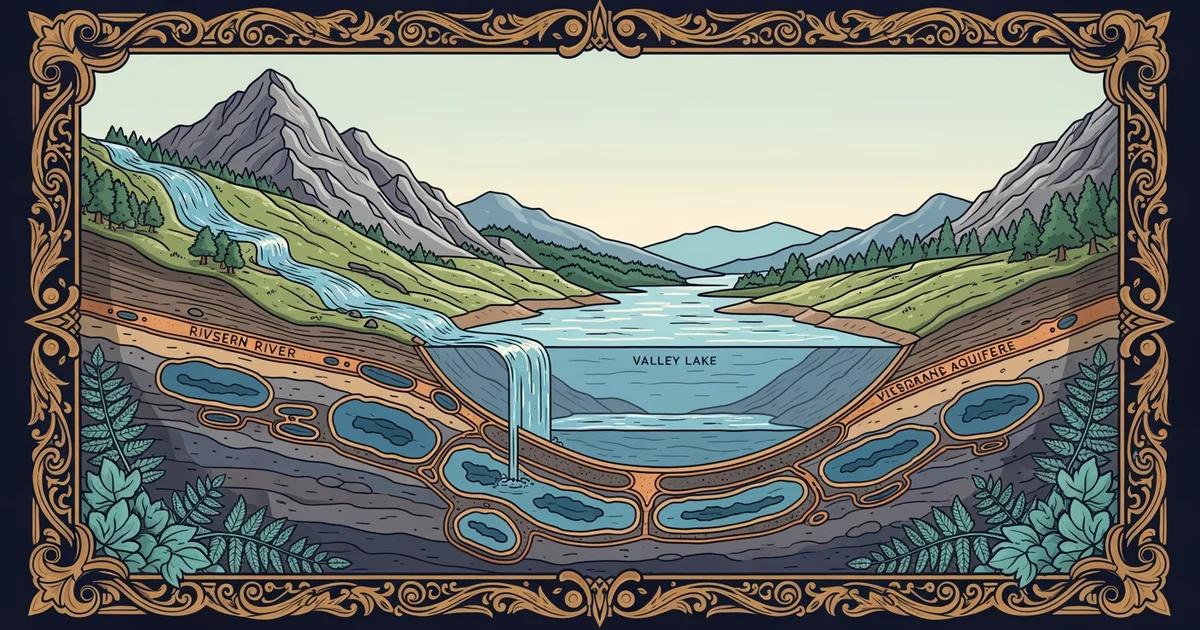
After water reaches the ground, it does not just stay in one place for long. It moves through a complex network of natural storage areas that act like a giant planetary savings account. Some water collects in rivers and streams, which act as high-speed transport lanes moving liquid toward the sea. Other portions of water soak into the ground to fill up massive underground spaces called aquifers. These natural reservoirs store water for long periods, protecting it from the heat of the sun. The following table highlights how different parts of the planet store and move this vital resource throughout the cycle.
| Storage Area | Primary Function | Movement Speed |
|---|---|---|
| Oceans | Long-term storage | Very slow |
| Rivers | Rapid transport | Fast flow |
| Aquifers | Groundwater bank | Extremely slow |
We can think of this cycle like a circular economic system where nothing is ever truly wasted. The water you use today for a shower will eventually evaporate, form a cloud, and fall as rain in a different location. This infinite loop ensures that the total amount of water on Earth remains constant over time. Because the planet does not create new water, we must rely on this natural recycling process to keep our supplies clean and available. Learning how this system works allows us to manage our water usage more effectively for the future.
To keep this system running, the Earth relies on several key stages that move moisture across the globe:
- Condensation occurs when cooling water vapor turns back into liquid droplets to form clouds, which prepares the water for its return journey to the surface.
- Transpiration happens when plants release water vapor through their leaves, adding more moisture to the air and helping to regulate the local climate.
- Infiltration describes how water soaks into the soil and rocks, replenishing the underground supplies that provide us with clean drinking water for daily needs.
The global water cycle acts as a closed-loop recycling system that constantly redistributes moisture to support life across every corner of the planet.
By understanding these core components, you will gain the tools needed to explore how we manage freshwater availability in the next section of this path.