
Freshwater Availability
Imagine reaching for a glass of water, only to find the tap is completely dry. While water covers most of our planet, the vast majority of it is salty ocean water. This reality creates a hidden tension between our growing global needs and the limited supply of drinkable water.
The Reality of Global Water Distribution
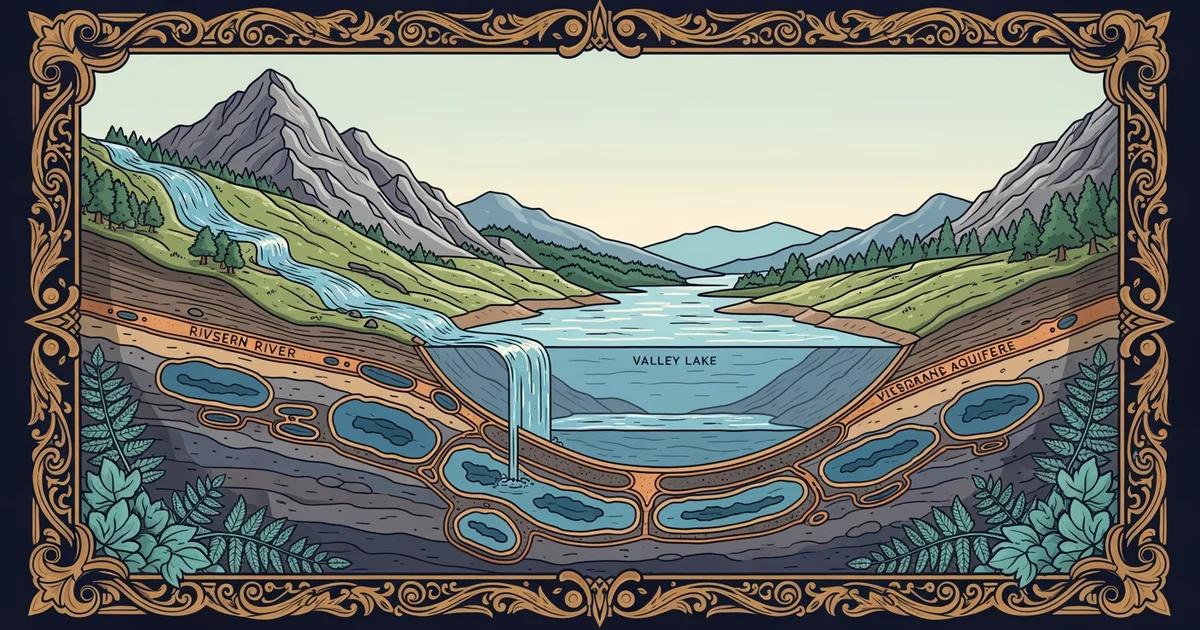
Although Earth is often called the blue planet, we must distinguish between total water and usable freshwater. Most water on Earth exists in oceans, which contain high concentrations of salt that humans cannot safely drink. We rely on freshwater sources like rivers, lakes, and underground aquifers for our daily survival needs. Unfortunately, these sources represent a tiny fraction of the total water available on our home planet. Much of this freshwater remains locked away in polar ice caps or deep glaciers. Because this ice is currently inaccessible, we face a significant challenge in accessing enough liquid water for everyone. We operate much like a person with a massive bank account who can only access a few spare coins. We see the wealth of water around us, but the vast majority of those funds remain frozen in a vault we cannot open.
Key term: Hydrosphere — the total amount of water on a planet, including water on the surface, underground, and in the air.
Factors Limiting Our Freshwater Supply
Beyond the issue of frozen reserves, we must consider how geography and climate affect where water flows. Water does not distribute itself evenly across the continents, leaving some regions with abundance and others with extreme scarcity. Some areas experience heavy rainfall that replenishes local rivers, while other regions suffer from long-term drought conditions. These natural patterns often conflict with where people choose to build their homes and industries. We also face the ongoing risk of pollution, which can render existing freshwater sources unsafe for human consumption. When we contaminate a local lake or river, we effectively shrink our already small pool of available resources. The following factors highlight why this resource remains so fragile for human populations:
- Geographic location determines how much rain a region receives, which dictates the natural replenishment rate of local surface water supplies.
- Seasonal variation causes water levels to fluctuate wildly throughout the year, making it difficult to maintain a steady, reliable supply.
- Human contamination introduces harmful chemicals and waste into clean systems, which permanently removes that specific water from our usable supply.
Understanding these constraints helps us see that water management is not just about finding more water. It is about protecting the limited amount we have while balancing the needs of different communities. We must treat our freshwater as a finite budget that requires careful planning and constant oversight to avoid depletion.
| Water Source | Percentage of Total | Accessibility Level |
|---|---|---|
| Oceans | 97.5% | Very Low |
| Glaciers | 1.7% | Very Low |
| Groundwater | 0.7% | Moderate |
| Surface | 0.1% | High |
This table illustrates how little water we can actually use for our daily needs. While surface water is the easiest to reach, it represents the smallest portion of the total supply. We must prioritize the protection of these vulnerable surface sources to ensure our communities have enough water. Every action we take to reduce waste helps preserve these limited stores for future generations. If we continue to ignore these distribution patterns, we risk facing severe shortages that could impact every aspect of modern life. We are essentially living on a very tight water budget that leaves little room for error or mismanagement.
Managing freshwater requires acknowledging that only a tiny fraction of Earth's total water is accessible, liquid, and safe for human use.
The next step in our journey explores how human activities influence the specific volume of water we consume each day.