
Dam Infrastructure
Imagine a massive concrete wall holding back billions of gallons of rushing river water. Engineers design these structures to capture energy and store water for dry seasons. While these walls provide stability, they fundamentally alter the natural flow of our planet's river systems. Building a dam is like installing a giant gate in your home hallway to control the flow of guests. You gain total control over who enters each room, but you also block the natural path for everyone. This trade-off defines the core challenge of modern water management in our growing world.
The Mechanics of Hydraulic Control
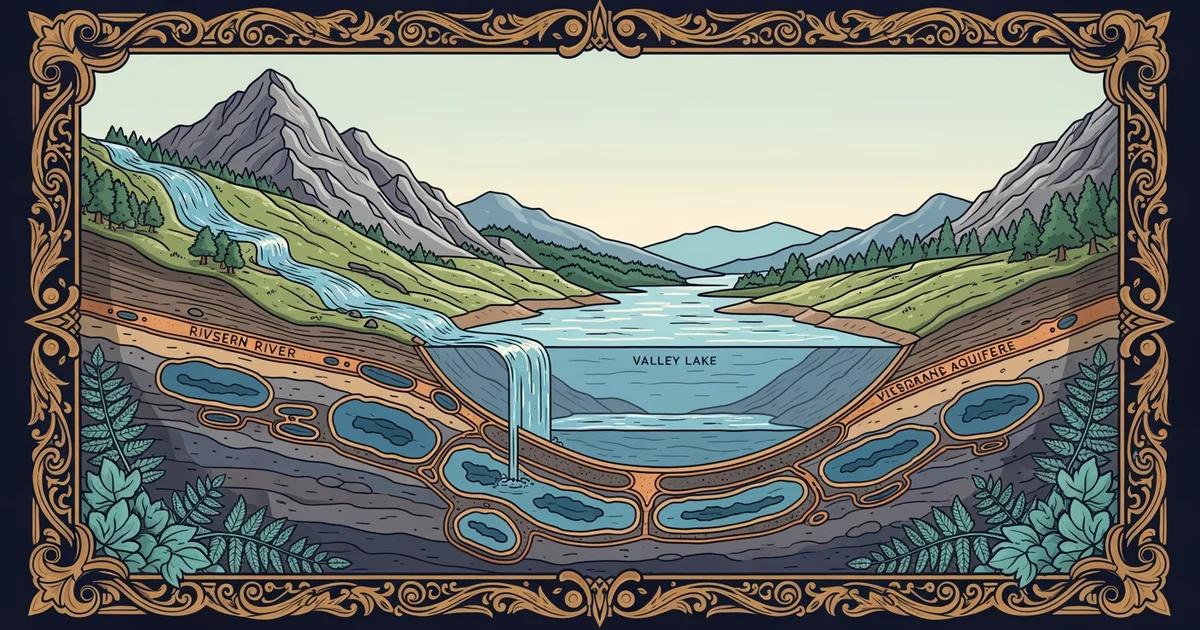
When we build a large dam, we create a massive reservoir by flooding a wide area of land. This process allows us to manage water levels during times of heavy rain or drought. By holding back the water, we ensure a steady supply for farmers and cities downstream. However, this storage system stops the natural movement of sediment and nutrients that rivers carry. These materials usually nourish the soil in areas far away from the dam itself. Without this flow, the land downstream begins to lose its natural fertility over many years.
Key term: Reservoir — a large artificial lake created behind a dam to store water for later use.
Note: Large dams often force the relocation of entire communities to make room for the rising water levels.
Beyond water storage, these massive structures serve as critical hubs for generating clean electrical power. We use the weight of the water to spin large turbines located deep inside the dam. This process provides a reliable source of power that does not burn fossil fuels for energy. Despite this benefit, the physical barrier prevents fish from migrating to their natural spawning grounds upstream. Many species struggle to survive because they cannot reach the places they need for reproduction. Engineers try to solve this by building fish ladders, though these structures rarely replace the original river.
Balancing Human Needs and Ecology
We must consider the long-term impact on the local ecosystem when planning new hydraulic projects. The following list highlights the primary environmental trade-offs that engineers face during the construction phase:
- Habitat fragmentation occurs when a barrier splits a continuous river into two separate, isolated segments.
- Reduced water temperature happens because water released from the bottom of a deep reservoir is often cold.
- Altered flow patterns change the timing of seasonal floods that many native plants require for healthy growth.
- Increased methane emissions result from the decay of flooded vegetation trapped at the bottom of the reservoir.
| Feature | Benefit to Humans | Cost to Environment |
|---|---|---|
| Storage | Reliable supply | Land flooding |
| Power | Renewable energy | Migratory blockage |
| Control | Flood prevention | Sediment trapping |
Each row in this table shows why choosing to build a dam remains a complex decision. We gain essential resources like electricity and water security for our homes and our farms. Yet, we lose the natural rhythm of the river that sustains diverse wild animal populations. Finding a middle ground requires careful planning and a deep respect for the natural world. We are learning that nature provides services that are difficult to replace with human engineering alone. Sustainable management means looking at the health of the entire river, not just the water.
Managing water resources requires balancing immediate human demands for power and irrigation against the long-term health of natural river ecosystems.
But what does it look like in practice when we try to remove these massive barriers to restore the environment?
Want this with sources you can check?
Premium Learning Paths for Earth Sciences & Geography are researched against open-access libraries — PubMed, arXiv, government databases, and more — with their distinctive claims cited to real sources and independently checked.
See what Premium includes