
Erosion and Deposition
Imagine you are holding a garden hose while spraying a patch of loose dirt. As the water hits the ground, you notice small channels forming where the soil washes away into the grass. This simple action shows how moving water acts like a sculptor on the surface of our planet. Just as your hose removes dirt, river systems constantly reshape the land by moving materials from one place to another. This ongoing process of change is what we call the mechanical work of water.
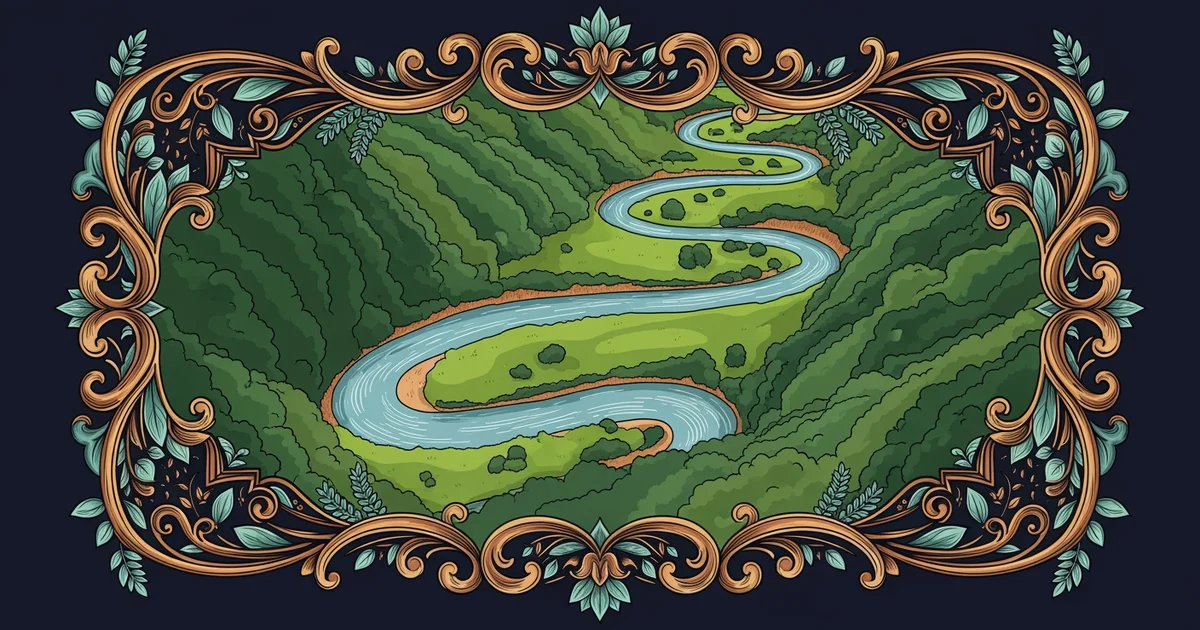
The Mechanics of Moving Earth
When water flows through a river channel, it carries energy that can move heavy rocks and fine sand. This power is known as erosion, which is the process of picking up and transporting loose soil or stones. Think of a river like a delivery truck that picks up cargo at one site to drop it off later. The speed of the water determines how much material the river can lift and carry downstream. Faster currents have more strength to move larger pieces of sediment than slow, gentle streams.
Key term: Deposition — the process where water slows down and drops its cargo of sand, silt, or rock fragments.
Once the water loses its energy, it can no longer hold onto the heavy sediment it carries. This is where deposition takes place, creating new landforms like sandbars or deltas. You can compare this to a person carrying a heavy backpack who finally sets it down to rest. When the river rounds a sharp curve, the water on the inside of the bend slows down significantly. This loss of speed forces the river to drop its load, building up land on that inner curve.
Patterns of River Change
Rivers do not stay in one place forever because they constantly shift their paths over time. The following list explains how these changes occur through the interaction of flowing water and land:
- Erosion happens on the outer bank of a river bend where water flows fastest, carving away the soil and widening the channel over many years.
- Deposition occurs on the inner bank where water moves slowly, allowing sediment to settle and create new ground that slowly pushes the river to one side.
- The constant cycle of cutting into one bank while building up the other causes the river to twist and turn in large loops across the landscape.
| Feature | Location | Process | Result |
|---|---|---|---|
| Outer Bank | Outside curve | Erosion | Deeper water |
| Inner Bank | Inside curve | Deposition | Shallower water |
| River Bed | Channel floor | Transport | Moving sediment |
These processes allow a river to migrate across its valley floor like a snake moving through grass. The water acts as a persistent force that balances the removal of material with the creation of new land. By shifting its path, the river ensures that the landscape remains dynamic rather than static. This movement is a natural part of how water regulates the shape of the earth's surface over long periods. When we observe these changes, we see the cumulative effect of gravity pulling water toward lower elevations.
Understanding these mechanics helps us see why rivers never look the same from one century to the next. The water seeks the path of least resistance while it carries the weight of the land toward the sea. Every grain of sand moved by the river is a tiny piece of a larger puzzle that defines our geography. As the water carves, it also builds, creating a balance that keeps the earth in a state of constant motion. This cycle of building and breaking down is the primary way that water systems influence the physical environment around us.
Rivers continuously reshape the landscape by eroding material from fast-moving outer banks and depositing that sediment on slower inner banks.
But what does it look like when these shifting river paths eventually overflow their banks and cover the surrounding land?
Want this with sources you can check?
Premium Learning Paths for Earth Sciences & Geography are researched against open-access libraries — PubMed, arXiv, government databases, and more — with their distinctive claims cited to real sources and independently checked.
See what Premium includes