
Channel Morphology Types
Imagine you are trying to navigate a crowded sidewalk while carrying a heavy box. If you walk in a straight line, you might bump into obstacles, so you shift your path to move around them. Rivers behave in a similar way when they encounter different types of ground on their journey to the sea. The physical shape of a river, known as its channel morphology, changes based on the speed of the water and the materials it must cross.
Understanding River Channel Patterns
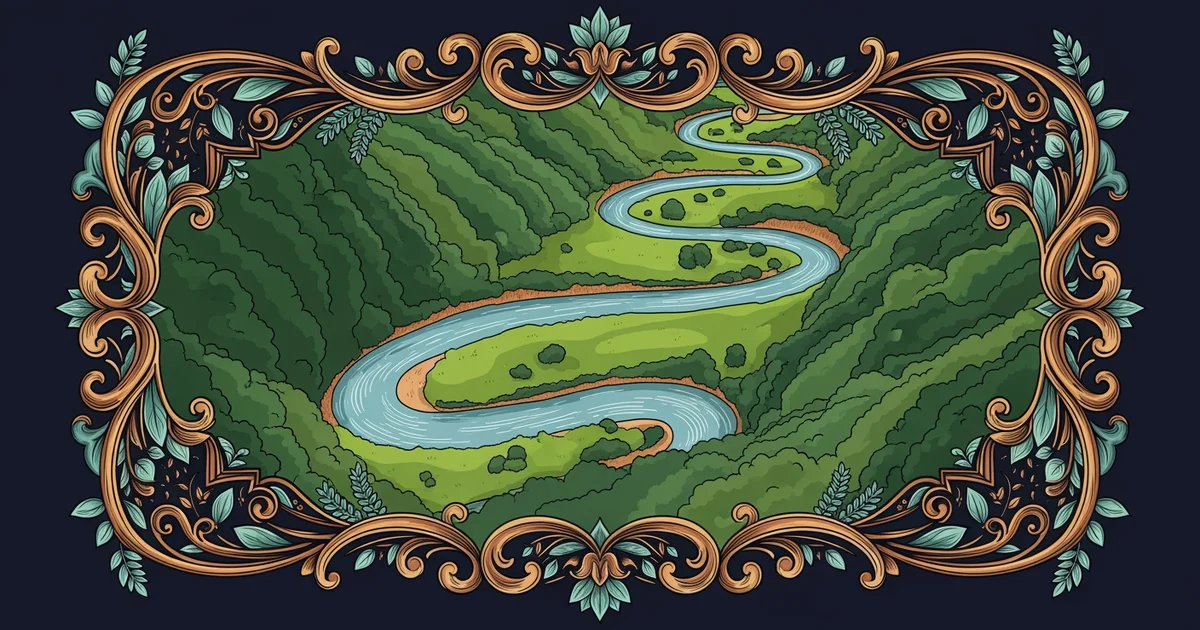
When a river flows over a flat landscape, it often develops a winding path that looks like a series of loops. This pattern is called a meandering channel, and it happens because water moves faster on the outside of a curve. As the water speeds up, it erodes the bank and picks up sediment to carry downstream. Meanwhile, the water on the inside of the curve moves much slower, allowing it to drop the sediment it carries. Over time, these loops grow wider and shift their position across the flat valley floor.
Think of a meandering river like a person walking through a field of tall grass. Instead of cutting a straight line through the thickest parts, the person naturally follows the path of least resistance. The river does the same thing by avoiding solid rock or dense soil, choosing instead to curve around softer ground. This continuous process of carving and filling creates the classic snake-like shape that we see on maps of older, flatter river systems.
Braided Channels and Sediment Loads
In contrast to the single winding path of a meander, some rivers look like a tangled web of many smaller streams. These are known as braided channels, and they typically form in areas with very high amounts of sediment. When a river carries more sand and gravel than it can transport, it drops that material in the middle of the channel. These deposits create small islands or bars that force the main flow to split into several smaller, shallower paths. The river looks like a braided rope, constantly shifting its threads as the sediment piles up or washes away during high water events.
| Feature | Meandering Channel | Braided Channel |
|---|---|---|
| Sediment Load | Low to moderate volume | Very high volume |
| Channel Count | Single main path | Multiple shifting paths |
| Bank Stability | Stable and cohesive | Loose and erodible |
We can compare the difference between these two types to how a business manages its resources. A meandering river acts like a single specialist firm that focuses its energy on one clear, efficient path. A braided river behaves more like a busy marketplace with many small vendors, where resources are spread out across multiple stalls. Both systems effectively move their cargo from one location to another, but they use very different strategies to handle the volume and the obstacles they face along the way.
Key term: Channel morphology — the physical form and shape of a river bed that results from the interaction between flowing water and local sediment.
When the supply of sediment changes, a river may even transition from one type of channel to another. A river that once meandered might become braided if a landslide dumps a massive amount of dirt into its path. Similarly, a braided river might eventually turn into a single meander if the sediment source is removed. These changes demonstrate how sensitive river systems are to the balance of power between the water and the land. By observing these patterns, scientists can reconstruct the history of a landscape and predict how it might change in the future.
The shape of a river channel serves as a visual record of how water balances its energy against the sediment it must carry across the landscape.
The next Station introduces sediment transport processes, which determines how specific materials move through these channel types.