
Subduction Zone Forces
Imagine a heavy anchor dragging a ship down into the deep ocean depths while the vessel moves forward across the waves. This movement represents the powerful forces at play beneath our feet as massive tectonic plates descend into the hot mantle of our planet.
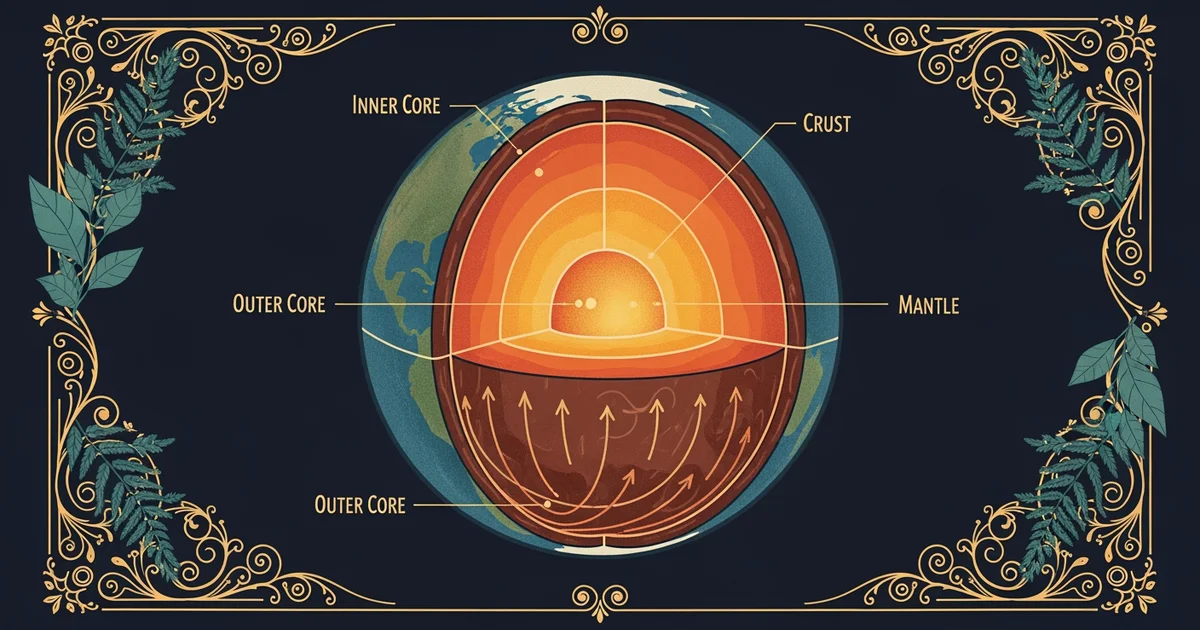
The Mechanics of Plate Descent
When a dense oceanic plate meets a lighter continental plate, the heavier slab begins to sink into the interior of the Earth. This process, known as subduction, acts as the primary engine for moving the outer shell of our world. As the cold, dense slab enters the mantle, it experiences a dramatic increase in temperature and pressure. This change alters the mineral structure of the rock, making the descending slab significantly denser than the surrounding mantle material. Gravity pulls this heavy, sinking slab downward with immense force, effectively dragging the rest of the plate behind it like a heavy chain falling off the edge of a table.
Key term: Slab pull — the gravitational force that drags a tectonic plate into the mantle as it descends during the process of subduction.
This gravitational pull serves as the dominant force driving plate motion across the globe today. Without this constant downward tension, the plates would likely remain stationary rather than drifting across the surface. The speed of plate movement often correlates directly with the age and density of the subducting slab. Older, colder plates sink more rapidly because their increased density generates a stronger gravitational attraction toward the core. Younger, warmer plates remain more buoyant and tend to sink at much slower rates during their descent into the mantle.
The Role of Density and Gravity
We can compare this movement to an economic system where the weight of an investment determines its long-term direction and stability. Just as a heavy asset drags a portfolio toward a specific market outcome, the dense rock slab forces the crust to shift toward the subduction zone. This interaction between density and gravity ensures that the surface of the Earth remains in a constant state of renewal and recycling. The following table highlights how different slab characteristics influence the speed and intensity of the subduction process within the mantle:
| Slab Characteristic | Impact on Subduction | Relative Force Magnitude |
|---|---|---|
| High Density | Rapid descent speed | Very High Force |
| Low Temperature | Increased sinking rate | High Gravitational Pull |
| High Buoyancy | Slower descent speed | Low Gravitational Pull |
These factors work together to shape the landscape of our planet through constant, invisible movement. The subduction process requires specific conditions to function effectively across different geographic regions of the world.
- Initial contact occurs when two plates collide at a convergent boundary zone.
- The denser oceanic plate bends and begins its long descent beneath the lighter plate.
- Gravitational forces increase as the slab enters the mantle and gains more density.
- The sinking slab creates a powerful drag effect that pulls the trailing plate along.
This continuous cycle of sinking and dragging explains why our continents shift positions over millions of years. The energy released during this descent is not just a geological curiosity but a fundamental requirement for maintaining the internal heat balance of the Earth. As the slab reaches deeper into the mantle, it eventually melts and contributes to the formation of new magma. This magma then rises to create volcanic arcs, which effectively recycles the crustal material back into the surface environment. Understanding these forces allows us to predict where earthquakes and volcanic activity will likely occur in the future. The entire system relies on the delicate balance between the downward pull of gravity and the resistance of the surrounding mantle rock layers.
The downward gravitational pull on dense, sinking tectonic plates serves as the primary engine that drives the continuous movement and recycling of the Earth's outer crustal layers.
But what does this process look like in practice when the sinking slab begins to melt and create new volcanic structures?