
Indigenous Land Tenure Tales
In 1997, the Delgamuukw court case forced the Canadian justice system to finally accept oral histories as valid evidence for land ownership. This landmark shift proved that ancestral stories are not just myths but are actually legal blueprints for territory management. Ancient communities have always used specific narratives to define the boundaries of their ancestral lands, effectively creating a living map passed down through generations. When we ignore these stories, we lose the historical context that explains why certain groups hold deep ties to specific geographic features. Understanding this helps us see that folklore functions like a deed in a modern property dispute, providing a record of long-term stewardship over the physical environment.
The Legal Weight of Oral Traditions
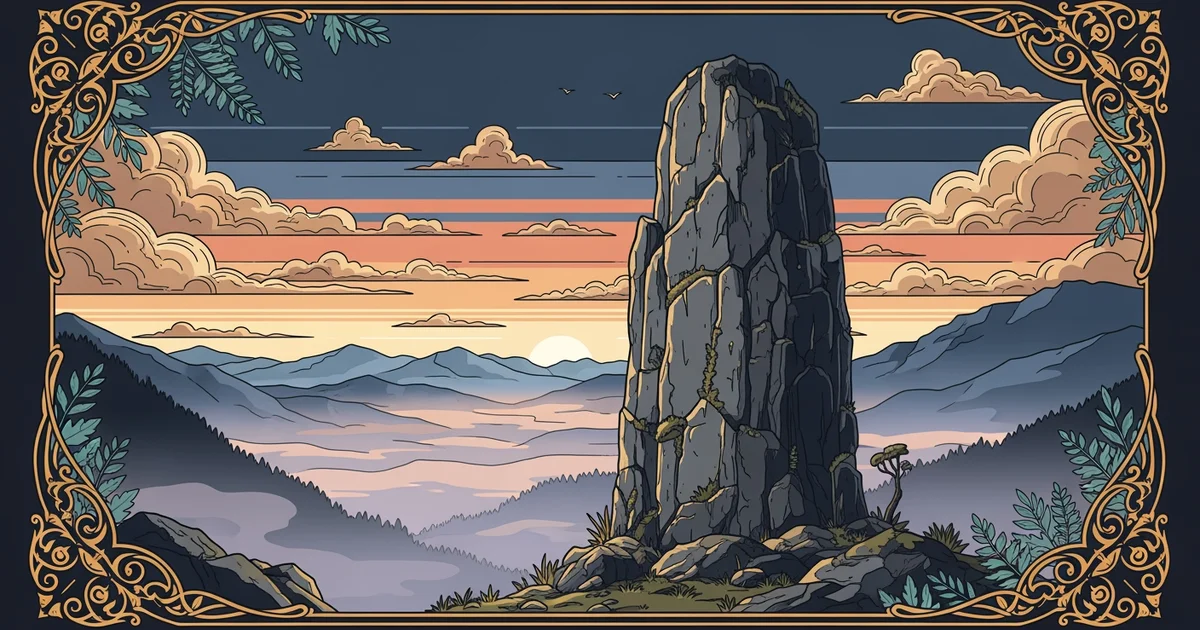
Traditional stories often act as a repository for complex information about resources, boundaries, and stewardship responsibilities. These narratives function much like a modern land registry, where specific stories correspond to specific geographic markers such as rivers, mountain peaks, or unique rock formations. By embedding these details into cultural memory, indigenous groups ensured that their land tenure remained clear and enforceable across centuries of history. This is the application of cultural memory from Station 10, showing how memory secures property rights against external encroachment. When a community tells a story about a mountain, they are often describing the precise limits of their hunting grounds, water rights, and gathering zones. This method of record-keeping relies on the consistency of the landscape to maintain the integrity of the legal claim.
Key term: Indigenous Land Tenure — the right of native peoples to own and manage their traditional territories based on historical occupation and cultural systems.
Legal systems often struggle to process these stories because they prioritize written documents over spoken testimony. However, when courts finally acknowledge these tales, they are essentially recognizing a different form of intellectual property that has existed for millennia. This recognition creates a bridge between modern property law and ancient traditions, allowing for a more inclusive definition of land ownership. By treating stories as evidence, the law begins to respect the deep connections that groups maintain with their environment. This move away from strict written records represents a significant evolution in how we define property in a globalized world. It requires judges and lawyers to learn the language of the landscape, treating every hill and stream as a potential witness to a long-standing legal agreement.
Integrating Folklore into Modern Governance
Modern policy makers are now starting to see that indigenous stories offer valuable insights into sustainable land management practices. These tales frequently contain detailed observations about local ecology, such as which areas should remain untouched to protect animal migration routes or water quality. By integrating this knowledge into contemporary planning, governments can create more effective and culturally sensitive environmental policies. This approach is similar to how a city planner might consult historical zoning maps to avoid building on flood-prone land, except the map here is a story. The process ensures that development projects do not inadvertently destroy sites of immense cultural or ecological significance, which protects both the heritage and the long-term health of the region.
| Feature | Traditional Story | Modern Land Deed |
|---|---|---|
| Storage | Oral memory | Written document |
| Flexibility | High adaptability | Rigid structure |
| Stewardship | Long-term duty | Ownership rights |
- Oral narratives preserve specific ecological data by linking survival strategies to landmarks, ensuring that future generations know exactly how to manage their resources without depleting them.
- Ancestral boundaries are often defined by natural features, which act as permanent markers that do not require fences or signs to be understood by the local population.
- Cultural stewardship requires a deep commitment to the land, where the stories function as a moral contract that binds the people to the preservation of their natural environment.
Traditional stories serve as essential legal frameworks that validate indigenous land rights by documenting historical stewardship through the geography of the landscape.
But this model faces significant challenges when modern industrial interests collide with these ancient, non-written definitions of territorial boundaries.