
Flatware Placement Logic
Imagine reaching for a fork during a formal dinner, only to find the wrong tool in your hand. An awkward pause often follows, as guests realize their placement does not match the meal service. Proper flatware arrangement is not merely about decoration; it serves as a silent language that guides guests through each course. By following a clear logic, hosts ensure that every diner feels comfortable and prepared for the meal ahead. This system of placement acts as a roadmap, directing the diner from the outside in as the menu progresses.
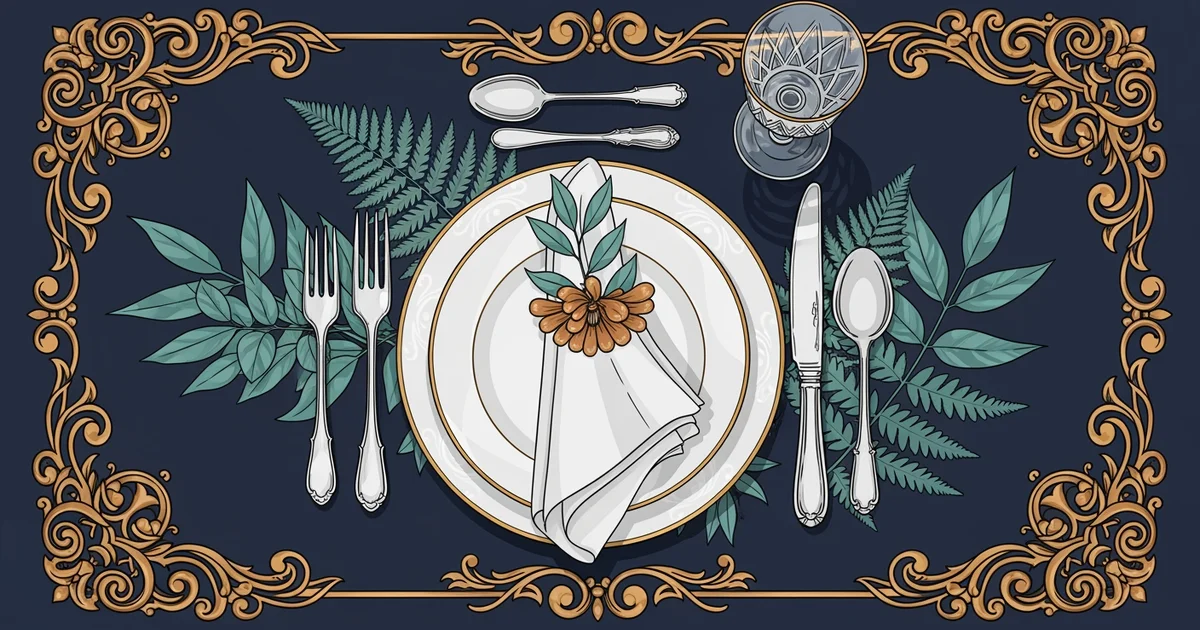
The Logic of Outside-In Placement
When setting a table, the primary rule involves placing utensils in the order of their use. Diners start with the pieces furthest from the plate and work their way inward toward the center. This design mimics the flow of a multi-course dinner, where soup or salad usually arrives before the main protein. If a guest sees three forks, they know the outermost one belongs to the first course. This physical arrangement removes the guesswork, allowing the diner to focus on conversation rather than worrying about which tool to pick up next. Think of this arrangement like a professional assembly line where the tools you need are always within reach at the exact moment you need them. Just as a mechanic organizes tools by the order of repairs, a host organizes the table to streamline the dining experience. This logic creates a seamless rhythm, ensuring that the movement from one dish to the next feels natural and intuitive for everyone at the table.
Standard Positioning Guidelines
Beyond the sequence of use, specific rules dictate the side of the plate where each piece rests. Forks typically sit on the left side, while knives and spoons find their home on the right. The cutting edge of every knife must face inward toward the plate, signaling safety and order. This convention keeps the table looking tidy and prevents accidental contact with sharp edges during the meal. To maintain this balance, follow these standard placement guidelines for a formal setting:
- The salad fork sits on the far left, as it is usually the first utensil required for the opening course.
- The dinner fork rests directly next to the plate, positioned to handle the main course after the salad is finished.
- The dinner knife occupies the space to the right of the plate, with the blade turned inward to face the center.
- The soup spoon sits on the far right, placed outside the knife because soup is typically served before the main entree.
These placements ensure that the table remains functional for both right-handed and left-handed guests. By keeping the most important tools closest to the plate, the host creates a visual anchor that defines the dining space. This clarity reduces the cognitive load on the guest, allowing them to enjoy the food without needing to scan the table for misplaced items. When the table is set with such precision, the entire atmosphere feels more welcoming and professional, reinforcing the respect the host holds for their invited guests.
Key term: Flatware — the collective term for the metal utensils, such as forks, knives, and spoons, used for eating and serving food.
Maintaining this order requires attention to detail, especially when adding dessert utensils. These items often sit horizontally above the main plate, separated from the primary set. By keeping dessert tools apart, the host prevents clutter in the main dining area, reserving them for the final stage of the meal. This separation also provides a clear visual signal that the main meal has concluded, helping guests understand the progression of the evening. Each piece of metal on the table has a specific purpose and a designated location, reflecting the careful planning that goes into a successful dining experience. When every item resides in its proper place, the table becomes a canvas of order, elevating the simple act of eating into a structured social event.
Proper flatware placement uses an outside-in logic to guide guests through a meal, ensuring that the necessary tools are always accessible in the correct order.
The next Station introduces glassware and beverage service, which determines how wine and water service complements the established flatware arrangement.