
Colonial Kitchen Tools
Imagine trying to prepare a full dinner without any electricity, modern stoves, or even simple metal measuring cups. You must rely entirely on your physical strength and basic hand tools to turn raw ingredients into a finished meal. This daily struggle defined the lives of early settlers who had to master manual labor just to survive the harsh winters. Before modern convenience arrived, every bite of food required hours of intense, repetitive physical effort from the cook. Understanding these tools reveals why cooking was once the most demanding chore in a household.
The Mechanics of Manual Preparation
Early colonial kitchens relied on simple machines that used leverage and friction to process food items. The most essential of these tools was the mortar and pestle, a pair used to crush, grind, and blend ingredients into fine powders or pastes. You hold the heavy base steady while using the rounded end of the pestle to press down on spices or grains. This action mimics how a modern food processor works, but it requires human energy rather than electric power. Without this tool, cooks could not easily break down tough dried herbs or hard peppercorns into usable cooking components.
Using a mortar and pestle is like trying to sand down a piece of wood by hand; it demands a steady rhythm and focused pressure to achieve the right texture. If you rush the process, the ingredients remain coarse and uneven, which ruins the final flavor of the dish. You must learn to listen to the sound of the grinding to know when the texture is perfect. This manual labor creates a direct connection between the cook and the food that is often lost in our modern, automated kitchens.
Essential Tools for the Colonial Hearth
Beyond grinding, colonial cooks relied on specific implements to manage heat and measure volume without standardized scales. Since they lacked digital timers and precise temperature controls, they developed an intuitive sense of timing based on the look and smell of the food. The items listed below represent the core equipment found in almost every colonial home during that period:
- The trivet acts as a metal stand that keeps heavy iron pots above the direct flames, preventing the bottom of the food from scorching during long cooking times.
- A long-handled iron peel allows the baker to reach deep into the back of a hot stone oven to place or remove heavy loaves of bread safely.
- The wooden butter churn uses a simple vertical motion to agitate heavy cream until the fat separates from the liquid, which provides the household with fresh butter for daily meals.
| Tool Name | Primary Function | Energy Source |
|---|---|---|
| Mortar and Pestle | Grinding herbs | Human muscle |
| Iron Skillet | Frying food | Hearth fire |
| Butter Churn | Making dairy | Human muscle |
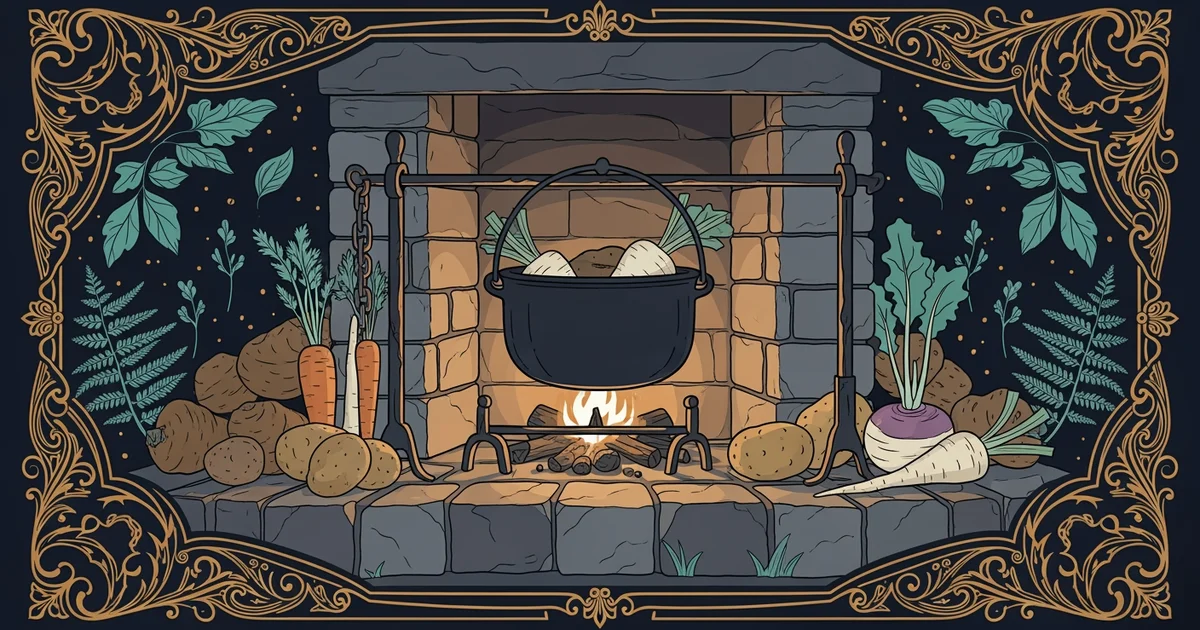
Key term: Hearth — the brick or stone floor of a fireplace where colonial cooks placed their pots and pans to prepare meals over an open fire.
Managing these tools required a high level of coordination and foresight to ensure that multiple dishes were ready at the same time. You could not simply turn a dial to adjust the heat, so you had to move your pots closer to or further from the fire. This constant monitoring made cooking a full-time job that dictated the rhythm of the entire day. By mastering these manual tools, the early settlers turned raw, difficult ingredients into the hearty meals that sustained their families through difficult years.
Mastering manual kitchen tools requires a deep understanding of physical effort and timing because these implements lack the automated controls found in modern appliances.
The next Station introduces adapting to primitive equipment, which determines how kitchen layout influences the efficiency of your cooking tasks.