
The Purpose of Historical Cooking
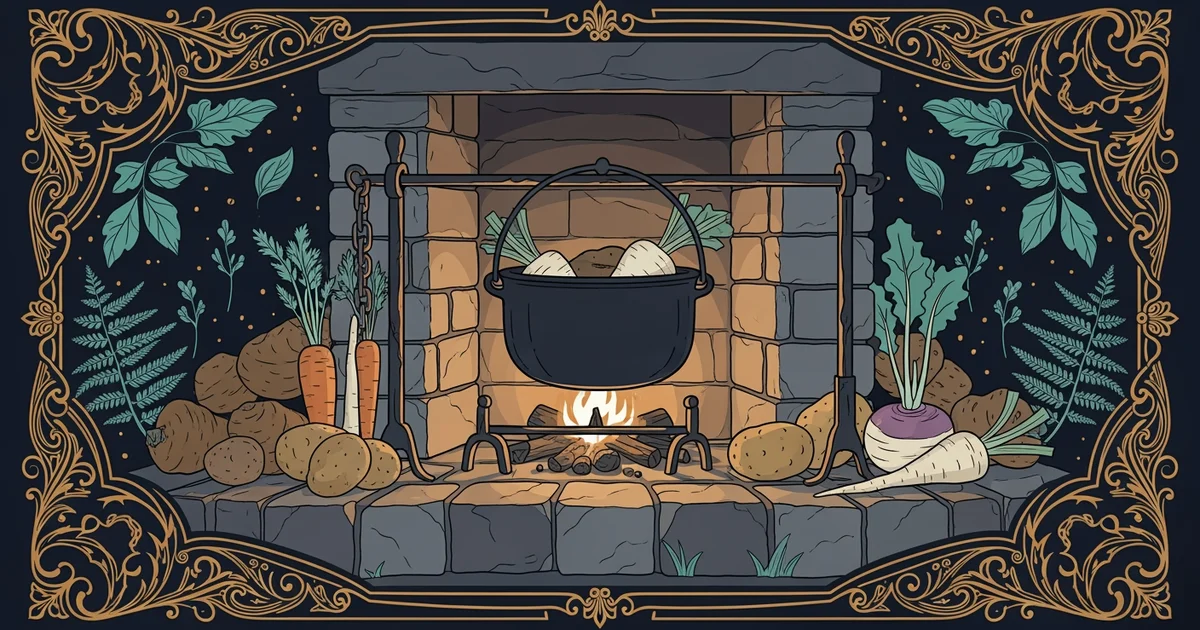
Imagine you are standing in a kitchen where the only heat source is an open wood fire. You have no timers, no precise temperature gauges, and no modern appliances to assist with your meal. This is the reality of historical cooking, a practice that transforms raw ingredients into a living link with our ancestors. Recreating these ancient methods allows us to step outside our modern convenience and experience the physical labor that defined daily life for centuries. By doing this, we move beyond reading history to actually feeling its texture, heat, and effort.
The Cultural Value of Ancient Methods
Studying food preparation from the past reveals how societies organized their time and resources to survive. When we recreate these dishes, we learn about the limitations and the ingenuity of people who lived long before us. Cooking was not merely a chore but a central pillar of community survival and social structure. It required deep knowledge of local ecosystems and seasonal cycles that we often ignore today. Just as a mechanic learns about a car by taking the engine apart, we understand history by taking apart the recipes that sustained entire civilizations.
Key term: Historical cooking — the practice of recreating food preparation techniques using the tools and ingredients available in a specific past era.
This process functions like a time machine that operates through our senses rather than through imagination alone. When you smell wood smoke or handle rough, hand-ground grains, you connect with the physical reality of the past. It highlights the vast gap between our current instant access to food and the patience required by our predecessors. Understanding this gap helps us appreciate the evolution of human technology and the shifting values regarding time, labor, and sustenance.
Why Historians Analyze Food Preparation
Historians study these methods to uncover the hidden stories of non-elite populations who left few written records. Most historical documents focus on kings or major political events, but food preparation was a universal experience for everyone. By analyzing the tools found in archaeological sites, researchers can reconstruct the daily routines of common families. This approach provides a bottom-up view of history that includes the experiences of women, children, and laborers who were often invisible in traditional texts.
We can compare the complexity of different food systems using the following framework to understand how various cultures managed their limited resources:
- Resource management: This involves how families tracked seasonal yields and stored surplus food to survive harsh winters or lean harvest periods without electricity.
- Tool utility: This refers to the specific design of manual implements like stone mortars or clay ovens that dictated exactly how ingredients could be processed.
- Social cooperation: This describes how communal cooking tasks required groups to work together, which strengthened family bonds and reinforced social hierarchies within the village.
By examining these elements, we build a clearer picture of how humans adapted to their environments over thousands of years. This study is not just about what people ate, but how their food choices shaped their entire way of life. It connects our modern dietary habits to the survival strategies that allowed our ancestors to thrive in challenging conditions. Through this path, you will gain a deep understanding of culinary evolution and the essential role that food plays in shaping human civilization.
Recreating historic food provides a sensory bridge that turns abstract historical facts into a tangible understanding of human endurance and daily ingenuity.
We will now move to the next stage where we explore the essential process of sourcing authentic ingredients to ensure our historical reenactments remain accurate.