
Database Management Systems
Imagine trying to find a single grain of sand inside a massive, unorganized desert. Biological data is often just like that desert, containing billions of tiny pieces of information about genes and proteins. Without a proper way to store and search this information, researchers would never find the patterns that reveal how our bodies function.
Organizing Biological Information
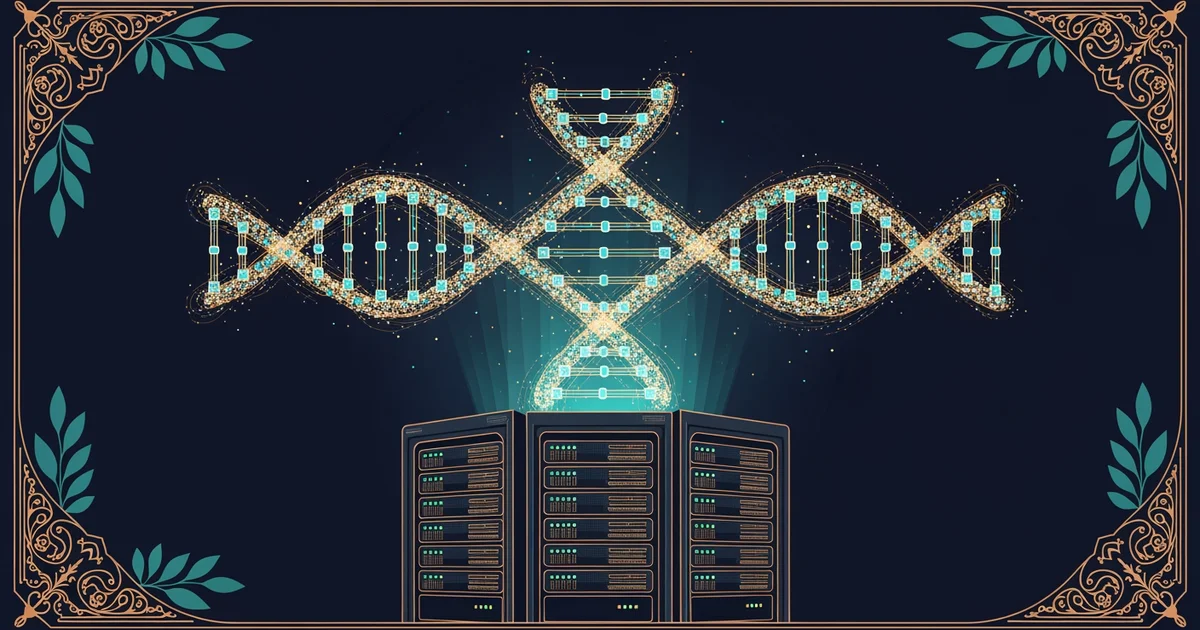
To make sense of this vast biological data, scientists rely on a Database Management System. Think of this system as a highly organized filing cabinet that keeps every document in its perfect place. Just as a librarian uses a cataloging system to locate a specific book in a library, these digital systems use structured rules to store information. When researchers need to find data about a specific protein, they do not search through raw text files. Instead, they send a request to the database, which finds the exact match in milliseconds. This efficiency allows scientists to focus on solving medical mysteries rather than spending their days organizing thousands of messy spreadsheets. By standardizing how data is stored, these systems ensure that scientists across the world can share and compare their discoveries without any confusion.
Key term: Database Management System — a specialized software tool designed to define, create, maintain, and control access to a large digital database.
Structures for Data Retrieval
Once the information is stored, we need a reliable way to pull it back out for analysis. Most biological databases use a Relational Database model to link different types of information together. Imagine you are managing a store where one list tracks your customers and another list tracks your inventory. If you want to know who bought a specific item, you need a way to link the customer name to the product ID. Databases use these connections to provide a complete picture of complex biological interactions. The following table shows how different biological entities are linked within a typical research database:
| Data Category | Primary Use | Linking Attribute |
|---|---|---|
| Gene Sequence | Identification | Unique Accession ID |
| Protein Fold | Structure Map | Amino Acid Chain |
| Clinical Trial | Outcome Data | Patient Identifier |
By keeping these categories separate but linked, the system remains fast and easy to update. If a new protein structure is discovered, researchers only need to add it to one table. The system automatically connects that new data to the existing gene records. This modular approach prevents errors and keeps the entire biological library accurate and up to date for every user.
Building these systems requires careful planning to ensure that the data remains accessible and secure. Developers often use a standard language to talk to these databases and request specific subsets of information. This process works like placing an order at a restaurant where you ask for specific ingredients. The database receives your request, gathers the relevant data, and serves it back to you in a clean format. This structured interaction is the backbone of modern biological research, allowing us to turn raw genetic code into usable medical knowledge. Without these organized systems, the sheer volume of biological information would be impossible to manage or understand.
Organized database systems transform chaotic biological data into structured knowledge by using logical links that allow researchers to retrieve specific information efficiently.
The next Station introduces Statistical Modeling Basics, which determines how data patterns are interpreted to predict biological outcomes.