
Defining Computational Biology
Imagine trying to sort through a massive library of books that have been torn into tiny, scattered pieces. If you had to piece together the original stories by hand, the task would take you many lifetimes to finish. Modern scientists face this exact problem when they study the complex blueprints of living things. They use powerful digital tools to organize these giant piles of information into meaningful patterns. This process turns biological chaos into clear, actionable knowledge about how our bodies function every single day.
The Digital Blueprint of Life
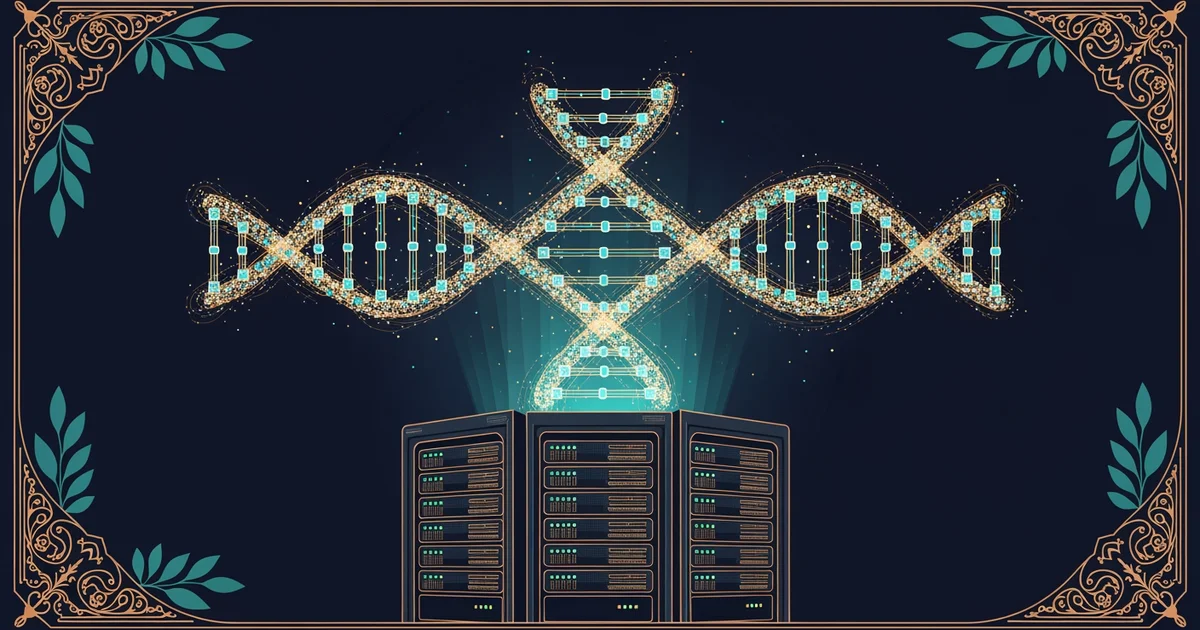
Biological systems store instructions for life inside long, intricate sequences that act like a massive code. Scientists call this sequence genomics, which involves reading the chemical letters that form the physical foundation of every living organism. Because these sequences are so long, humans cannot process them without help from advanced electronic machines. Computers act as high-speed translators that scan through millions of data points in seconds to find important clues. They allow researchers to see the big picture instead of getting lost in the tiny details of one single cell.
Key term: Bioinformatics — the specialized field that uses software and mathematical models to analyze and interpret complex biological datasets.
When we look at how computers help us, we can compare them to a professional accountant managing a massive business budget. An accountant does not track every single penny spent by hand because the volume of transactions is far too high. Instead, they use software to categorize expenses and identify trends that might be hidden from the naked eye. Similarly, researchers use computational tools to manage the vast "budget" of biological information stored in our DNA. This helps them find patterns that explain why some people get sick while others stay healthy.
Solving Biological Puzzles with Logic
Computers solve these puzzles by applying strict logical rules to messy, real-world data points found in nature. This field, known as computational biology, bridges the gap between raw laboratory observations and digital simulations. By creating virtual models, scientists can test how a new medicine might affect the body without needing to perform risky experiments. These simulations act as a sandbox where researchers can safely explore millions of different outcomes in a very short time. This efficiency saves years of work and helps bring life-saving treatments to the public much faster than before.
To understand how these tools work, consider the following ways that computers process biological information:
- Pattern recognition software identifies repeating sequences in DNA that might signal a specific genetic disease or trait.
- Predictive modeling allows scientists to simulate how proteins fold into shapes that determine their function inside our cells.
- Data visualization tools turn complex numerical tables into colorful maps that make it easier for human brains to understand.
These functions are essential because biology is not just about static parts, but about how those parts move together. The following table shows how different computational approaches help us understand these biological systems:
| Method | Primary Goal | Benefit to Science |
|---|---|---|
| Sequence Alignment | Compare genetic codes | Identify evolutionary links |
| Structure Prediction | Model protein shapes | Design better medications |
| Network Analysis | Map cellular pathways | Predict disease spread |
By using these methods, experts can finally decode the language of life with high precision. This work builds the foundation for everything you will learn about data analysis in the upcoming sections of this path. You will eventually be able to see how these digital tools empower scientists to cure diseases, improve human health, and understand the very origins of our existence.
Computational biology uses the immense processing power of modern computers to transform massive, confusing biological datasets into clear insights about how life functions.
By mastering these foundational concepts, you will gain the ability to navigate the complex world of biological data and understand how digital innovation drives modern medical breakthroughs.