
The History of Bioinformatics
Imagine trying to translate a massive, ancient library written in a secret code using only a manual typewriter and your own tired eyes. Early scientists faced this exact struggle when they first started looking at the long, complex strings of genetic data found inside living cells. They needed a way to store, sort, and analyze these biological messages without losing their minds in the process. This specific need for digital organization marks the true birth of our modern field of study.
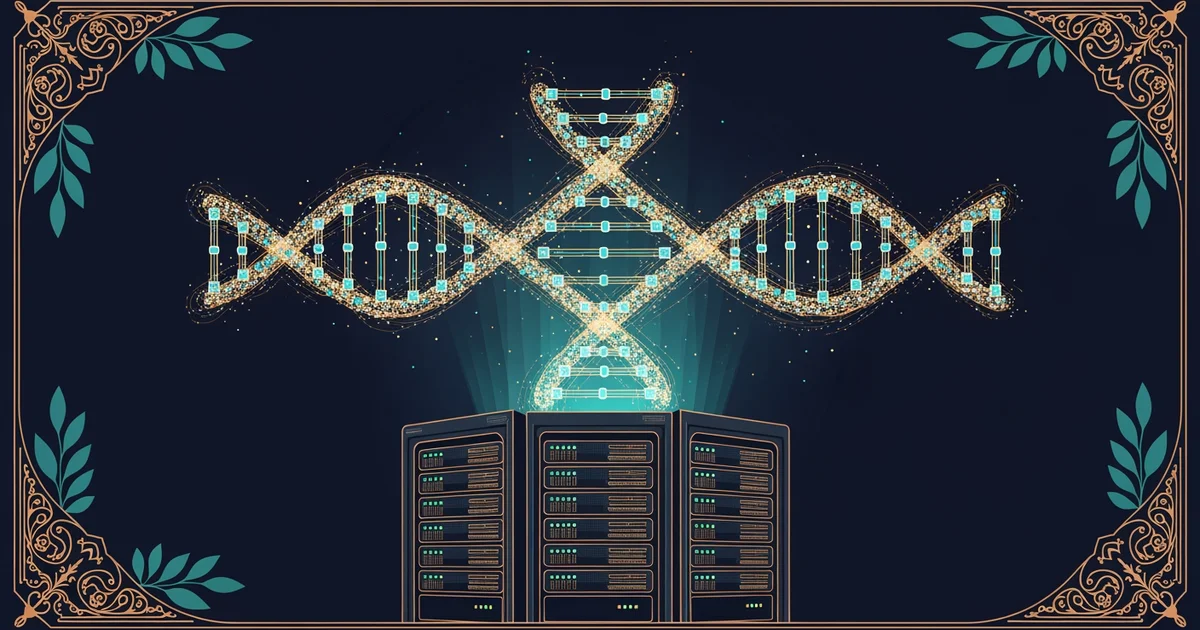
The Evolution of Digital Biology
Biological data represents the blueprint of life, but it exists as a messy, sprawling text that no human can read alone. Before computers became common, researchers used paper punch cards to track sequences of DNA, which is a slow and error-prone method for any serious discovery. When scientists finally gained access to early mainframe computers, they started building the first digital archives for genetic information. Think of this transition like moving from a tiny, handwritten ledger to a massive, searchable database in the cloud. This shift allowed experts to compare different organisms side-by-side for the first time in human history.
Key term: Bioinformatics — the specialized field that combines biology, computer science, and statistical analysis to decode the massive datasets found within living organisms.
As these digital tools grew more powerful, researchers began to see patterns that were previously invisible to the naked eye. They created complex algorithms to match genetic sequences, helping them find similarities between different species that might share common ancestors. This process is much like using a word processor to find a specific phrase in a document that is millions of pages long. Without these automated systems, we would still be stuck manually comparing strings of letters, which would take thousands of years to complete.
Milestones in Computational Research
To understand how far we have come, we must look at the specific tools that changed the landscape of biological research forever. These innovations transformed biology from a purely observational science into a data-driven discipline that relies on high-speed processing power.
| Innovation | Primary Function | Impact on Research |
|---|---|---|
| Early Databases | Storing raw sequences | Created a shared global resource |
| Sequence Matching | Finding gene overlaps | Revealed evolutionary connections |
| Predictive Models | Simulating cell activity | Reduced the need for wet-lab tests |
These advancements did not happen all at once, but rather through a series of logical steps that built upon previous successes:
- Initial digitization efforts focused on creating standard formats so that researchers could share their findings across different laboratories worldwide.
- Advanced search algorithms allowed scientists to query these massive databases to find specific gene functions that relate to human health.
- Modern simulation software now allows us to model how proteins fold in three dimensions, which helps us design new medicines safely.
By following this path, scientists moved from simple data storage to complex modeling of life itself. This evolution shows that the power of computing does not just store facts, but actively helps us predict how life functions under different conditions. Every new tool we build adds another layer of understanding to the complex puzzle of our own genetic makeup. We now stand at a point where we can simulate entire biological systems on a screen before we ever touch a physical sample in a lab. This capability saves time, money, and lives by narrowing down the endless possibilities of nature into actionable, testable theories for the future.
The history of bioinformatics proves that we can only unlock the secrets of life by transforming raw biological data into structured, searchable digital information.
Next, we will explore the specific logic used to align these genetic sequences to reveal their hidden biological messages.