
Biological Data Basics
Imagine you are trying to read a library book written in a secret code that only uses four letters. Every single cell in your body contains this massive library, and your job is to translate those letters into instructions for building you. Biological data is simply the digital version of this complex, life-sustaining code. By turning these biological patterns into strings of text that a computer can read, we unlock the ability to scan, search, and understand the blueprints of life itself.
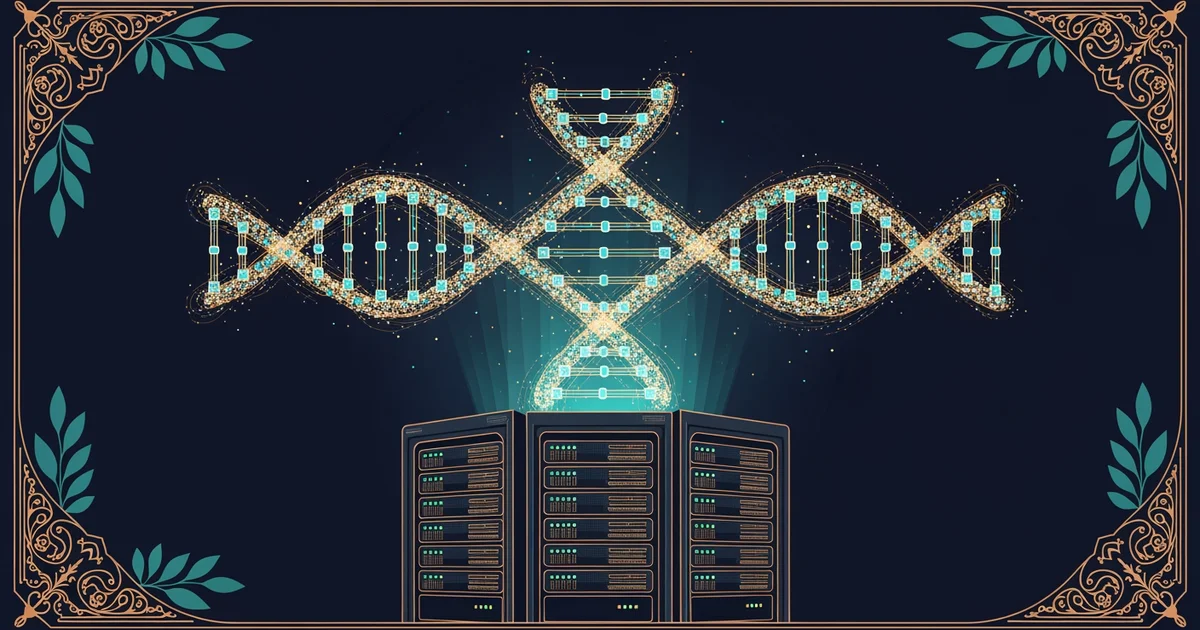
The Language of Life
DNA acts like a long, winding instruction manual that tells your body how to function correctly. This manual is written using four chemical building blocks that we label with the letters A, C, T, and G. In the world of computers, we treat these letters like bits of data that store specific information. Just as a digital image is made of millions of tiny colored dots, your traits are made of billions of these chemical letters arranged in a precise order. When we sequence a genome, we are essentially taking a snapshot of this manual to turn it into a format that software can process. This conversion is the first step in using powerful tools to find patterns, errors, or hidden traits within your cells.
Key term: Genomics — the study of the complete set of DNA instructions in an organism, which allows scientists to analyze how different parts of the code interact to create living systems.
Mapping Biological Data
Once we have the letters in a digital format, we need a way to organize them so they remain useful. Think of this process like sorting a massive, unorganized pile of receipts into a digital spreadsheet for your budget. If you do not categorize the data, it remains a useless heap of characters that provides no real insight. We use specialized software to align these sequences against a reference map to see where each piece fits. This alignment helps researchers identify which sections of the code perform specific tasks, such as determining eye color or managing how your body processes energy from food. Without this structured mapping, the raw data would be like having a dictionary where all the words were cut out and scattered across the floor.
To understand how we store this vast amount of biological information, we can look at the common file formats used by researchers:
- FASTA files store raw sequences of DNA letters as simple text, which acts as the basic foundation for almost every analysis tool we use today.
- FASTQ files include both the sequence letters and a quality score for every single character, which tells the computer how confident we are in that specific data point.
- VCF files highlight the differences between one person and a standard reference, which makes it much faster to spot unique variations in a specific set of data.
Translating Patterns into Knowledge
After the data is cleaned and sorted, computers perform complex math to find hidden meaning in the long strings of code. This is similar to a bank using algorithms to spot unusual spending patterns in your account history to prevent fraud. In biology, we look for recurring sequences that might indicate a health risk or a specific biological function. By comparing millions of these sequences at once, computer programs can predict how a cell might react to a new medicine or a change in its environment. This high-speed analysis allows us to solve problems that would take human researchers thousands of years to complete by hand. We are essentially teaching computers how to read the language of life so they can help us solve the mysteries stored within our own biology.
| Format Type | Primary Purpose | Key Feature |
|---|---|---|
| FASTA | Basic storage | Plain text sequences |
| FASTQ | Quality control | Includes accuracy scores |
| VCF | Variation study | Lists genetic differences |
By organizing these files, we ensure that the vast amount of data remains accessible and reliable for future research projects. The goal is to make sure that any scientist can take the same digital file and reach the same conclusions about the biological data. This consistency is what allows the scientific community to build upon previous work and make new discoveries about how our bodies work at the molecular level.
Digital biological data allows us to treat the complex instructions of life like a searchable, programmable library of information.
Now that we understand how DNA is stored as digital data, we will explore the history of how these methods were first developed to map the human genome.