
Future Remote Trends
Digital tools allow teams to span continents, yet many leaders still struggle to keep workers engaged. When you view your career as an evolving product, you realize that static job descriptions are becoming obsolete. Just as a software developer updates code to patch security holes, you must update your professional skills to match the shifting demands of a borderless economy. This Station explores how future trends in remote work will reshape the way we view employment and team cooperation.
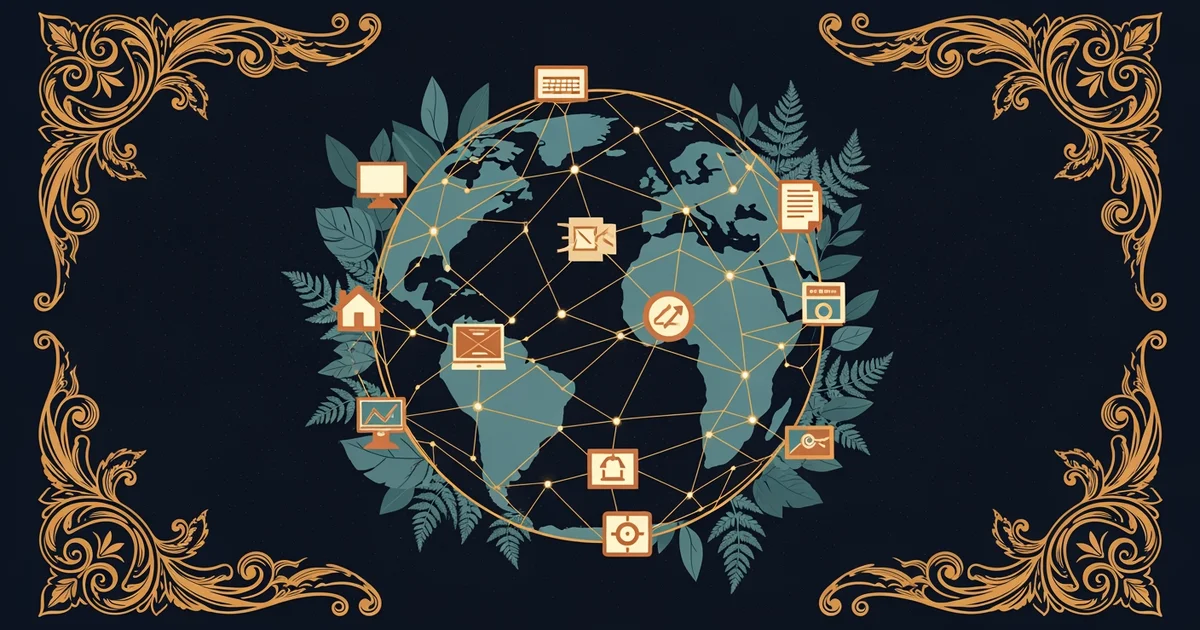
The Evolution of Global Employment
Businesses are moving toward a model where talent is sourced from any location on Earth. This shift creates a distributed workforce where team members operate in different time zones and cultural contexts. Companies that rely on this model gain access to a larger talent pool than firms limited by geography. However, this transition requires a change in management style from monitoring hours to measuring actual output. When managers focus on results rather than physical presence, they create a culture built on trust and clear expectations. This shift mirrors the way a local shop might expand into a global marketplace by using e-commerce platforms to reach distant customers.
Key term: Distributed workforce — a team structure where employees work from various geographic locations instead of a single office building.
As organizations refine their remote strategies, they must address the challenges of maintaining a cohesive company culture. Without a shared physical space, teams often feel a sense of isolation that can hinder long-term collaboration. To fix this, successful firms use digital tools to simulate social interactions and team bonding. These efforts ensure that employees feel connected to the company mission, even when they sit thousands of miles apart. Building these connections is like maintaining a bridge between two islands; you must constantly reinforce the structure to keep traffic moving smoothly across the water.
Technology and Future Market Needs
Advanced digital platforms now provide the infrastructure needed to support seamless global collaboration and deep project integration. These tools allow teams to sync their workflows, share large files instantly, and communicate through immersive virtual environments. As these technologies improve, the barrier to entry for remote work will continue to drop for many industries. You should prepare for a future where your ability to master these digital tools is as important as your technical job skills. The following table highlights how specific technologies are changing the way we handle remote projects.
| Technology Type | Primary Benefit | Impact on Remote Work |
|---|---|---|
| Cloud Storage | Data access | Enables real-time editing |
| Virtual Reality | Team presence | Simulates office meetings |
| Automation Bots | Task efficiency | Reduces repetitive labor |
These advancements force us to reconsider the work-life integration discussed in previous lessons. When your office is wherever you have a stable internet connection, the boundaries between professional and personal life start to blur. You must set firm digital limits to prevent burnout while remaining flexible enough to collaborate across various time zones. This tension between freedom and duty is the defining challenge of the modern remote career path. If you fail to manage these boundaries, the very flexibility that makes remote work attractive will eventually lead to exhaustion and lower productivity.
Finally, consider how your specific skills fit into this changing landscape of global employment and remote team dynamics. Are you preparing to be a specialist who can work from anywhere, or are you hoping to find a role that offers more stability? The most successful professionals will be those who treat their career path as a dynamic project that requires constant adjustment. By staying ahead of these trends, you can build a career that offers both professional growth and the personal freedom that remote work provides.
Adapting to future remote trends requires you to view your career as a flexible, output-based project that leverages global connectivity to drive personal and professional growth.
Now that you understand the future of remote work, consider how your leadership style must adapt to guide these distributed teams effectively.