
Asynchronous Workflow Design
Imagine trying to play a game of catch where your partner is located on the other side of the world. If you both must be in the park at the exact same moment to throw the ball, your game will likely never happen due to the massive gap in your daily schedules.
The Mechanics of Non-Simultaneous Collaboration
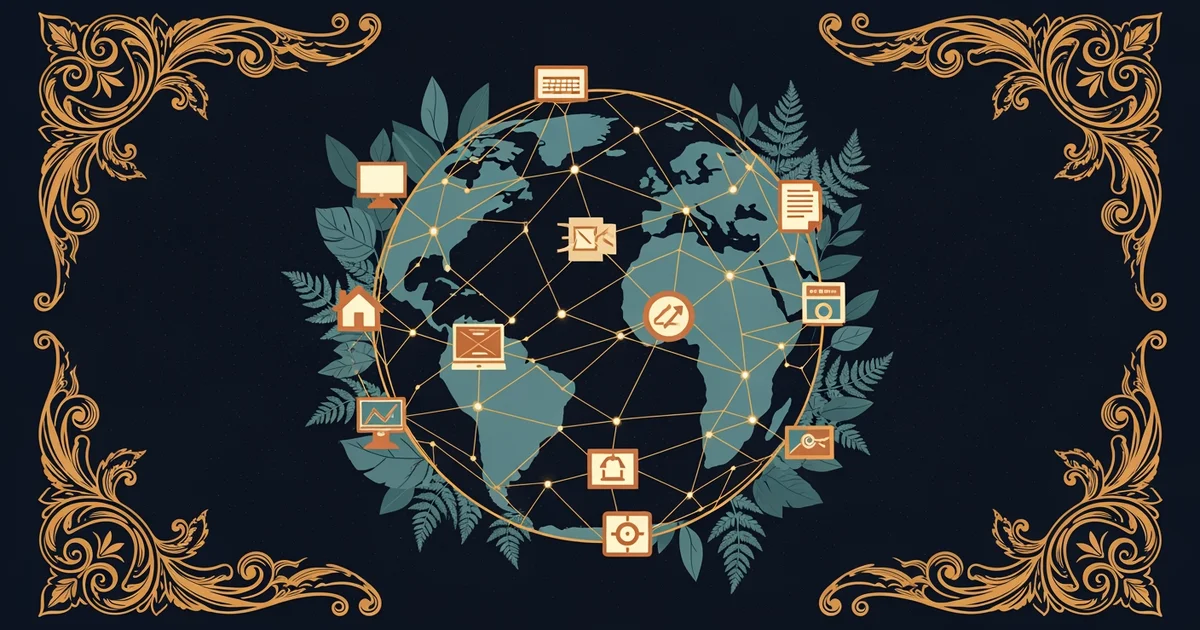
Most modern teams operate under the false assumption that being online at the same time is required for success. This belief creates a bottleneck where productivity stalls because everyone waits for a response before they can move to the next task. Asynchronous workflow design allows team members to contribute to projects at different times without needing to coordinate their specific working hours. Think of this process like a relay race where runners do not need to be on the track together. One runner completes their leg and hands off the baton in a secure location for the next person to pick up whenever they arrive. This method removes the pressure of instant replies and gives people the space to focus on deep work without constant interruptions from notifications. By shifting from live meetings to documented progress, teams can maintain momentum across multiple time zones without burning out their staff. When you document every step of a process, you create a permanent record that serves as a guide for anyone joining the project later. This reduces the need for repeated explanations and ensures that the quality of work remains consistent regardless of who is currently active on the system.
Key term: Asynchronous workflow design — a system of collaboration where team members complete tasks independently according to their own schedules rather than requiring real-time interaction.
Optimizing Tasks for Global Efficiency
To manage this transition effectively, you must categorize your tasks based on their need for immediate feedback versus independent execution. Some work requires a quick conversation to align on a vision, but most daily operations function better when they are handled as self-contained units of labor. You can improve your team performance by adopting clear standards for how information is shared and stored across your digital workspace. The following table outlines how to distinguish between tasks that benefit from live interaction and those that thrive in an asynchronous environment:
| Task Type | Best Format | Primary Goal | Frequency |
|---|---|---|---|
| Brainstorming | Live Meeting | Shared Energy | Monthly |
| Status Update | Documented | Transparency | Weekly |
| Deep Analysis | Independent | Accuracy | Daily |
Using this structure ensures that you only use live meetings for high-value collaboration that truly requires multiple voices in the room. For everything else, you should rely on shared documents, recorded videos, or project management boards that hold all necessary context in one place. By making this change, you stop treating every request as an emergency that demands an immediate response from your colleagues. This cultural shift protects the focus of your team and allows them to produce higher quality output because they are not constantly switching between different tasks.
Effective asynchronous habits depend on how well you communicate your expectations to your peers and supervisors. When you send a request, always provide the full context, the deadline, and the desired outcome so the receiver can act without needing to ask you for clarification later. This level of clarity is the foundation of trust in a remote team because it demonstrates that you respect the time of your teammates. As you master these habits, you will find that your output increases while your stress levels related to instant messaging decline significantly. The goal is not to eliminate communication, but to make communication more intentional and effective by removing the constraints of the clock. This creates a sustainable environment where work happens steadily throughout the day rather than in chaotic bursts of activity.
True asynchronous workflow success relies on providing complete context in your documentation to eliminate the need for back-and-forth clarification.
The next Station introduces Virtual Team Culture, which determines how asynchronous workflows influence the social bonds and trust within your remote organization.